Your kitchen cabinets are one of the hardest-working parts of your home. Every day, they collect grease from cooking, fingerprints from busy hands, food splatters, dust, and even moisture. Over time, this buildup can make beautiful cabinets look dull, sticky, and older than they really are.
The good news is that learning how to clean kitchen cabinets isn’t difficult. You don’t need expensive cleaning products or professional services. With the right cleaning methods and a few common household supplies, you can safely restore the beauty of your cabinets without damaging their finish.
Whether your cabinets are made from solid wood, painted wood, laminate, thermofoil, or MDF, this complete guide explains how to clean kitchen cabinets safely, remove stubborn grease, prevent future stains, and keep them looking like new for years.
Why Learning How to Clean Kitchen Cabinets Matters

Many homeowners spend thousands of dollars installing beautiful kitchen cabinets but rarely think about maintaining them properly.
Every time you cook, tiny grease particles become airborne. These invisible droplets settle on cabinet doors, drawer fronts, handles, and trim. Dust then sticks to this grease, creating the sticky layer many homeowners notice around the stove.
I remember helping a friend clean her kitchen before hosting a family gathering. We mixed a few drops of dishwashing liquid with warm water, grabbed a microfiber cloth, and cleaned just one cabinet door.
The difference was incredible.
The cabinet hadn’t aged—it had simply been hidden beneath months of grease and grime.
That’s exactly why knowing how to clean kitchen cabinets correctly can save money and extend the life of your kitchen.
Regular cleaning helps:
- Remove grease before it hardens.
- Prevent sticky residue.
- Protect painted and wood finishes.
- Reduce bacteria on frequently touched surfaces.
- Maintain your cabinet’s natural color and shine.
- Extend the lifespan of your cabinetry.
The best part? Once you know how to clean kitchen cabinets, regular maintenance only takes a few minutes each week.
What You’ll Need Before You Clean Kitchen Cabinets
One of the biggest myths about how to clean kitchen cabinets is that you need expensive specialty cleaners.
In reality, most cabinet manufacturers recommend simple, gentle cleaning supplies.
Essential Cleaning Supplies
Before you begin cleaning kitchen cabinets, gather:
- Warm water
- Mild dishwashing liquid
- Soft microfiber cloths
- Soft sponge
- Dry lint-free towel
- Bucket
- Spray bottle (optional)
- Soft toothbrush
- Soft nylon brush
These simple supplies safely clean most cabinet finishes without causing damage.
Optional Products for Heavy Grease
If your cabinets haven’t been cleaned in several months, these products can help:
- Baking soda
- Diluted white vinegar
- Cabinet-safe multi-surface cleaner
- Citrus-based degreaser labeled safe for finished wood
- Wood-safe cabinet cleaner
Always test any commercial cleaner on a hidden area before using it across the entire kitchen.
What NOT to Use When Learning How to Clean Kitchen Cabinets
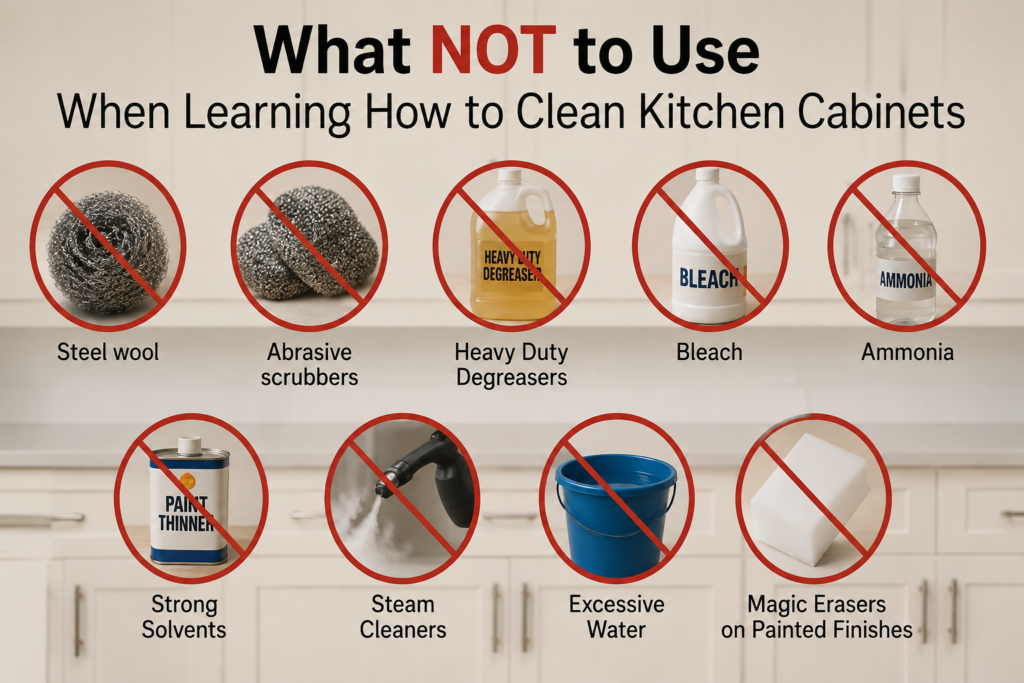
Knowing what not to use is just as important as knowing how to clean kitchen cabinets properly.
Avoid:
- Steel wool
- Abrasive scrubbers
- Harsh degreasers
- Bleach
- Ammonia
- Strong solvents
- Steam cleaners
- Excessive water
- Magic Erasers on painted finishes
These products may scratch surfaces, strip protective coatings, or damage cabinet finishes.
Whenever you’re unsure, choose the gentlest cleaning solution first.
How to Prepare Before You Clean Kitchen Cabinets
Preparation makes the entire cleaning process faster and safer.
Step 1: Clear the Area
If you’re deep cleaning, remove:
- Dishes
- Glasses
- Pantry items
- Small appliances
- Cookware
This gives you full access to every shelf and makes how to clean kitchen cabinets much easier.
Step 2: Remove Dust First
Before introducing any moisture, wipe every cabinet with a dry microfiber cloth.
Dust often hides on:
- Cabinet doors
- Drawer fronts
- Decorative trim
- Crown molding
- Handles
Skipping this step simply turns dust into muddy streaks.
Step 3: Identify Your Cabinet Material
Before deciding how to clean kitchen cabinets, identify the cabinet finish.
Common cabinet materials include:
- Solid wood
- Painted wood
- Laminate
- MDF
- Thermofoil
- Veneer
Different finishes require slightly different care, so always test a cleaner on a hidden area first.
Step 4: Mix a Gentle Cleaning Solution
For routine cabinet cleaning:
- Fill a bowl with warm water.
- Add just a few drops of mild dish soap.
- Stir gently.
You don’t need lots of soap.
Too much detergent simply leaves behind residue that requires additional rinsing.
The goal isn’t to soak your cabinets—it’s to loosen grease safely.
Step-by-Step: How to Clean Kitchen Cabinets Properly
Now it’s time to actually learn how to clean kitchen cabinets the right way.
Instead of scrubbing aggressively, let your cleaning solution do most of the work.
Step 1: Dampen Your Cloth
Dip your microfiber cloth into the cleaning solution.
Wring it out thoroughly.
The cloth should feel damp—not dripping.
Too much moisture can seep into joints, edges, and unfinished wood.
Step 2: Wipe One Cabinet at a Time
When learning how to clean kitchen cabinets, avoid rushing.
Start at one end of the kitchen and work methodically.
For each cabinet:
- Begin at the top.
- Wipe downward.
- Follow the wood grain when applicable.
- Pay extra attention to handles and edges.
Cleaning one cabinet completely before moving to the next prevents missed spots and streaks.
Step 3: Dry Immediately
One of the most overlooked steps in how to clean kitchen cabinets is drying.
Immediately wipe each cabinet with a clean, dry microfiber towel.
Drying helps:
- Prevent water spots.
- Protect wood finishes.
- Reduce moisture damage.
- Preserve painted surfaces.
Never allow water to sit on cabinet doors or around joints.
Step 4: Clean Handles and Hardware
Grease and fingerprints build up quickly around:
- Handles
- Knobs
- Drawer pulls
- Hinges
Use a soft toothbrush dipped in your cleaning solution to gently clean detailed areas before wiping everything dry.
Step 5: Repeat Throughout the Kitchen
Continue using the same process until every cabinet has been cleaned.
By following these simple steps consistently, you’ll master how to clean kitchen cabinets while protecting your investment and keeping your kitchen looking fresh all year long.
How to Clean Kitchen Cabinets with Stubborn Grease and Grime
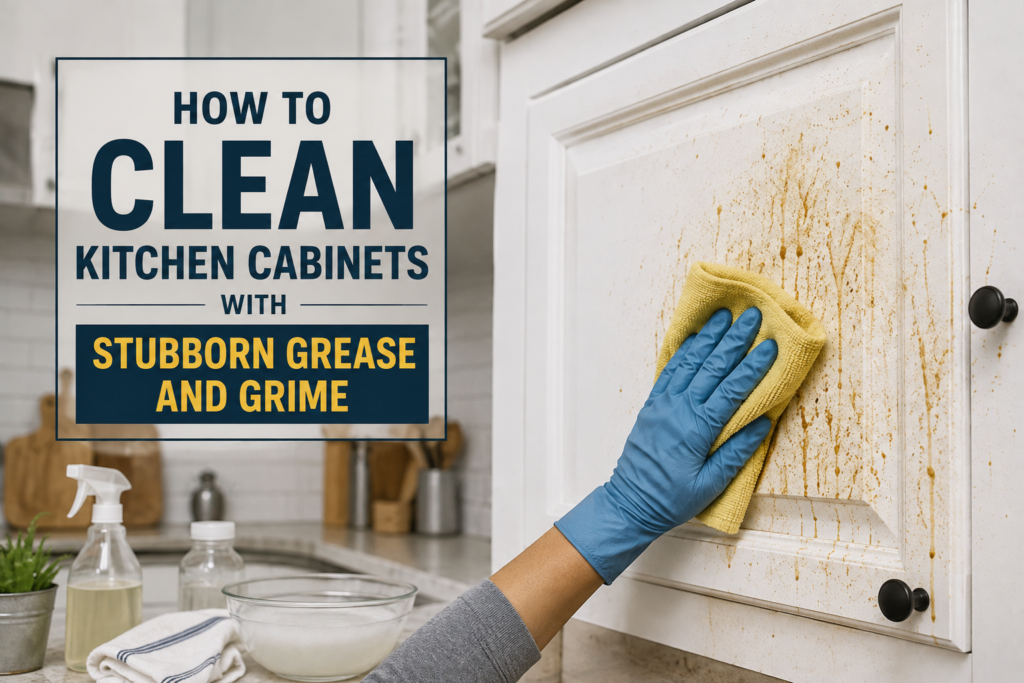
Even if you wipe your cabinets regularly, certain areas—especially those around the stove, oven, and range hood—can still develop stubborn grease. Learning how to clean kitchen cabinets with the right techniques will help remove sticky residue without harming the finish.
The key is patience. Instead of scrubbing aggressively, allow the cleaning solution to loosen the grease first.
Method 1: Clean Kitchen Cabinets with Dish Soap
For everyday grease, mild dish soap is still the safest and most effective solution.
Steps
- Fill a bowl with warm water.
- Add 2–3 drops of mild dishwashing liquid.
- Dip a microfiber cloth into the solution.
- Wring out the cloth until it’s only damp.
- Gently wipe the greasy cabinet.
- Dry immediately with a clean towel.
If grease doesn’t come off immediately, hold the damp cloth over the area for about a minute before wiping again.
This simple method is usually all you need when learning how to clean kitchen cabinets safely.
Method 2: Remove Tough Grease with Baking Soda
Sometimes grease has been sitting for months.
In that case, a gentle baking soda paste works well.
How to Make the Paste
Mix:
- 2 tablespoons baking soda
- 1 tablespoon warm water
Stir until it forms a thick paste.
Apply it directly to stubborn grease spots.
Leave it for about five minutes.
Using a soft microfiber cloth, gently wipe the grease away.
Finally, remove any remaining residue with a damp cloth and dry the cabinet immediately.
Never scrub aggressively.
Method 3: Use Diluted White Vinegar
Some homeowners prefer natural cleaners.
A mixture of equal parts white vinegar and warm water helps remove light grease and fingerprints.
However, remember these precautions:
- Always test it on a hidden area first.
- Spray the cloth—not the cabinet.
- Never allow vinegar to remain on painted surfaces for long periods.
Many cabinet manufacturers still recommend mild soap and water as the safest long-term solution.
Different Types of Kitchen Cabinets and How to Clean Them
While the basic steps explain how to clean kitchen cabinets, not every cabinet material or finish should be cleaned the same way. Different cabinet surfaces react differently to moisture, cleaning products, and everyday wear. Using the correct cleaning method helps protect the finish, extend the life of your cabinets, and keep them looking their best.
Below are the most common kitchen cabinet types along with a brief overview of the safest cleaning methods. For detailed step-by-step instructions, be sure to read our dedicated guides for each cabinet type.
How to Clean Wood Kitchen Cabinets
Solid wood cabinets add warmth, character, and long-term value to any kitchen. However, natural wood is more sensitive to moisture than other cabinet materials, so it’s important to clean it carefully.
To clean wood kitchen cabinets, use a microfiber cloth, warm water, and a few drops of mild dish soap. Wipe in the direction of the wood grain, avoid soaking the surface, and dry the cabinets immediately after cleaning to prevent swelling or water damage.
Regular dusting and gentle cleaning help preserve the natural beauty and protective finish of wood cabinets for many years.
Read our complete guide: How to Clean Wood Kitchen Cabinets
How to Clean Painted Kitchen Cabinets
Painted cabinets create a clean, modern look, but painted finishes require extra care to avoid scratches, fading, or peeling.
The safest way to clean painted kitchen cabinets is with warm water, mild dish soap, and a soft microfiber cloth. Avoid abrasive scrubbers, steel wool, Magic Erasers, bleach, or harsh chemicals that can damage the painted finish.
For stubborn grease, allow the cleaning solution to soften the residue before gently wiping it away instead of scrubbing aggressively.
Read our complete guide: How to Clean Painted Kitchen Cabinets
How to Clean White Kitchen Cabinets
White kitchen cabinets brighten any kitchen, but they also reveal fingerprints, grease, dust, and food stains much faster than darker finishes.
To keep white cabinets looking bright, wipe cabinet doors weekly using warm water and mild dish soap. Clean spills immediately, use a baking soda paste for stubborn stains, and dry every surface thoroughly to help prevent yellowing caused by grease buildup.
Routine maintenance keeps white cabinets looking clean and fresh while reducing the need for heavy scrubbing.
Read our complete guide: How to Clean White Kitchen Cabinets
How to Clean Laminate Kitchen Cabinets
Laminate cabinets are durable, affordable, and easy to maintain, making them one of the most popular cabinet choices in modern kitchens.
Clean laminate cabinets using a damp microfiber cloth and a gentle dish soap solution. Avoid excessive moisture around seams and edges because water can cause laminate to swell or peel over time.
Never use abrasive cleaners or rough scrubbing pads that could scratch the laminate surface.
Read our complete guide: How to Clean Laminate Kitchen Cabinets
How to Clean Greasy Kitchen Cabinets
Cabinets located near the stove, cooktop, or range hood usually collect the most grease. Over time, airborne cooking oils combine with dust, creating a sticky layer that attracts even more dirt.
Start with warm water and mild dish soap for light grease. For heavier buildup, use a gentle baking soda paste or a cabinet-safe degreaser designed for finished cabinets. Allow the cleaner to loosen grease before wiping rather than scrubbing forcefully.
Regular cleaning prevents grease from becoming difficult to remove.
Read our complete guide: How to Clean Greasy Kitchen Cabinets
How to Clean the Tops of Kitchen Cabinets
The tops of kitchen cabinets are often forgotten because they’re out of sight, but they collect large amounts of dust, grease, and airborne cooking residue.
Begin by vacuuming or dusting the surface with a microfiber cloth. Then wipe it using warm water and mild dish soap before drying thoroughly. Many homeowners place wax paper or shelf liner on top of cabinets to catch grease, making future cleaning much easier.
Cleaning cabinet tops every few months helps prevent thick grease buildup and improves overall kitchen cleanliness.
Read our complete guide: How to Clean the Tops of Kitchen Cabinets
Why These Dedicated Cleaning Guides Matter
Although the basic principles of how to clean kitchen cabinets remain the same, each cabinet material requires slightly different care. Following the correct cleaning method helps you:
- Protect cabinet finishes from scratches and fading
- Remove grease safely without damaging surfaces
- Extend the lifespan of your cabinetry
- Prevent moisture damage and warping
- Keep every type of kitchen cabinet looking its best
For the best results, explore each detailed guide linked above. Together, these articles form a complete resource hub that covers every major kitchen cabinet cleaning scenario, making it easier to choose the safest cleaning method for your specific cabinet type..
How to Clean Different Types of Kitchen Cabinets

Not every cabinet should be cleaned exactly the same way.
Knowing your cabinet material makes how to clean kitchen cabinets much easier and safer.
How to Clean Wood Kitchen Cabinets
Natural wood cabinets bring warmth and beauty to any kitchen, but they require extra care.
When cleaning wood cabinets:
- Wipe along the wood grain.
- Never soak the wood.
- Use a microfiber cloth.
- Dry immediately after cleaning.
- Use wood-safe cleaners only.
Avoid excessive moisture around cabinet joints and decorative trim.
How to Clean Painted Kitchen Cabinets
how to clean kitchen cabinets Painted cabinets require gentle cleaning because the painted finish can scratch more easily.
The safest method includes:
- Warm water
- Mild dish soap
- Soft microfiber cloth
Avoid:
- Steel wool
- Abrasive scrubbers
- Harsh chemicals
- Magic Erasers
Understanding how to clean kitchen cabinets with painted finishes correctly helps preserve their color and smooth appearance.
How to Clean White Kitchen Cabinets
White cabinets look beautiful but show grease, fingerprints, and stains more quickly than darker colors.
To keep them bright:
- Wipe weekly.
- Clean spills immediately.
- Use warm water and mild dish soap.
- Remove stubborn stains with a gentle baking soda paste.
- Dry surfaces thoroughly.
Regular maintenance prevents yellowing caused by cooking grease.
How to Clean Laminate Kitchen Cabinets
Laminate cabinets are durable but sensitive to moisture around seams.
Clean laminate cabinets using:
- Mild soap
- Warm water
- Damp microfiber cloth
Never leave standing water on laminate surfaces.
Always dry immediately.
How to Clean Thermofoil Kitchen Cabinets
Thermofoil cabinets feature a vinyl coating over engineered wood.
To protect them:
- Avoid excessive heat.
- Never use steam cleaners.
- Use gentle cleaning products.
- Dry immediately after cleaning.
Strong chemicals may loosen the thermofoil over time.
How Often Should You Clean Kitchen Cabinets?
A regular cleaning routine makes learning how to clean kitchen cabinets much easier because grease never has a chance to build up.
Daily
- Wipe spills.
- Remove visible fingerprints.
Weekly
- Dust cabinet doors.
- Clean handles.
- Wipe grease near the stove.
Monthly
- Clean cabinet edges.
- Wash decorative trim.
- Remove grease buildup.
Every 3–6 Months
Perform a complete deep clean:
- Empty cabinets.
- Vacuum interiors.
- Wash shelves.
- Clean hardware.
- Organize storage.
Regular maintenance keeps your cabinets looking newer for much longer.
Natural vs. Commercial Cleaners: Which Is Best for Cleaning Kitchen Cabinets?
When homeowners search for how to clean kitchen cabinets, they often wonder whether homemade cleaners are better than commercial products.
The truth is that both have their place. For everyday cleaning, simple household ingredients usually work perfectly. However, if you’re dealing with heavy grease buildup, a cabinet-safe commercial cleaner can save time and effort.
The secret is choosing the gentlest cleaner that gets the job done.
| Cleaning Solution | Best For | Safe for Most Cabinets |
|---|---|---|
| Warm water & mild dish soap | Weekly cleaning | Yes |
| Baking Soda paste | Tough grease stains | Yes (use gently) |
| Diluted White Vinegar | Fingerprints & light grease | Test first |
| Cabinet-safe multi-surface cleaner | Heavy grease buildup | Yes |
| Citrus-based cabinet cleaner | Deep cleaning | Follow label directions |
| Bleach or ammonia | Not recommended | No |
| Steel wool or abrasive pads | Never use | No |
Whenever possible, begin with warm water and mild dish soap. Most kitchen cabinet manufacturers recommend this method because it’s effective and gentle on cabinet finishes.
How to Prevent Grease Buildup on Kitchen Cabinets
Knowing how to clean kitchen cabinets is important, but preventing grease buildup is even better.
Simple daily habits can dramatically reduce cleaning time and keep your cabinets looking newer for years.
1. Wipe Spills Immediately
Food splashes, coffee, cooking oil, and sauces become harder to remove once they dry.
Whenever you notice a spill:
- Wipe it immediately.
- Use a damp microfiber cloth.
- Dry the surface afterward.
Fresh spills take seconds to clean.
Old stains often require much more effort.
2. Always Turn On the Range Hood
Many homeowners forget that the range hood protects more than just the air.
It also reduces:
- Cooking grease
- Steam
- Smoke
- Airborne oils
These particles are the primary reason cabinets become sticky over time.
Using your range hood every time you cook makes how to clean kitchen cabinets much easier later.
For more information about indoor air quality, visit the U.S. Environmental Protection Agency (EPA).
3. Dust Cabinets Every Week
Dust doesn’t look dangerous, but when it mixes with grease, it forms the sticky film commonly found on kitchen cabinets.
A quick weekly wipe with a microfiber cloth removes dust before it becomes difficult to clean.
Pay extra attention to:
- Cabinet tops
- Crown molding
- Door edges
- Decorative trim
4. Clean Handles Frequently
Cabinet handles are among the most touched surfaces in your kitchen.
Oils from your hands gradually spread across cabinet doors.
Once a week, wipe:
- Knobs
- Pulls
- Handles
- Drawer fronts
This simple habit helps keep fingerprints under control.
5. Avoid Hanging Wet Towels on Cabinet Doors
Many people hang damp dish towels over cabinet doors without realizing the damage this can cause.
Constant moisture may lead to:
- Swollen wood
- Peeling paint
- Loose laminate
- Water stains
Instead, use a towel bar or hook designed for kitchen towels.
6. Dry Cabinets After Every Cleaning
One of the biggest mistakes people make while learning how to clean kitchen cabinets is forgetting the final step.
Always dry cabinets immediately after wiping them down.
Drying helps prevent:
- Moisture damage
- Water spots
- Warping
- Peeling finishes
A dry microfiber towel works best.
Best Products for Cleaning Kitchen Cabinets
If you’re shopping for supplies to make how to clean kitchen cabinets easier, these products are excellent choices.
Microfiber Cloth
A high-quality microfiber cloth safely removes dust, grease, and fingerprints without scratching cabinet finishes.
Ideal for:
- Daily dusting
- Weekly cleaning
- Final drying
Mild Dish Soap
A gentle dishwashing liquid remains one of the safest and most effective cleaners for almost every cabinet material.
Perfect for:
- Painted cabinets
- Wood cabinets
- Laminate cabinets
- Thermofoil cabinets
Baking Soda
A small amount of baking soda mixed with water creates a mild paste that works well on stubborn grease and food stains.
Always use gentle pressure when applying it.
White Vinegar
Diluted white vinegar is a natural option for removing light grease and fingerprints.
Always test it on an inconspicuous area before widespread use.
Cabinet-Safe Multi-Surface Cleaner
For seasonal deep cleaning, choose a cleaner specifically labeled for finished kitchen cabinets.
Avoid industrial-strength degreasers unless recommended by the cabinet manufacturer.
Signs Your Kitchen Cabinets Need More Than Cleaning
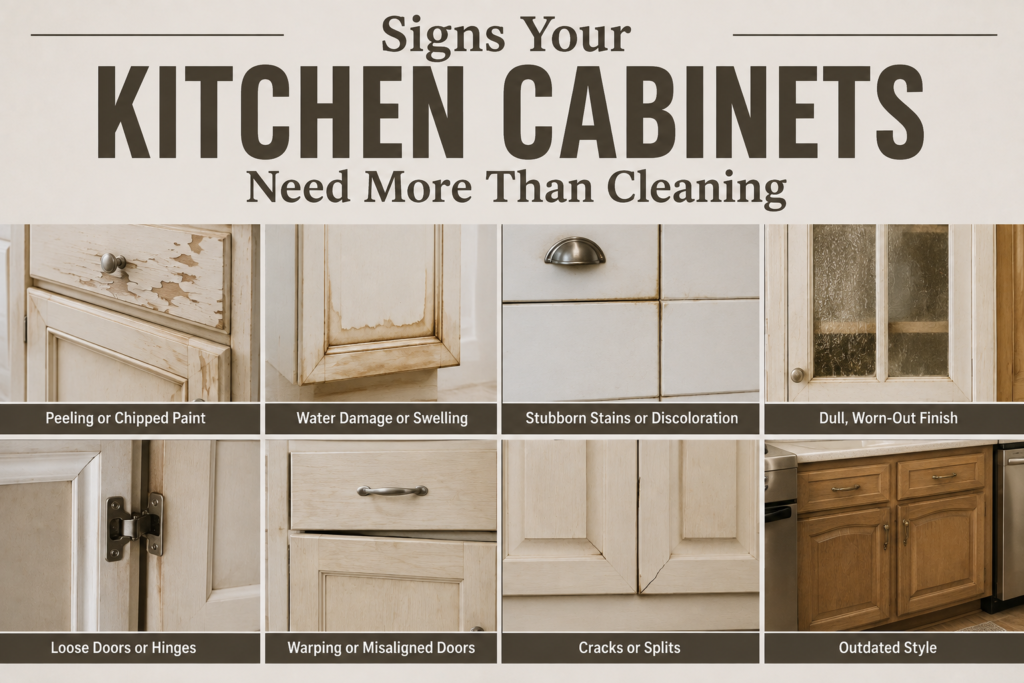
Even after learning how to clean kitchen cabinets, there are situations where cleaning alone won’t restore their appearance.
Consider refinishing or replacing your cabinets if you notice:
- Peeling paint
- Deep scratches exposing bare wood
- Swollen cabinet doors
- Warped panels
- Loose thermofoil
- Cracked laminate
- Severe water damage
Cleaning removes dirt and grease, but it can’t repair structural damage or worn finishes.
Final Thoughts
Learning how to clean kitchen cabinets doesn’t require expensive products or professional help. With warm water, mild dish soap, a microfiber cloth, and a consistent cleaning routine, you can remove grease, fingerprints, dust, and stains while protecting your cabinet finish.
The best way to master how to clean kitchen cabinets is to clean them regularly instead of waiting until grease becomes difficult to remove. Wipe spills immediately, use your range hood while cooking, dust weekly, and deep clean every few months. These simple habits will keep your kitchen cabinets looking beautiful and extend their lifespan for many years.
Whether you have wood kitchen cabinets, painted cabinets, white cabinets, laminate cabinets, or thermofoil cabinets, following the right cleaning methods will help preserve their appearance and protect your investment.
FAQ’S…
What Is the Best Cleaner for Kitchen Cabinets?
If you’re wondering how to clean kitchen cabinets safely, the best cleaner is usually a mixture of warm water and mild dish soap. It removes grease, fingerprints, and everyday dirt without harming painted, wood, laminate, or thermofoil cabinet finishes.
How Often Should You Clean Kitchen Cabinets?
Knowing how to clean kitchen cabinets also means knowing how often to clean them.
A simple schedule works best:
Daily: Wipe spills and splashes.
Weekly: Clean cabinet doors, drawer fronts, and handles.
Monthly: Remove grease buildup around the stove.
Every 3–6 Months: Deep clean the inside and outside of every cabinet.
Regular cleaning prevents stubborn stains and extends the life of your cabinets.
Is Baking Soda Safe for Kitchen Cabinets?
Yes. Baking soda is safe when used gently.
If you’re following proper how to clean kitchen cabinets techniques, mix baking soda with water to create a soft paste and avoid aggressive scrubbing.
Can I Clean Painted and Wood Cabinets the Same Way?
For most situations, yes.
The safest how to clean kitchen cabinets method for both painted and wood cabinets is warm water, mild dish soap, and a microfiber cloth.
However, painted cabinets require extra care because the painted finish can scratch more easily.