Wood kitchen cabinets add warmth, elegance, and timeless charm to any kitchen. Whether your cabinets are made from oak, maple, cherry, walnut, or another hardwood, they deserve proper care to preserve their natural beauty. Unfortunately, everyday cooking leaves behind grease, fingerprints, food splatters, dust, and moisture that can slowly dull the finish if not cleaned regularly.
The good news is that learning How to Clean Wood Kitchen Cabinets doesn’t require expensive cleaners or professional help. In fact, with a few simple household supplies and the right techniques, you can safely remove dirt, grease, and grime while protecting the wood finish for years to come.
Many homeowners believe stronger cleaners produce better results. However, harsh chemicals and abrasive scrubbers often damage wood finishes instead of helping them. The safest approach is gentle, consistent cleaning combined with proper maintenance. In this complete guide, you’ll learn How to Clean Wood Kitchen Cabinets step by step, discover the best cleaning products, avoid common mistakes, remove stubborn grease safely, and keep your cabinets looking as beautiful as the day they were installed.
Quick Tip: Cleaning your cabinets every week prevents heavy grease buildup and makes deep cleaning much easier.
Why Regular Cleaning Is Important
Every time you cook, tiny particles of grease and steam settle on nearby cabinet doors. These particles mix with dust and fingerprints, creating a sticky layer that’s often invisible at first.
Think about the cabinet next to your stove. You may clean your countertop every day, but the cabinet door is touched dozens of times while preparing meals. After several weeks, grease, dust, and fingerprints combine to dull the wood’s natural beauty.
A friend of mine once believed her maple cabinets needed refinishing because they looked faded. Before spending thousands of dollars on new cabinetry, she tried a simple cleaning solution of warm water and mild dish soap. Within minutes, the original rich color returned. The cabinets weren’t worn out—they simply needed proper cleaning.
That’s exactly why learning How to Clean Wood Kitchen Cabinets is one of the easiest ways to protect your kitchen investment.
Benefits of Regular Cabinet Cleaning
- Removes grease before it hardens.
- Preserves the wood finish.
- Prevents stains and discoloration.
- Reduces bacteria on frequently touched surfaces.
- Extends the life of your cabinets.
- Keeps your kitchen looking bright and well-maintained.
Supplies You’ll Need Before You Start

One of the best things about How to Clean Wood Kitchen Cabinets is that you probably already have everything you need.
Essential Cleaning Supplies
Gather these items before you begin:
- Microfiber cloth
- Soft lint-free towel
- Warm water
- Mild dish soap
- Soft sponge
- Bucket or bowl
- Spray bottle (optional)
- Soft nylon brush or old toothbrush
These simple supplies are safe for most stained, sealed, and Painted Kitchen Cabinets finishes.
Optional Supplies for Deep Cleaning
If your cabinets have heavy grease buildup, these products may also help:
- Cabinet-safe multi-surface cleaner
- Orange oil wood cleaner
- Baking soda
- Distilled white vinegar
- Wood cabinet polish (only if recommended by the cabinet manufacturer)
Always test any new cleaner on an inconspicuous area before applying it to visible surfaces.
Cleaning Products You Should Never Use
One of the biggest mistakes homeowners make when learning How to Clean Wood Kitchen Cabinets is using products that are too harsh.
Avoid using:
- Steel wool
- Abrasive scouring pads
- Bleach
- Ammonia-based cleaners
- Strong solvents
- Harsh degreasers
- Steam cleaners
- Excessive water
These products may scratch the finish, remove protective coatings, or allow moisture to penetrate the wood.
Editor’s Tip: Gentle cleaning protects wood far better than aggressive scrubbing.
Prepare Your Cabinets Before Cleaning
Preparation only takes a few minutes but makes the cleaning process much easier.
Step 1: Remove Loose Dust
Using a dry microfiber cloth, wipe:
- Cabinet doors
- Drawer fronts
- Cabinet sides
- Decorative trim
- Crown molding
Removing loose dust first prevents it from turning into muddy streaks once moisture is added.
Step 2: Empty Cabinets (For Deep Cleaning)
If you’re performing a routine wipe-down, you can leave everything inside.
For deep cleaning:
- Remove dishes
- Empty pantry items
- Take out cookware
- Remove shelf liners if needed
Cleaning one cabinet at a time keeps everything organized.
Step 3: Identify Your Cabinet Finish
Not every cabinet has the same finish.
Your cabinets may be:
- Natural wood
- Stained wood
- Painted wood
- Sealed wood
- Laminate with a wood appearance
- Thermofoil
Knowing your finish helps you choose the safest cleaning method.
Step 4: Mix a Gentle Cleaning Solution
The safest cleaner for How to Clean Wood Kitchen Cabinets is surprisingly simple.
Mix:
- Warm water
- A few drops of mild dish soap
Avoid adding too much soap because it may leave behind residue that attracts dust.
Step 5: Use a Damp Cloth—Not a Wet One
Dip your microfiber cloth into the cleaning solution and wring it out thoroughly.
The cloth should be damp, not dripping.
Too much water can seep into cabinet joints, edges, and unfinished wood, potentially causing swelling or damage over time.
How to Clean Wood Kitchen Cabinets: Step-by-Step Cleaning Guide
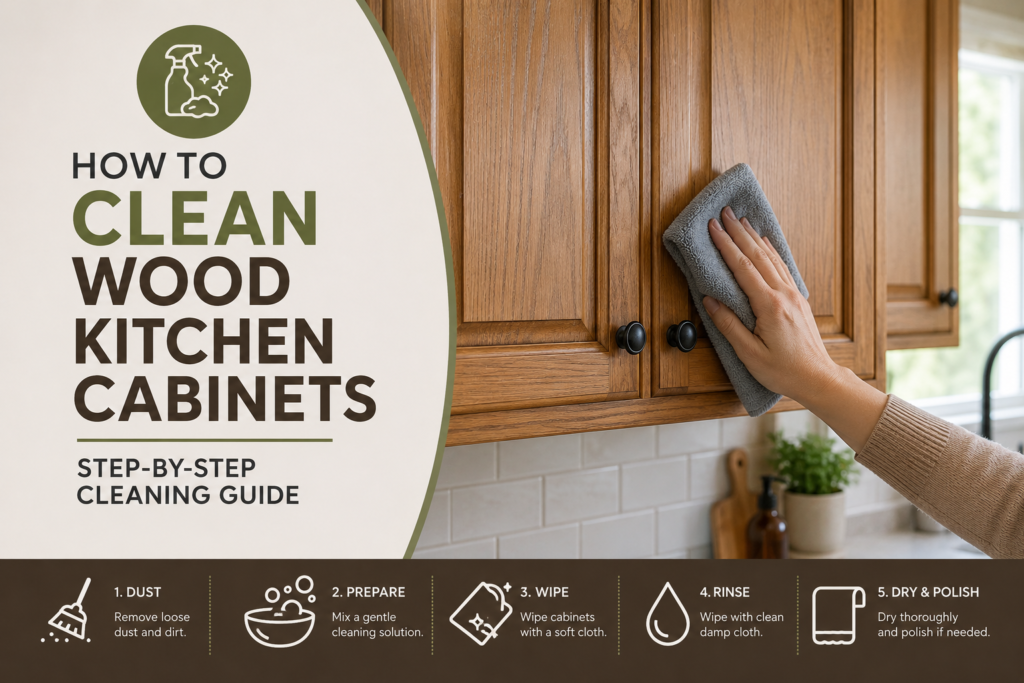
Now that you’ve prepared your cabinets and gathered your cleaning supplies, it’s time to clean them properly. The secret to How to Clean Wood Kitchen Cabinets isn’t scrubbing harder—it’s using the right technique. Gentle cleaning removes grease and grime while protecting the wood finish, helping your cabinets stay beautiful for years.
Whether your cabinets have a stained, sealed, or painted finish, these steps will help you clean them safely without causing damage.
Step 1: Start Cleaning from the Top
A common mistake homeowners make is cleaning the lower cabinets first.
Instead, always begin with the upper cabinets and work your way down.
Why?
Dust and dirty water naturally fall downward. Cleaning from the top prevents dirt from landing on areas you’ve already cleaned.
Work one cabinet at a time by cleaning:
- Cabinet doors
- Drawer fronts
- Cabinet sides
- Decorative trim
- Lower cabinets
This method keeps the process organized and ensures you don’t miss any spots.
Pro Tip: When learning How to Clean Wood Kitchen Cabinets, always complete one cabinet before moving to the next.
Step 2: Wipe Gently with the Wood Grain
If your cabinets have a natural wood finish, always wipe with the grain rather than across it.
Cleaning with the grain:
- Protects the wood finish
- Reduces visible streaks
- Prevents tiny scratches
- Creates a smoother appearance
Use a slightly damp microfiber cloth and apply only light pressure.
There’s no need to scrub aggressively.
Step 3: Focus on High-Touch Areas
Some cabinet surfaces collect much more dirt than others.
Pay extra attention to:
- Cabinet handles
- Drawer pulls
- Cabinets above the stove
- Pantry doors
- Trash cabinet pull-outs
- Coffee station cabinets
These are the areas most likely to collect fingerprints, grease, and food residue.
Cleaning them every week prevents stubborn buildup.
Step 4: Clean Decorative Details
Raised panels, grooves, molding, and carved cabinet details often trap grease and dust.
Use a soft toothbrush or nylon brush to gently clean:
- Decorative grooves
- Routed edges
- Corner joints
- Around hinges
- Cabinet trim
Never use metal brushes or abrasive tools.
Step 5: Rinse Away Soap Residue
After cleaning each cabinet, wipe it again using a second microfiber cloth lightly dampened with clean water.
This removes leftover soap residue that could otherwise attract dust over time.
Although many homeowners skip this step, it’s an important part of How to Clean Wood Kitchen Cabinets because it helps preserve the cabinet’s natural finish.
Step 6: Dry Every Surface Immediately
Never allow wood cabinets to air dry.
Instead, use a clean lint-free towel to dry:
- Cabinet doors
- Drawer fronts
- Handles
- Decorative trim
- Cabinet edges
Moisture is one of the biggest enemies of wood cabinetry.
Drying immediately helps prevent:
- Swelling
- Warping
- Finish damage
- Water stains
How to Remove Grease from Wood Kitchen Cabinets
Grease is the biggest challenge for most homeowners.
Cooking releases tiny oil particles that settle on nearby cabinets, especially around the stove.
Fortunately, removing grease doesn’t require harsh chemicals.
Method 1: Mild Dish Soap and Warm Water (Best for Everyday Cleaning)
For routine grease removal:
Mix:
- Warm water
- 3–4 drops of mild dish soap
Dip a microfiber cloth into the solution and wring it out well.
Gently wipe the greasy surface.
If grease remains:
- Hold the damp cloth against the grease for about 30 seconds.
- Wipe gently.
- Repeat if necessary.
This is the safest method for How to Clean Wood Kitchen Cabinets during regular maintenance.
Method 2: White Vinegar Solution
Many homeowners prefer natural cleaning methods.
Mix:
- Equal parts distilled White Kitchen Cabinets
- Warm water
Lightly dampen a microfiber cloth with the solution and wipe the greasy area.
Always test this solution on an inconspicuous area first because different wood finishes react differently.
Method 3: Baking Soda Paste for Tough Spots
For stubborn grease stains:
Mix:
- 2 parts baking soda
- 1 part warm water
Apply a small amount directly to the stain.
Allow it to sit for one to two minutes.
Wipe gently with a damp microfiber cloth.
Dry immediately afterward.
Use this method only for isolated stains rather than routine cleaning.
How to Restore Shine to Wood Kitchen Cabinets
Over time, even clean cabinets may lose some of their natural luster.
Once you’ve finished How to Clean Wood Kitchen Cabinets, you can restore their appearance by using a wood-safe cabinet polish or conditioner only if it’s recommended by the cabinet manufacturer.
Avoid applying furniture waxes or oil-based products that are not designed for your cabinet finish, as they can leave residue and attract dust.
A simple cleaning routine combined with occasional conditioning (when appropriate) is usually enough to keep wood cabinets looking rich and vibrant.
How to Protect Wood Kitchen Cabinets for Long-Lasting Beauty
Knowing How to Clean Wood Kitchen Cabinets is only half the job. The other half is protecting them from everyday wear and tear. A few simple habits can significantly extend the life of your cabinets and keep them looking as beautiful as the day they were installed.
Fortunately, protecting wood cabinets doesn’t require expensive treatments. Small daily habits often make the biggest difference.
1. Clean Spills Immediately
Grease, sauces, coffee, and water are much easier to remove while they’re still fresh.
Instead of waiting until the end of the day, wipe spills as soon as they happen.
This simple habit prevents:
- Sticky residue
- Water stains
- Finish discoloration
- Permanent marks
The sooner you clean a spill, the easier How to Clean Wood Kitchen Cabinets becomes later.
2. Always Use Cabinet Handles
Many homeowners instinctively push cabinet doors closed with greasy fingers.
Over time, fingerprints create dark spots around cabinet edges.
Using cabinet knobs and handles instead helps:
- Reduce grease buildup
- Protect the wood finish
- Keep cabinet doors cleaner for longer
3. Control Kitchen Moisture
Wood naturally expands and contracts when exposed to excessive humidity.
After cooking:
- Turn on your range hood.
- Open nearby windows if possible.
- Wipe away condensation around cabinets.
Reducing moisture helps prevent swelling and finish damage.
4. Keep Heat Away from Cabinets
Cabinets located beside ovens, dishwashers, and coffee machines experience more heat than others.
Whenever possible:
- Open the dishwasher after it cools slightly.
- Use your exhaust fan while cooking.
- Avoid directing portable heaters toward cabinetry.
Excessive heat may gradually weaken protective finishes.
5. Dust Cabinets Weekly
Dust may seem harmless, but it often mixes with cooking oils and becomes sticky over time.
A quick weekly wipe with a microfiber cloth keeps cabinet surfaces looking fresh and reduces the need for heavy scrubbing later.
How Often Should You Clean Wood Kitchen Cabinets?
One of the most common questions homeowners ask after learning How to Clean Wood Kitchen Cabinets is how often they should actually clean them.
The answer depends on how frequently you cook.
Daily
- Wipe fresh spills.
- Remove visible grease.
- Dry any water splashes.
Weekly
- Dust cabinet doors.
- Clean fingerprints.
- Wipe cabinet fronts.
- Clean handles and drawer pulls.
Monthly
- Clean decorative grooves.
- Wipe cabinet sides.
- Remove grease near the stove.
- Inspect for scratches or loose hardware.
Every 3–6 Months
Perform a complete deep cleaning.
Include:
- Interior shelves
- Cabinet doors
- Drawer fronts
- Cabinet sides
- Hardware
- Decorative trim
Yearly
Inspect your cabinets for:
- Water damage
- Loose hinges
- Chipped finish
- Worn protective coating
Small repairs today can prevent expensive replacements later.
Common Mistakes to Avoid
Many cabinet finishes become damaged because of simple cleaning mistakes.
Avoid these common errors while learning How to Clean Wood Kitchen Cabinets.
Using Too Much Water
Wood and standing water never work well together.
Always use a damp cloth—not a soaking wet one.
Too much moisture may cause:
- Warping
- Swelling
- Finish failure
- Joint separation
Using Abrasive Scrubbers
Steel wool, scouring pads, and rough brushes may remove grease quickly, but they also scratch wood finishes.
Always choose:
- Soft microfiber cloths
- Soft sponges
- Nylon detail brushes
Ignoring Grease Buildup
Grease becomes much harder to remove once it hardens.
Instead of waiting several months, wipe cabinet doors regularly.
Weekly maintenance is far easier than heavy restoration cleaning.
Using Harsh Chemicals
Avoid cleaners containing:
- Bleach
- Ammonia
- Strong solvents
- Industrial degreasers
These products may strip protective coatings and leave cabinets looking dull.
Skipping the Drying Step
Many homeowners clean their cabinets correctly but forget to dry them.
Always finish How to Clean Wood Kitchen Cabinets by wiping every surface dry with a clean, lint-free towel.
Best Products for Cleaning Wood Kitchen Cabinets
You don’t need expensive specialty products to keep your cabinets clean.
These options work well for most wood finishes.
Mild Dish Soap
Best for: Everyday cleaning
Removes grease without damaging protective finishes.
Microfiber Cloth
Best for: Dusting and wiping
Microfiber traps dirt without scratching wood.
Cabinet-Safe Multi-Surface Cleaner
Best for: Heavy grease
Use only if it’s approved for wood cabinetry.
Baking Soda Paste
Best for: Small stubborn stains
Use sparingly and rinse immediately.
White Vinegar Solution
Best for: Natural cleaning
Always test on a hidden area before using it on visible cabinet surfaces.
Signs Your Wood Cabinets Need Deep Cleaning
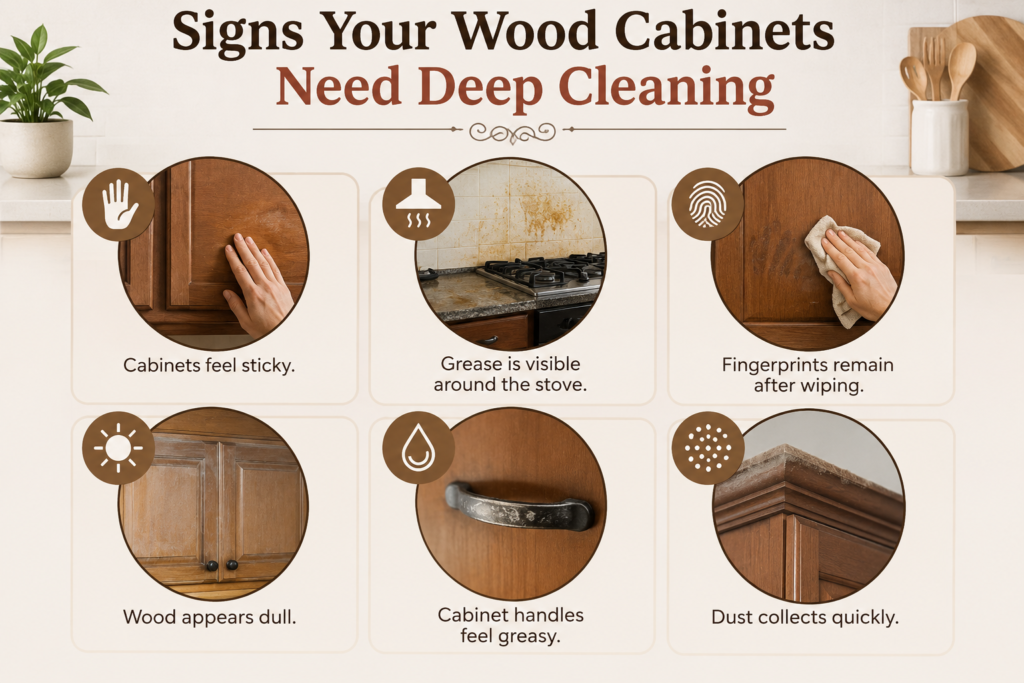
If you notice any of the following, it’s time for a thorough cleaning:
- Cabinets feel sticky.
- Grease is visible around the stove.
- Fingerprints remain after wiping.
- Wood appears dull.
- Cabinet handles feel greasy.
- Dust collects quickly.
Ignoring these signs makes future cleaning more difficult.
Should You Refinish or Simply Clean Your Cabinets?
Many homeowners assume dull cabinets need refinishing.
In reality, they often just need proper cleaning.
If your cabinets have:
- Surface grease
- Dust buildup
- Fingerprints
- Food residue
A deep cleaning may completely restore their appearance.
However, refinishing may be necessary if you notice:
- Peeling finish
- Deep scratches
- Water damage
- Large worn areas
- Exposed bare wood
Cleaning should always be your first step before considering replacement or refinishing.
Recommended Products for Wood Kitchen Cabinets
The right cleaning products make How to Clean Wood Kitchen Cabinets easier while protecting the wood finish.
Mild Dish Soap
Perfect for everyday grease and dirt.
Microfiber Cloth
Safely removes dust and fingerprints without scratching.
Cabinet-Safe Wood Cleaner
Ideal for seasonal deep cleaning.
Baking Soda
Great for removing isolated stubborn stains.
Distilled White Vinegar
A natural cleaning option when diluted and spot-tested first.
Final Thoughts
Learning How to Clean Wood Kitchen Cabinets is one of the easiest ways to protect one of the biggest investments in your kitchen. Regular cleaning not only removes grease, fingerprints, and everyday dirt but also preserves the natural beauty of the wood and extends the life of your cabinetry.
The secret isn’t using expensive cleaning products—it’s using the right techniques consistently. A microfiber cloth, warm water, and mild dish soap are usually all you need to keep your cabinets looking their best. Avoid harsh chemicals, excessive moisture, and abrasive scrubbers, and always dry the surface after cleaning.
By following this complete guide on How to Clean Wood Kitchen Cabinets, you’ll spend less time fighting stubborn grime and more time enjoying a clean, beautiful kitchen that continues to impress family and guests for years to come.
FAQ’s..
How to Clean Wood Kitchen Cabinets without damaging the finish?
The safest way to How to Clean Wood Kitchen Cabinets is by using a microfiber cloth, warm water, and a few drops of mild dish soap. Wipe gently with the grain of the wood, avoid abrasive scrubbers, and dry the surface immediately to protect the cabinet finish.
How often should I clean wood kitchen cabinets?
For the best results when learning How to Clean Wood Kitchen Cabinets, wipe cabinet doors weekly and deep clean both the interior and exterior every three to six months. Regular cleaning prevents heavy grease buildup and keeps the wood looking beautiful.
Can I use vinegar for How to Clean Wood Kitchen Cabinets?
Yes. A mixture of equal parts distilled white vinegar and warm water can be used for How to Clean Wood Kitchen Cabinets, but always test it on a small hidden area first. Some wood finishes may react differently, so mild dish soap remains the safest option for routine cleaning.
Can I use furniture polish after How to Clean Wood Kitchen Cabinets?
Yes, but only if the polish is recommended by your cabinet manufacturer. After How to Clean Wood Kitchen Cabinets, a cabinet-safe wood polish can help restore shine to stained wood cabinets without leaving a heavy residue.
What should I avoid when learning How to Clean Wood Kitchen Cabinets?
When learning How to Clean Wood Kitchen Cabinets, avoid steel wool, abrasive pads, bleach, ammonia, harsh degreasers, steam cleaners, and excessive water. These products can scratch the finish or damage the wood over time.