Painted kitchen cabinets can completely transform the look of your kitchen. Whether you’ve chosen classic white shaker cabinets, modern gray cabinetry, or bold navy blue finishes, freshly painted cabinets create a clean, elegant, and welcoming space. However, they also require proper care to maintain their smooth finish and vibrant color.
The good news is that learning How to Clean Painted Kitchen Cabinets isn’t difficult. You don’t need expensive cleaning products or professional equipment. In fact, a few simple household supplies and the right cleaning routine are enough to remove grease, fingerprints, food splatters, and everyday grime without damaging the paint.
Many homeowners make the mistake of using harsh chemicals or abrasive scrubbers because they think stronger cleaners work better. Unfortunately, these products often do more harm than good. Over time, they can dull the finish, cause scratches, or even shorten the lifespan of your cabinet paint.
This comprehensive guide explains How to Clean Painted Kitchen Cabinets safely using proven techniques inspired by professional cabinet painters and manufacturers. You’ll also learn which products to avoid, how to remove stubborn grease, and how to protect your cabinets so they continue looking freshly painted for years.
Quick Tip: Regular gentle cleaning is far more effective than waiting until grease and grime become difficult to remove.
Why How to Clean Painted Kitchen Cabinets Matters
How to Clean Painted Kitchen Cabinets Your kitchen is one of the busiest rooms in your home. Every day, your cabinets are exposed to:
- Cooking grease
- Steam
- Dust
- Fingerprints
- Food splatters
- Moisture
- Smoke residue
Even if your cabinets appear clean, a thin layer of grease and dust slowly builds up on the painted surface. Areas around the stove and range hood collect the most residue because airborne cooking oils settle there after every meal.
Imagine making breakfast every morning. You open cabinet doors with buttery fingers, prepare lunch, cook dinner, and wipe the counters—but the cabinet fronts often get overlooked. After several weeks, those invisible fingerprints combine with grease and dust, leaving your cabinets dull and sticky.
That’s why knowing How to Clean Painted Kitchen Cabinets properly is just as important as cleaning your countertops or appliances.
Supplies You’ll Need Before You Start
How to Clean Painted Kitchen Cabinets of the best things about cleaning painted cabinets is that you probably already own everything you need.
Essential Cleaning Supplies
Gather these items before you begin:
- Microfiber cloths
- Soft lint-free towels
- Warm water
- Mild dish soap
- Soft sponge
- Bucket or bowl
- Spray bottle (optional)
- Soft toothbrush for corners and decorative details
These simple supplies are safe for most professionally painted kitchen cabinets and help remove dirt without scratching the finish.
Optional Supplies for Deep Cleaning
For cabinets with heavier grease buildup, you may also need:
- Cabinet-safe multi-purpose cleaner
- Baking soda
- Distilled white vinegar
- Kitchen gloves
- Handheld vacuum (for cabinet interiors)
Always read the cleaner’s label before using it and test it on an inconspicuous area first.
Cleaning Products You Should Never Use
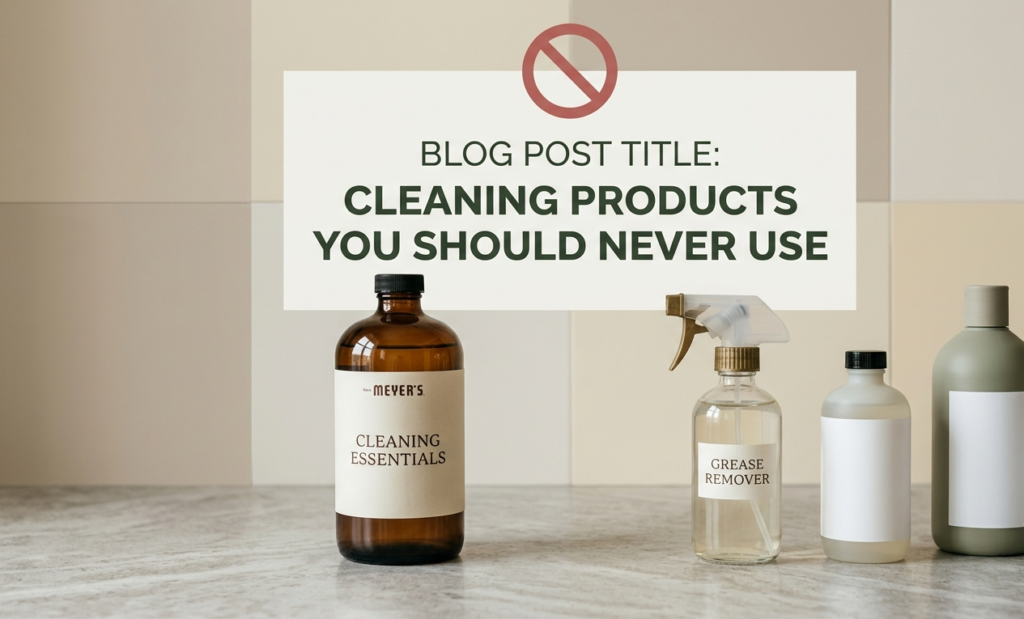
How to Clean Painted Kitchen Cabinets of the biggest mistakes homeowners make is assuming stronger cleaners produce better results.
Unfortunately, many household cleaners are far too aggressive for painted cabinetry.
Avoid Using:
- Magic Erasers for routine cleaning (they work like very fine sandpaper)
- Steel wool
- Scouring pads
- Abrasive cleaning powders
- Bleach
- Ammonia-based cleaners
- Strong solvents
- Harsh degreasers not approved for painted cabinets
Likewise, avoid Wood Kitchen Cabinets or waxes that are intended for natural wood furniture. Painted cabinets don’t benefit from these products, and they may leave behind an oily residue that attracts more dust.
Editor’s Tip: If you’re unsure whether a cleaner is safe, test it on the inside edge of a cabinet door and wait 24 hours before using it on visible surfaces.
Prepare Your Painted Kitchen Cabinets Before Cleaning
Taking a few minutes to prepare your cabinets will make the entire cleaning process easier and help protect the painted finish.
Step 1: Remove Loose Dust
Use a dry microfiber cloth to wipe away dust from:
- Cabinet doors
- Drawer fronts
- Decorative trim
- Crown molding
- Cabinet sides
Dusting first prevents dirt from turning into muddy streaks once water is introduced.
Step 2: Clear the Work Area
For routine weekly cleaning, you can leave everything inside the cabinets.
However, if you’re performing a deep clean, remove:
- Plates
- Bowls
- Glasses
- Pantry items
- Small appliances
Working on one cabinet at a time keeps the process organized and manageable.
Step 3: Mix a Gentle Cleaning Solution
The safest cleaning solution is also the simplest.
Mix:
- Warm water
- A few drops of mild dish soap
Avoid using excessive soap, as too much can leave residue behind.
Step 4: Use a Damp—Not Wet—Cloth
Dip your microfiber cloth into the cleaning solution and wring it out thoroughly.
The cloth should be slightly damp, never dripping wet.
Too much water can seep into cabinet joints and edges, potentially affecting the paint over time.
How to Clean Painted Kitchen Cabinets: A Step-by-Step Cleaning Guide
Now that your cleaning supplies are ready, it’s time to clean your cabinets the right way. The goal isn’t to scrub aggressively—it’s to remove grease, fingerprints, and dirt while protecting the painted finish. By following these simple steps, you’ll keep your cabinets looking freshly painted without risking scratches, peeling, or discoloration.
Step 1: Wipe Cabinets from Top to Bottom
When learning How to Clean Painted Kitchen Cabinets, always begin with the upper cabinets.
Gravity causes dust and dirty water to fall downward, so cleaning from the top prevents you from having to clean the same area twice.
Using your damp microfiber cloth:
- Wipe the cabinet doors.
- Clean the drawer fronts.
- Continue with the cabinet sides.
- Finish with the lower cabinets.
Working in small sections also prevents water from drying before you can wipe it away.
Pro Tip: Clean one cabinet completely before moving to the next. This helps you avoid missed spots.
Step 2: Use Gentle Pressure While Cleaning
One of the biggest misconceptions about How to Clean Painted Kitchen Cabinets is that tougher stains require harder scrubbing.
In reality, painted finishes last longer when cleaned gently.
Instead of applying heavy pressure:
- Place the damp microfiber cloth over the dirty area.
- Let it sit for 20–30 seconds.
- Wipe gently in circular motions.
This allows the warm water and dish soap to loosen grease naturally.
Never use your fingernails or sharp objects to scrape dried food from painted surfaces.
Step 3: Focus on High-Touch Areas
Certain parts of your kitchen cabinets collect significantly more dirt than others.
Pay extra attention to:
- Cabinet handles
- Drawer pulls
- Cabinets above the stove
- Pantry doors
- Trash cabinet pull-outs
- Cabinets near the coffee station
These surfaces are touched dozens of times every day and often collect fingerprints, cooking oils, and food residue.
Cleaning these areas weekly helps prevent stubborn buildup.
Step 4: Clean Decorative Details and Corners
If your cabinets feature raised panels, grooves, or decorative molding, dust and grease can accumulate in these small spaces.
Use a soft toothbrush to gently clean:
- Inside corners
- Decorative trim
- Routed edges
- Around cabinet hinges
Avoid pressing too hard. The brush should loosen dirt—not damage the paint.
Step 5: Remove Soap Residue
Once you’ve cleaned a cabinet, wipe it again with another microfiber cloth lightly dampened with clean water.
This removes leftover soap that could otherwise attract dust over time.
Although this step is often skipped, it’s an important part of How to Clean Painted Kitchen Cabinets because it helps maintain a smooth, streak-free finish.
Step 6: Dry Every Surface Immediately
Never allow painted cabinets to air dry.
Instead, use a clean lint-free towel to dry:
- Cabinet doors
- Drawer fronts
- Edges
- Corners
- Handles
Drying immediately helps protect the painted finish and prevents moisture from collecting around joints and seams.
How to Remove Grease from Painted Kitchen Cabinets
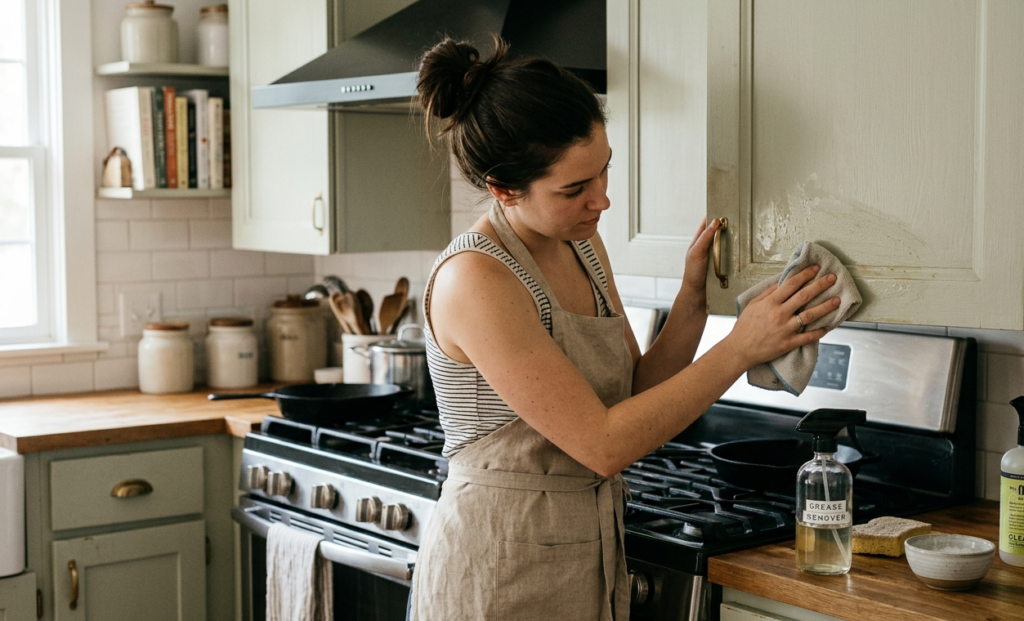
Grease is one of the most common problems homeowners face, especially around the stove.
Even if you don’t fry food often, steam carries tiny oil particles through the kitchen, where they settle on nearby cabinets.
Fortunately, removing grease doesn’t require harsh chemicals.
Method 1: Dish Soap and Warm Water (Best for Everyday Grease)
Mix:
- Warm water
- 3–4 drops of mild dish soap
Dip a microfiber cloth into the solution, wring it out well, and gently wipe the greasy area.
For stubborn grease:
- Hold the damp cloth over the spot for about 30 seconds.
- Wipe gently.
- Repeat if necessary.
This simple method works for most everyday grease without harming painted finishes.
Method 2: Baking Soda Paste (For Stubborn Spots)
If grease remains after using dish soap, make a paste with:
- 2 parts baking soda
- 1 part warm water
Apply a small amount to the stain using a soft cloth.
Let it sit for one to two minutes before gently wiping it away.
Finish by rinsing the area with clean water and drying immediately.
Use this method only for isolated stains rather than routine cleaning.
Method 3: Diluted Vinegar Solution
Many homeowners prefer natural cleaning methods.
Mix:
- Equal parts distilled white vinegar
- Warm water
Lightly dampen a microfiber cloth with the solution and wipe the greasy area.
Because painted finishes vary, always test the solution on a hidden spot before cleaning visible surfaces.
How to Deep Clean Painted Kitchen Cabinets
Weekly cleaning removes everyday dirt, but every few months your cabinets deserve a deeper clean.
Deep cleaning helps remove hidden grease, dust, and crumbs while giving you the opportunity to organize your kitchen.
Step 1: Empty the Cabinets
Remove:
- Plates
- Glasses
- Pantry items
- Small appliances
- Food containers
Working one cabinet at a time keeps everything organized.
Step 2: Vacuum Loose Debris
Use a handheld vacuum or dry microfiber cloth to remove:
- Crumbs
- Flour
- Rice
- Dust
- Spice residue
Cleaning loose debris first prevents it from turning into muddy streaks during washing.
Step 3: Wipe Interior Shelves
Using your mild cleaning solution, wipe:
- Cabinet floors
- Side walls
- Interior doors
- Shelves
Follow with a clean damp cloth to remove soap residue.
Finally, dry every surface completely before returning your kitchen items.
How to Clean Painted Shaker Cabinets
Painted shaker cabinets remain one of the most popular kitchen styles because of their clean, timeless design.
However, the recessed center panel naturally traps dust and grease.
Cleaning them properly is simple.
Dust First
Use a dry microfiber cloth to remove loose dust from the frame and center panel.
Clean the Flat Surfaces
Wipe the cabinet using warm water and mild dish soap.
Work from the outer frame toward the center panel.
Use a Soft Toothbrush
Clean the inside corners with a soft toothbrush to remove dirt trapped in the grooves.
Avoid excessive pressure.
Dry Thoroughly
Finish by drying every surface immediately using a clean lint-free towel.
This simple routine keeps painted shaker cabinets looking crisp and prevents moisture from affecting the finish.
How to Protect Painted Kitchen Cabinets and Keep Them Looking New
Cleaning your cabinets is only half the job. The real secret to preserving their beauty is protecting the painted finish from everyday wear and tear. If you already know How to Clean Painted Kitchen Cabinets, the next step is building simple habits that prevent grease buildup, scratches, and paint damage.
The good news is that you don’t need expensive maintenance products or professional services. A few small changes to your daily routine can significantly extend the life of your painted cabinets.
Common Mistakes to Avoid When Cleaning Painted Kitchen Cabinets
Many homeowners unintentionally damage their cabinets because they use the wrong products or cleaning techniques. Avoiding these mistakes is just as important as knowing How to Clean Painted Kitchen Cabinets correctly.
Using Abrasive Cleaning Tools
Painted cabinets have a protective finish that can become scratched if you use rough cleaning tools.
Avoid:
- Steel wool
- Scouring pads
- Hard-bristle brushes
- Abrasive sponges
Instead, always choose a soft microfiber cloth or a non-abrasive sponge.
Using Too Much Water
Water is necessary for cleaning, but excessive moisture can damage cabinet joints and edges.
Never soak cabinet doors or spray large amounts of water directly onto painted surfaces.
Instead:
- Dampen your cloth.
- Wring out excess water.
- Wipe gently.
- Dry immediately.
Ignoring Grease Build-Up
Grease becomes harder to remove the longer it stays on your cabinets.
A quick five-minute wipe every week is much easier than spending hours deep cleaning months of accumulated grime.
Using Wood Polish on Painted Cabinets
This is one of the biggest mistakes homeowners make.
Wood polishes and furniture waxes are designed for natural wood—not painted surfaces.
Many contain oils or waxes that leave behind residue and actually attract more dust and grease.
For How to Clean Painted Kitchen Cabinets, stick with mild dish soap and water unless your cabinet manufacturer recommends another product.
Scrubbing Too Hard
If a stain doesn’t disappear immediately, resist the temptation to scrub harder.
Instead:
- Let the cleaning solution soften the dirt.
- Wipe gently.
- Repeat if necessary.
Gentle cleaning always protects the paint better than aggressive scrubbing.
Best Maintenance Tips for Painted Kitchen Cabinets

Cleaning removes dirt, but maintenance prevents it from returning quickly.
Here are a few simple habits that make a noticeable difference.
1. Dust Cabinets Weekly
Dust may seem harmless, but it mixes with airborne grease and forms a sticky film over time.
A dry microfiber cloth removes loose dust in just a few minutes.
2. Wipe Spills Immediately
Coffee splashes.
Tomato sauce.
Cooking oil.
Juice.
These everyday spills are easiest to remove while they’re fresh.
Waiting several days often means much more work later.
3. Always Use Cabinet Handles
Handles and knobs aren’t only decorative.
They’re designed to reduce fingerprints on painted surfaces.
Opening cabinet doors by their edges transfers natural skin oils directly onto the paint.
4. Turn on Your Range Hood
One of the simplest ways to reduce grease buildup is using your kitchen ventilation every time you cook.
The range hood captures airborne grease before it settles on nearby cabinets.
5. Keep Humidity Under Control
Wood naturally expands and contracts as humidity changes.
Although quality cabinet paint is durable, excessive moisture can eventually contribute to small cracks around cabinet joints.
Keeping indoor humidity around 40–50% helps protect your cabinetry throughout the year.
How Often Should You Clean Painted Kitchen Cabinets?
A consistent routine keeps your cabinets looking their best without requiring hours of work.
| Cleaning Task | Recommended Frequency |
|---|---|
| Dust cabinet doors | Once a week |
| Wipe exterior surfaces | Once a week |
| Clean handles and knobs | Every 2–4 weeks |
| Remove grease around stove | Weekly |
| Deep clean inside cabinets | Every 3–6 months |
| Inspect paint finish | Twice a year |
Following this schedule prevents grease from becoming difficult to remove.
Best Cleaning Products for Painted Kitchen Cabinets
The safest cleaners are usually the simplest.
Mild Dish Soap
Best for:
- Everyday cleaning
- Fingerprints
- Light grease
- Weekly maintenance
This should be your first choice for routine cabinet care.
Cabinet-Safe Multi-Purpose Cleaner
Ideal for:
- Heavy grease buildup
- Seasonal deep cleaning
- Sticky cabinet surfaces
Always verify that the cleaner is safe for painted finishes.
Baking Soda Paste
Useful for:
- Small grease stains
- Sticky spots
Use sparingly and only on isolated stains.
Distilled White Vinegar Solution
Suitable for homeowners who prefer natural cleaning methods.
Always spot-test first because cabinet finishes vary.
A Simple Story Every Homeowner Can Relate To
A homeowner invested thousands of dollars in professionally painted white cabinets during a complete kitchen remodel.
For months, they looked perfect.
Then one evening, while cooking spaghetti, a few drops of tomato sauce landed on a cabinet door. “I’ll clean it tomorrow,” they thought.
Tomorrow became next week.
By then, the sauce had dried and mixed with cooking grease, making it much harder to remove. Fortunately, the paint wasn’t damaged—but the experience taught an important lesson.
Now, after every meal, they spend just two minutes wiping nearby cabinet doors.
That small habit keeps their kitchen looking freshly remodeled all year long.
How to Clean Painted Kitchen Cabinets
If you only remember a few things from this guide, let them be these:
- Clean painted kitchen cabinets weekly to prevent grease and grime from building up.
- Use a microfiber cloth, warm water, and mild dish soap for everyday cleaning.
- Avoid abrasive scrubbers, steel wool, Magic Erasers, bleach, and harsh chemical cleaners that can damage painted finishes.
- Always wipe cabinets dry immediately after cleaning to prevent moisture damage.
- Clean grease around the stove as soon as possible before it hardens.
- Deep clean your cabinets every 3–6 months to keep both the interior and exterior fresh.
- Use cabinet handles instead of touching the painted surface whenever possible.
- Regular maintenance is the easiest way to extend the life of your painted kitchen cabinets.
Expert Cleaning Checklist
Save this checklist and use it as part of your regular kitchen cleaning routine.
Weekly
- Dust cabinet doors with a microfiber cloth.
- Wipe fingerprints from handles and drawer fronts.
- Remove grease around the stove.
- Dry cabinet surfaces after cleaning.
Monthly
- Clean cabinet handles and knobs thoroughly.
- Inspect cabinet edges for chips or scratches.
- Clean decorative grooves and corners.
- Check for sticky residue around high-touch areas.
Every 3–6 Months
- Empty cabinets completely.
- Vacuum crumbs and dust.
- Wash cabinet interiors.
- Clean shelves and organizers.
- Reorganize pantry items.
Yearly
- Perform a complete cabinet inspection.
- Tighten loose hinges and hardware.
- Touch up small paint chips if needed.
- Check for signs of moisture damage.
Buying Guide: Choosing the Best Cleaner for Painted Kitchen Cabinets
There are countless Laminate Kitchen Cabinets cleaners available, but not all are safe for painted cabinetry.
When shopping for a cleaner, look for these features:
✔ Safe for Painted Surfaces
Always read the product label to ensure it’s suitable for painted cabinets.
✔ Non-Abrasive Formula
Gentle cleaners protect the paint while still removing grease effectively.
✔ Low Residue
Choose products that rinse clean and don’t leave behind sticky residue that attracts dust.
✔ Easy to Use
The best cabinet cleaners require very little scrubbing and work with a soft microfiber cloth.
Recommended Cleaning Products
While many products can clean painted cabinets, these options are among the safest and most practical.
Mild Dish Soap
Best for: Weekly cleaning, fingerprints, and light grease.
Cabinet-Safe Multi-Purpose Cleaner
Best for: Seasonal deep cleaning and stubborn grime.
Distilled White Vinegar Solution
Best for: Natural cleaning enthusiasts.
Always spot-test before use.
Baking Soda Paste
Best for: Small, isolated grease stains.
Use gently and only when necessary.
Final Thoughts
Learning How to Clean Painted Kitchen Cabinets doesn’t require expensive products or complicated techniques. Consistent care, gentle cleaning, and the right supplies will keep your cabinets looking beautiful for years. Knowing How to Clean Painted Kitchen Cabinets is one of the easiest ways to protect your kitchen investment. Painted cabinets add beauty, brightness, and value to your home, but they also need consistent care to stay looking their best.
The key is to keep your cleaning routine simple. A microfiber cloth, warm water, and a small amount of mild dish soap are usually all you need to remove fingerprints, grease, and everyday dirt without damaging the painted finish. Avoid harsh chemicals, abrasive scrubbers, and excessive moisture, and always dry your cabinets after cleaning.
Whether your kitchen features timeless white shaker cabinets or bold modern colors, following the steps in this guide will help preserve their finish, reduce wear, and extend their lifespan. By making How to Clean Painted Kitchen Cabinets part of your regular household routine, you’ll spend less time dealing with stubborn grime and more time enjoying a clean, beautiful kitchen that looks freshly updated year after year. By following this complete guide on How to Clean Painted Kitchen Cabinets, you’ll have the confidence to clean, protect, and maintain your cabinets using safe, effective methods that deliver long-lasting results.
FAQ’S..
How to Clean Painted Kitchen Cabinets without damaging the paint?
The safest way to How to Clean Painted Kitchen Cabinets is by using a microfiber cloth, warm water, and a few drops of mild dish soap. Wipe the cabinets gently, avoid abrasive scrubbers, and always dry the surface immediately to protect the painted finish.
What is the best cleaner for How to Clean Painted Kitchen Cabinets?
The best cleaner for How to Clean Painted Kitchen Cabinets is a simple mixture of warm water and mild dish soap. For stubborn grease, you can use a cabinet-safe cleaner or a baking soda paste after testing it on a hidden area.
How often should I clean painted kitchen cabinets?
For the best results when learning How to Clean Painted Kitchen Cabinets, wipe the exterior once a week and deep clean both the inside and outside every 3–6 months. Regular cleaning prevents grease, fingerprints, and dust from building up.
Can I use vinegar for How to Clean Painted Kitchen Cabinets?
Yes. A mixture of equal parts distilled white vinegar and warm water can be used for How to Clean Painted Kitchen Cabinets, but always test it on a hidden area first. Some painted finishes may react differently, so mild dish soap remains the safest everyday option.
How do I deep clean painted kitchen cabinets?
When performing How to Clean Painted Kitchen Cabinets as a deep cleaning project, empty the cabinets, vacuum loose crumbs, wipe all interior and exterior surfaces with warm soapy water, rinse with a clean damp cloth, and dry every surface thoroughly before restocking.