
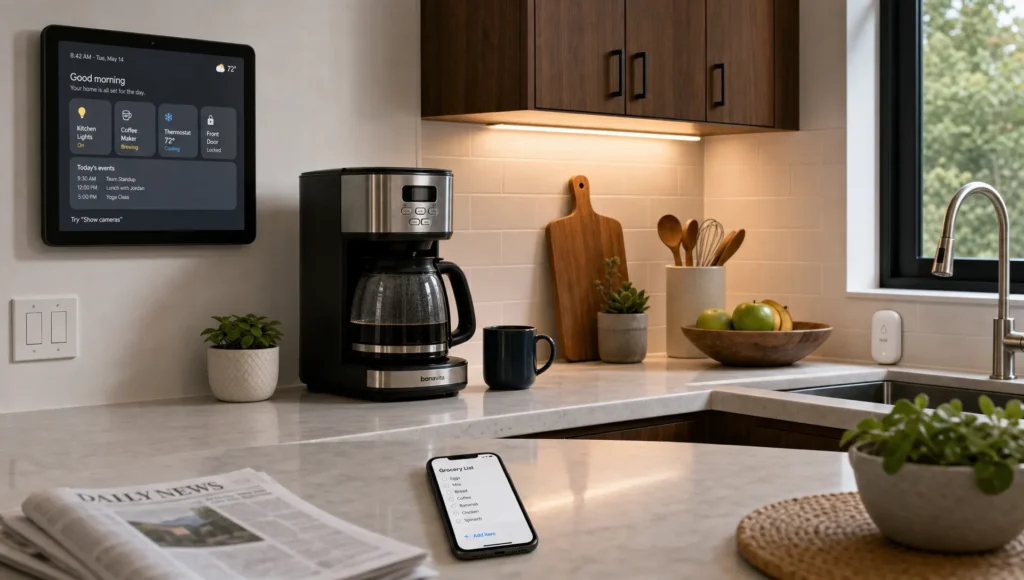
A smart kitchen is not about filling every countertop with screens or buying the newest appliance just because it connects to an app. The best smart kitchens make everyday routines easier: coffee starts when you need it, lights turn on when your hands are full, grocery lists update before you forget, and cooking feels less rushed.
For most homes, the right approach is practical and gradual. Start with the habits that slow you down, then add technology where it removes friction. A smart kitchen should feel calmer, safer, and more organized, not more complicated.
Start with the daily problems you want to solve
Before buying devices, walk through a normal day in your kitchen. Where do you lose time? Where do you repeat the same task over and over? Where do mess, clutter, or forgotten ingredients create stress?
Common smart kitchen goals include:
- Saving time during breakfast, lunch prep, and weeknight dinners
- Making cooking safer with timers, alerts, and temperature monitoring
- Reducing food waste through better storage reminders
- Improving lighting for chopping, cleaning, and late-night snacks
- Lowering energy and water use with smarter appliance habits
- Creating a kitchen that is easier for kids, guests, and older adults to use
This step matters because a smart kitchen should serve your routine. A family that batch cooks on Sundays needs different solutions than someone who makes quick meals in a small apartment. If your kitchen already needs basic upgrades, combine smart planning with practical improvements from Kitchen Campaign’s guide to kitchen upgrading tips so the space works better before you layer in technology.
Build the foundation: Wi-Fi, outlets, and compatibility
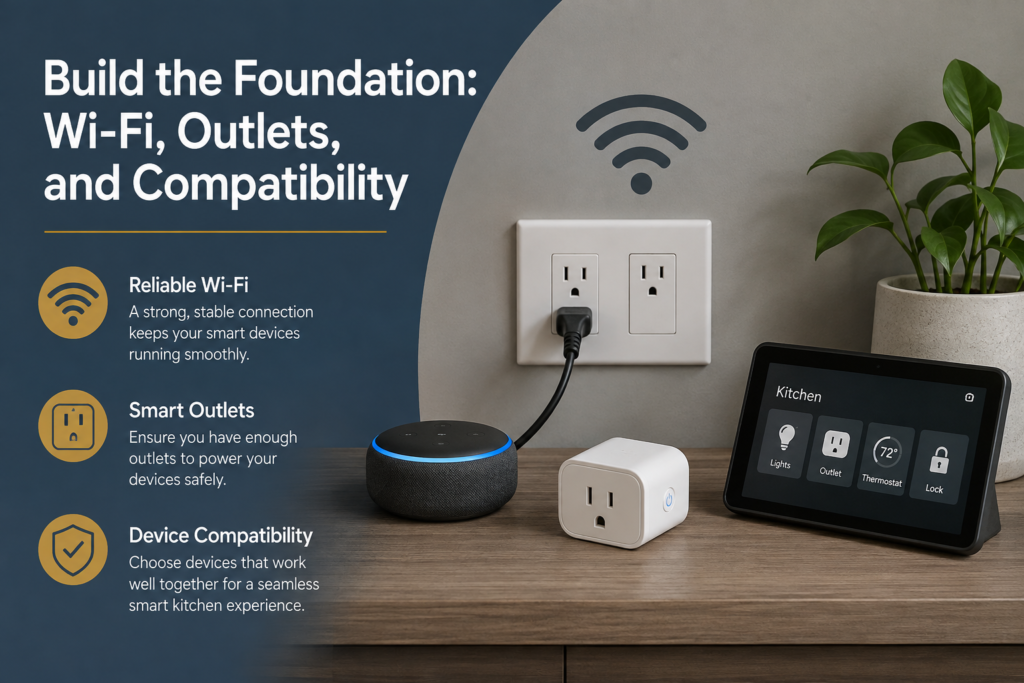
Smart devices are only useful when they work reliably. A weak signal, crowded outlets, or apps that do not talk to each other can turn helpful tools into daily annoyances.
Start with strong Wi-Fi coverage in the kitchen, especially if you plan to use connected appliances, cameras, smart speakers, or smart displays. Kitchens can be tricky because refrigerators, ovens, metal fixtures, and thick walls may interfere with signals. If devices drop offline often, consider moving your router, adding a mesh node, or using devices that connect through a smart home hub.
Compatibility is the next major decision. Many newer devices support Matter, a smart home standard designed to help products work across major ecosystems. The Connectivity Standards Alliance explains Matter as a way to improve interoperability between smart home products. You do not need every device to support it, but choosing compatible products can reduce app clutter and make future upgrades easier.
Power access also matters. Smart displays, under-cabinet lighting, appliance hubs, charging drawers, and robot vacuums all need thoughtful placement. If you are remodeling, talk with a licensed electrician about outlets, GFCI protection, and code requirements. If you are renting or not opening walls, focus on plug-in lighting, smart plugs, and rechargeable devices.
Choose smart devices by how much effort they remove
A good smart kitchen is not measured by how many devices it has. It is measured by how often those devices quietly help.
Use this table to prioritize upgrades based on practical value:
| Smart kitchen upgrade | Best for | Daily-life benefit | Watch out for |
|---|---|---|---|
| Smart speaker or display | Timers, recipes, voice control | Hands-free help while cooking | Place it away from splashes and heat |
| Smart lighting | Prep zones, cabinets, nighttime use | Better visibility and mood control | Avoid overly cool light near dining areas |
| Smart plugs | Coffee makers, lamps, small appliances | Simple schedules and remote shutoff | Only use with appliances rated for safe plug control |
| Smart thermometer | Meat, baking, reheating | More accurate cooking and food safety | Clean probes properly after use |
| Smart scale | Baking, meal prep, portioning | Less guessing and fewer dirty cups | Choose one with easy-to-read measurements |
| Connected refrigerator | Inventory, temperature alerts | Helps track food and reduce waste | Premium feature that may not be necessary for every home |
| Smart dishwasher | Scheduling, cycle alerts | Easier cleanup management | Check energy and water efficiency, not just app features |
| Smart faucet | Hand washing, filling pots | Touchless or measured water control | Installation quality is important |
If you are just starting, the most useful first purchases are usually a smart speaker or display, better lighting, and a few well-chosen smart plugs. These are relatively simple upgrades that can change how the kitchen feels without requiring a full renovation.
Organize the kitchen into smart zones
Technology works best when the kitchen layout already supports the task. Think of your space as a set of zones: prep, cooking, cleaning, storage, and serving. Each zone should have the tools, lighting, and controls that match the work happening there.
In the prep zone, prioritize bright task lighting, easy access to cutting boards, and a voice assistant or display that can handle timers and recipe steps. In the cooking zone, focus on safety alerts, temperature tools, and ventilation controls. In the cleaning zone, smart leak sensors under the sink and dishwasher alerts can prevent bigger problems. In the storage zone, inventory apps, labels, and clear bins may be more useful than a high-end refrigerator with every feature available.
Small kitchens benefit even more from zoning because every inch has to work harder. If your space is narrow, Kitchen Campaign’s galley kitchen layout ideas can help you think through traffic flow, storage, and work areas before adding smart devices.
Make cooking easier, not more distracting
Connected cooking tools should reduce guesswork. A smart oven, precision cooker, probe thermometer, or app-connected scale can help you cook with more confidence, especially when timing matters.
Voice control is useful when your hands are messy. You can set multiple timers, convert measurements, add ingredients to a grocery list, or ask for a safe internal cooking temperature without touching a phone. This is one of the simplest ways a smart kitchen improves daily life.
Smart displays can also help with recipes, but placement is important. Keep the screen visible from the prep area without blocking counter space. Avoid placing it directly behind steam, grease, or splashes. If you prefer a lower-tech setup, a tablet stand and washable recipe cards may be enough.
Do not forget the basics. A sharp knife, sturdy cutting board, accurate measuring tools, and reliable pans still matter more than flashy gadgets. If you are building your kitchen from scratch, start with the fundamentals in Kitchen Campaign’s guide to the best kitchen tools for beginners before deciding which connected tools deserve a place on your counter.
Use smart storage to reduce food waste
Food waste often happens because ingredients disappear in the back of the fridge, leftovers go unlabeled, or you forget what you already own. A smart kitchen can help, but the solution does not have to be expensive.
A simple system can include clear containers, date labels, a shared grocery list, and a weekly fridge check. Smart labels, inventory apps, and fridge cameras can add convenience, especially for busy households, but they work best when paired with consistent habits.
For food safety, temperature matters. The U.S. government food safety site recommends keeping the refrigerator at 40°F or below and the freezer at 0°F. You can review safe storage guidance through the FoodSafety.gov FoodKeeper resources. A basic fridge thermometer or a connected temperature sensor can give you peace of mind, especially if your refrigerator is older or your power goes out often.
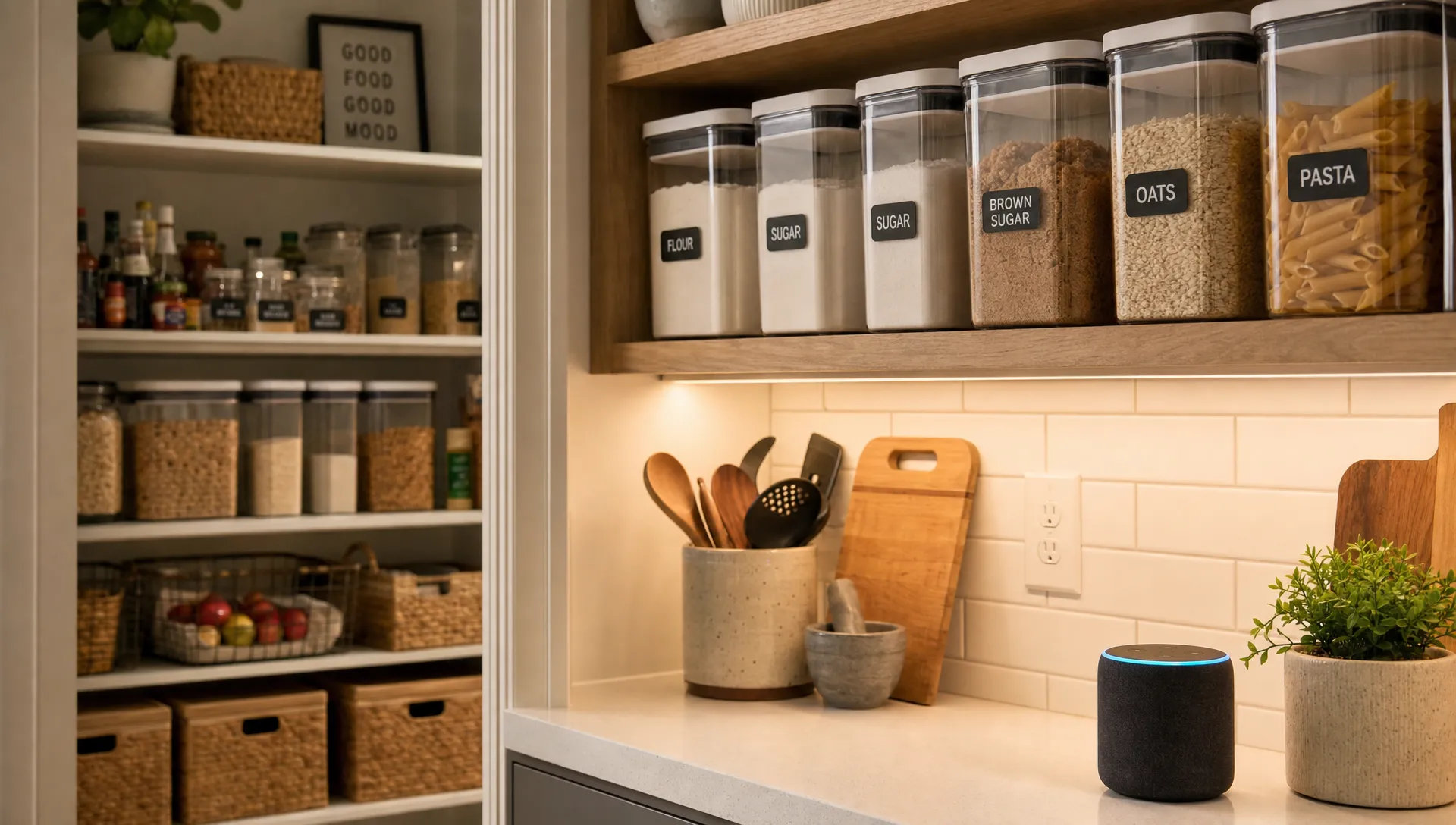
Smart storage is also about visibility. Store everyday ingredients at eye level, group snacks or breakfast items together, and keep leftovers in a designated area. When the kitchen shows you what you have, you buy less of what you do not need.
Save energy and water without micromanaging everything
A smart kitchen can make efficiency easier because it turns good habits into automatic routines. The goal is not to obsess over every watt or gallon. It is to set up systems that quietly help you waste less.
Lighting is a simple example. Motion sensors can turn on soft night lighting and turn it off automatically. Smart bulbs can dim during dinner and brighten during prep. Under-cabinet LEDs can make the kitchen feel more functional while using less energy than older lighting types.
Appliances matter too. The U.S. Department of Energy offers guidance on appliances and electronics efficiency, including how everyday choices affect energy use. When replacing a dishwasher, refrigerator, or range hood, look beyond app features and compare energy performance, size, repairability, and real household needs.
Water-saving upgrades can include touchless faucets, leak sensors, and dishwasher scheduling. A dishwasher alert that reminds you when a cycle is done may sound small, but it can reduce forgotten loads and help keep the kitchen moving. Leak sensors under the sink, behind the refrigerator, and near the dishwasher are especially valuable because they can warn you before a small drip becomes floor damage.
If sustainability is one of your goals, smart features pair well with durable, low-waste choices. Kitchen Campaign’s guide to eco friendly kitchen products can help you combine convenience with smarter materials and everyday habits.
Design lighting that changes with the day
Lighting is one of the most underrated parts of a smart kitchen. It affects safety, mood, cleaning, and how easy it is to cook.
A layered plan works best. Use ceiling lights for general brightness, under-cabinet lights for chopping and prep, pendant lights for islands, and soft accent lights for evening. Smart controls let you create scenes for different moments: morning coffee, dinner prep, cleanup, or late-night water runs.
Color temperature matters. Cooler light can help with detailed prep work, while warmer light feels better for eating and relaxing. If your kitchen and dining area share one open space, dimmable smart lighting can help the room shift from work mode to gathering mode.
For families, motion-activated low lighting near the floor or under cabinets can make nighttime movement safer. For aging-in-place design, voice control and brighter task lighting can make the kitchen easier to use without adding clutter.
Keep privacy and security in the plan
Any connected kitchen device is part of your home network, so security deserves attention. This is especially true for devices with microphones, cameras, door sensors, or purchase history.
Start with basic digital hygiene. Use strong unique passwords, enable two-factor authentication when available, update device firmware, and remove devices you no longer use. The Federal Trade Commission shares practical guidance on securing your home Wi-Fi network, which is a smart first step before adding more connected products.
Be selective with cameras in the kitchen. A camera inside a refrigerator may be useful for grocery checks, but a camera facing the whole room may feel invasive. Review privacy settings, voice recording options, and data-sharing permissions during setup. If a feature does not help your daily life, turn it off.
A separate guest network for smart devices can also be a practical choice. It keeps many connected products away from laptops, phones, and work devices. If you are not comfortable configuring your network, ask a trusted technician for help.
Build your smart kitchen in phases
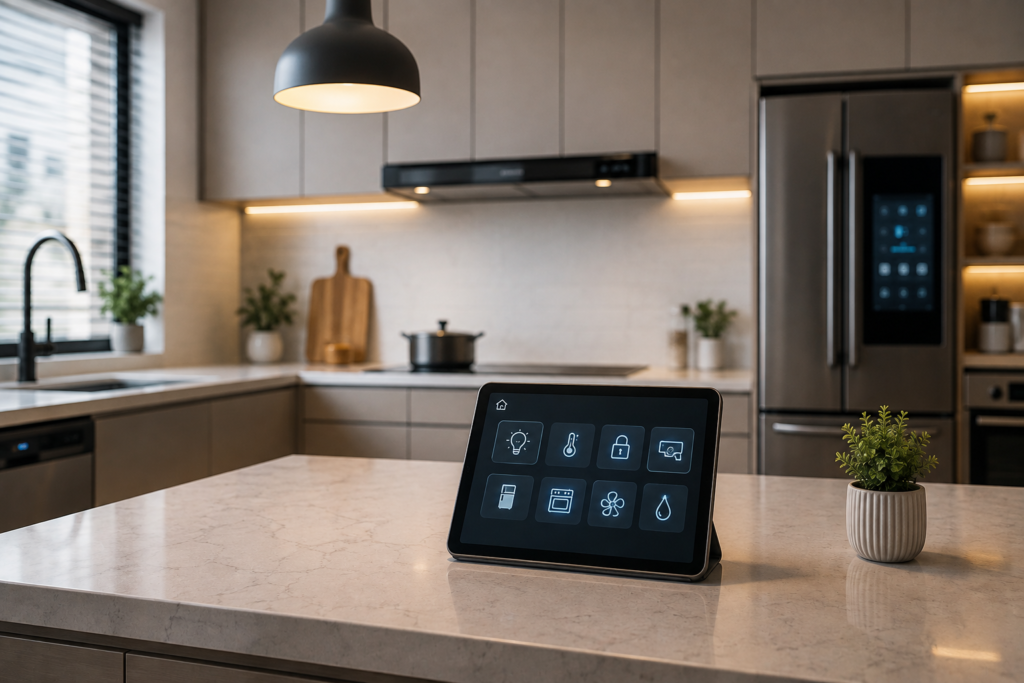
You do not need to transform everything at once. In fact, a phased approach usually leads to better decisions because you can learn what actually helps.
A starter phase might include smart lighting, a voice assistant, a shared grocery list, and a few smart plugs. This is enough to improve timers, reminders, visibility, and morning routines.
A mid-level phase might add leak sensors, a smart thermometer, a connected scale, improved under-cabinet lighting, and appliance alerts. This level is ideal for people who cook often and want better control without replacing major appliances.
A remodel phase can include hardwired lighting zones, built-in charging, smart ventilation, connected appliances, touchless fixtures, and better outlet placement. This is the time to coordinate technology with cabinetry, traffic flow, and long-term accessibility.
The smartest choice is often the one that disappears into your routine. If you have to open five apps to make dinner, the system is too complicated. If the lights, timers, lists, and alerts simply support what you already do, the kitchen is working the way it should.
Maintain the system so it stays helpful
A smart kitchen needs light maintenance, just like any other part of the home. Set a calendar reminder every few months to check device updates, clean sensors, replace batteries, and remove unused automations.
Review your routines as your household changes. A new baby, a school schedule, a home office routine, or a new dietary goal can all change what you need from the kitchen. Smart systems are most valuable when they adapt with you.
Also watch for clutter creep. If a device sits unused for months, it may not belong in your kitchen. The best smart kitchen still has clear counters, easy storage, and tools you enjoy using.
Make your kitchen smarter one useful upgrade at a time
A smart kitchen should make cooking, cleaning, storage, and everyday routines feel easier. Start with the friction points you notice most, choose reliable devices that fit your lifestyle, and build in phases so the space stays simple and enjoyable.
For more practical kitchen ideas, design inspiration, and home-friendly upgrades, explore the latest guides on Kitchen Campaign.
Conclusion
A smart kitchen is not defined by the number of connected devices you own—it is defined by how well those devices simplify your daily routine. By focusing on your household’s real needs, you can build a smart kitchen that saves time, improves safety, reduces food waste, and makes cooking more enjoyable.
Start with practical upgrades like smart lighting, voice assistants, or smart plugs, then expand your smart kitchen in phases as your budget and lifestyle evolve. Choosing reliable, compatible technology will help you create a space that stays organized, efficient, and easy to use for years to come.
Whether you’re upgrading an existing kitchen or planning a complete remodel, the best smart kitchen is one that works seamlessly in the background, making everyday tasks easier while keeping your home comfortable, functional, and future-ready.
FAQ’S…
What is the first thing to buy for a smart kitchen?
Start with smart lighting or a smart speaker because both improve daily routines immediately. They help with visibility, timers, reminders, and hands-free control without requiring a major renovation.
Do I need smart appliances to have a smart kitchen?
No. A smart kitchen can be built with simple upgrades like motion lighting, shared grocery lists, leak sensors, smart plugs, and better organization. Major appliances are optional and should be chosen only when they solve a real problem.
Are smart kitchen devices safe to use?
They can be safe when installed and used correctly. Follow manufacturer instructions, avoid overloading outlets, use smart plugs only with appropriate appliances, and keep connected devices updated for security.
How can a smart kitchen help reduce food waste?
It can help with shared grocery lists, fridge temperature alerts, inventory apps, date labels, and better storage visibility. The most effective system combines technology with simple habits like weekly fridge checks.
Is a smart kitchen worth it in a small space?
Yes, if you choose carefully. Small kitchens often benefit from under-cabinet lighting, compact smart speakers, shared lists, and better storage systems. Avoid bulky devices that take up valuable prep space.