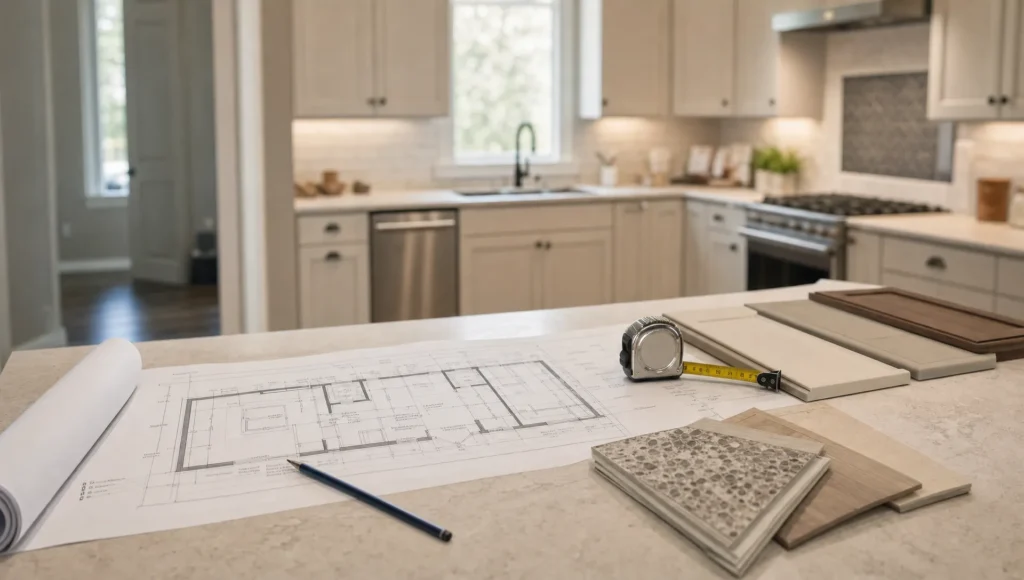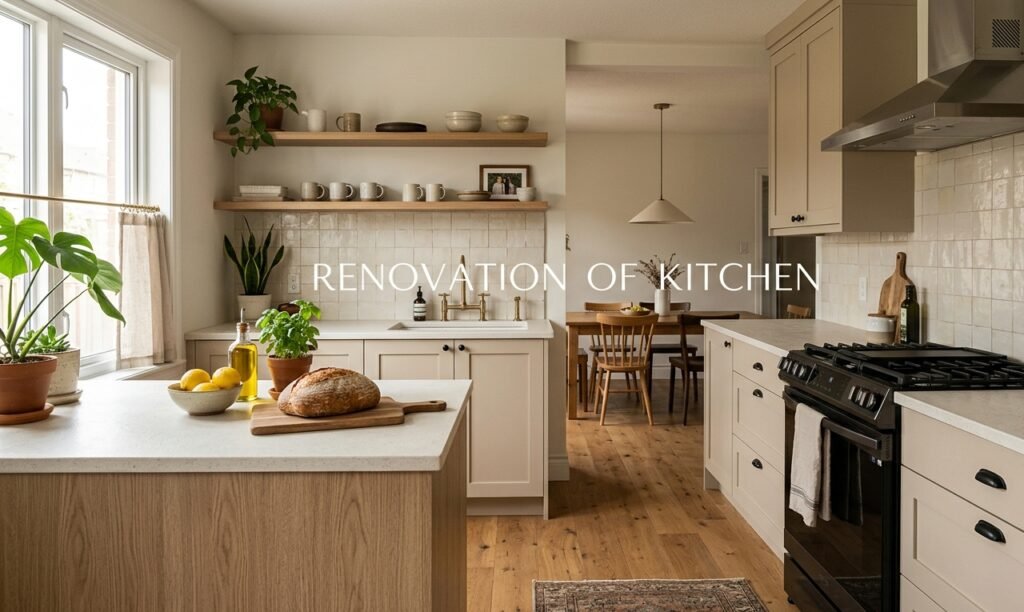
A renovation of kitchen can improve the way your home looks, cooks, stores, and gathers. It can also become expensive quickly if you begin with inspiration photos instead of a clear plan. The difference between a renovation of kitchen that feels controlled and one that spirals often comes down to decisions made before demolition starts.
Staying on budget does not mean choosing the cheapest option at every turn. It means matching your scope to your money, making selections early, understanding where costs hide, and leaving room for the unexpected. Whether you are refreshing cabinets or planning a full renovation of kitchen layout, the smartest budget is built around how you actually use the space.
Define the renovation before you define the style
Before you choose cabinet colors, countertops, or pendant lights, decide what problem the renovation needs to solve. A kitchen that looks outdated but functions well needs a different budget than one with poor storage, bad lighting, damaged flooring, and an inefficient layout.
Start by writing down your real reasons for renovating. Maybe your family needs better traffic flow. Maybe your cabinets are worn but the layout works. Maybe your appliances are failing, or your kitchen lacks counter space for daily cooking. These answers shape the scope, and scope is the biggest driver of cost.
A simple way to keep priorities clear is to divide your wishlist into three categories:
- Must fix: Safety, damaged materials, failing appliances, broken storage, plumbing or electrical issues, and layout problems that affect daily use.
- Would improve: Better lighting, updated cabinet fronts, more drawers, a larger sink, improved backsplash, or easier-to-clean surfaces.
- Nice to have: Luxury finishes, specialty storage inserts, built-in coffee stations, premium hardware, custom range hoods, and statement materials.
When the budget gets tight, this list tells you what to protect and what to pause.
Set a real maximum budget, then design below it

Many homeowners make the mistake of treating their full available amount as the design budget. That leaves no room for hidden damage, price changes, permit requirements, or small upgrades that appear during the project.
A safer approach is to set your true maximum number, then hold back a contingency before you start selecting materials. For many kitchen projects, a contingency of 10% to 20% is a practical planning range. Older homes, layout changes, wall removal, and plumbing or electrical updates usually need more cushion than a simple cosmetic refresh.
For example, if your maximum spend is $30,000, you might reserve $4,500 as contingency and design the project around $25,500. That does not mean you intend to spend the reserve. It means you are protecting yourself from having to cut essential work halfway through the renovation of kitchen.
| Budget step | What to do | Why it protects your money |
|---|---|---|
| Set your ceiling | Decide the absolute maximum you can spend | Prevents emotional overspending during selections |
| Remove contingency first | Hold back 10% to 20% before planning finishes | Gives you room for surprises and corrections |
| Build the working budget | Design the kitchen using only the remaining amount | Keeps the project realistic from the start |
| Track every change | Record upgrades, credits, and extra labor in one place | Stops small decisions from becoming a large overrun |
If you plan to finance the project, compare payment options carefully before signing. The Consumer Financial Protection Bureau offers guidance on home equity borrowing, which can help you understand risks before using your home to fund improvements.
Keep the layout if your budget is limited
The fastest way to increase a renovation of kitchen budget is to move the major systems. Relocating sinks, dishwashers, gas lines, vents, or electrical circuits can add labor, permits, and repair work behind walls and floors. Sometimes layout changes are worth it, especially if the current kitchen truly does not function. But if your existing layout is workable, keeping plumbing and appliances in roughly the same positions can preserve a major portion of your budget.
Instead of moving everything, look for lower-disruption improvements. Add drawers where deep cabinets are hard to use. Improve lighting layers. Replace cabinet doors or hardware. Upgrade the sink and faucet. Install a more practical pantry solution. These choices can change the daily experience of the kitchen without rebuilding the room from scratch.
If you are still deciding how much change your kitchen needs, Kitchen Campaign has a helpful collection of budget-friendly kitchen upgrading ideas that can inspire improvements short of a full renovation of kitchen.
Measure, draw, and confirm before buying anything
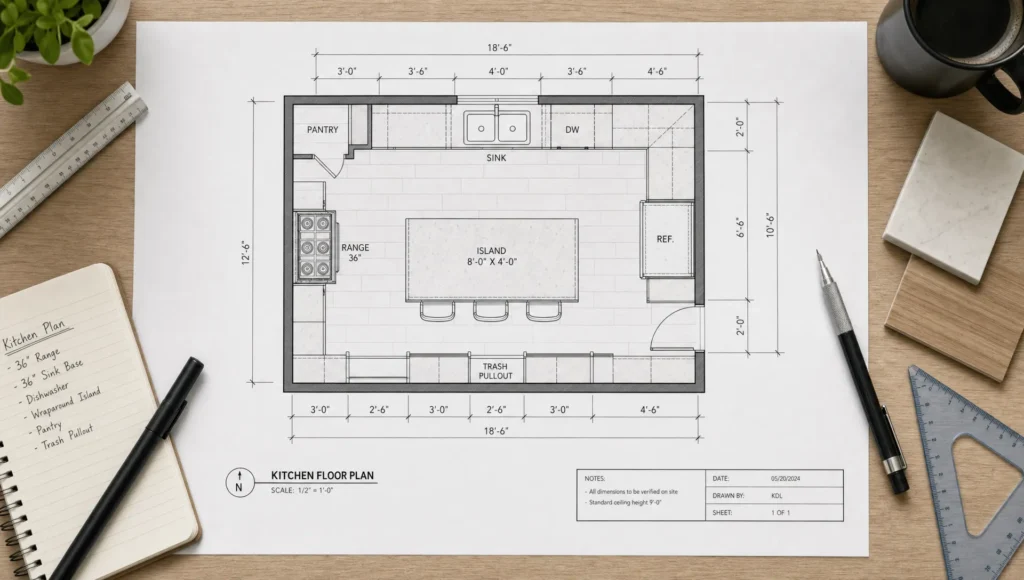
Accurate planning prevents expensive corrections. A wrong cabinet size, refrigerator clearance issue, or poorly placed outlet can create delays and extra labor. Before ordering materials, measure the renovation of kitchen carefully and document the location of doors, windows, ceiling heights, plumbing, outlets, vents, and any structural features.
Even if you hire a designer or contractor, having your own measurements helps you ask better questions. It also makes it easier to compare quotes because every professional is pricing the same basic scope.
Good kitchen planning should answer these questions before work starts:
- Will appliance doors open fully without blocking walkways?
- Is there enough landing space near the range, sink, and refrigerator?
- Are drawers and cabinet doors clear of corners, handles, and walls?
- Does the lighting plan include task lighting as well as ambient lighting?
- Are outlets located where small appliances will actually be used?
For more detailed planning, review these kitchen drawings that help you plan every detail before you finalize your layout. Drawings are not just design documents. They are budget-control tools.
Choose the right renovation level

Not every kitchen needs a full gut renovation of kitchen. Choosing the correct project level is one of the best ways to control spending while still improving the room.
| Renovation level | Best for | Typical scope | Budget risk |
|---|---|---|---|
| Cosmetic refresh | A functional kitchen that looks dated | Paint, hardware, lighting, faucet, backsplash, decor | Lower, if no hidden repairs are involved |
| Cabinet-focused update | A good layout with worn cabinet fronts | Refacing, new doors, paint, hardware, storage upgrades | Moderate, depending on cabinet condition |
| Partial remodel | A kitchen needing better function and finishes | Some cabinets, surfaces, appliances, lighting, flooring | Moderate to high, especially with trade work |
| Full renovation | A poor layout, damage, or major lifestyle change | Layout, cabinets, surfaces, utilities, flooring, appliances | Highest, due to labor, permits, and hidden conditions |
Cabinets are often one of the largest visual and financial decisions in a kitchen project. If the cabinet boxes are sturdy and the layout works, refacing may be worth exploring before replacing everything. Kitchen Campaign’s guide to refacing kitchen cabinets cost can help you understand where savings may come from and when replacement might still make more sense.
Get quotes that are detailed enough to compare
A low quote is not automatically a good quote. Sometimes it is low because it excludes work you assumed was included. The goal is not to find the cheapest contractor. The goal is to compare complete, realistic bids based on the same scope.
Ask each contractor to separate labor, materials, allowances, demolition, disposal, permits, electrical, plumbing, flooring, cabinetry, countertop installation, and finish work where possible. You do not need every screw itemized, but you do need enough detail to understand what you are buying.
The Federal Trade Commission recommends checking contractors carefully, getting written estimates, and avoiding pressure tactics. That advice matters because renovation of kitchen involves your money, your home, and weeks of access to your living space.
A good quote should clarify:
- What is included and excluded
- Who buys materials and appliances
- Whether permits are included
- How change orders are priced
- Payment schedule and deposit amount
- Warranty or workmanship terms
- Cleanup and disposal responsibilities
If one quote is much lower than the others, ask why. It may be a genuine efficiency, or it may be missing important work.
Use allowances carefully
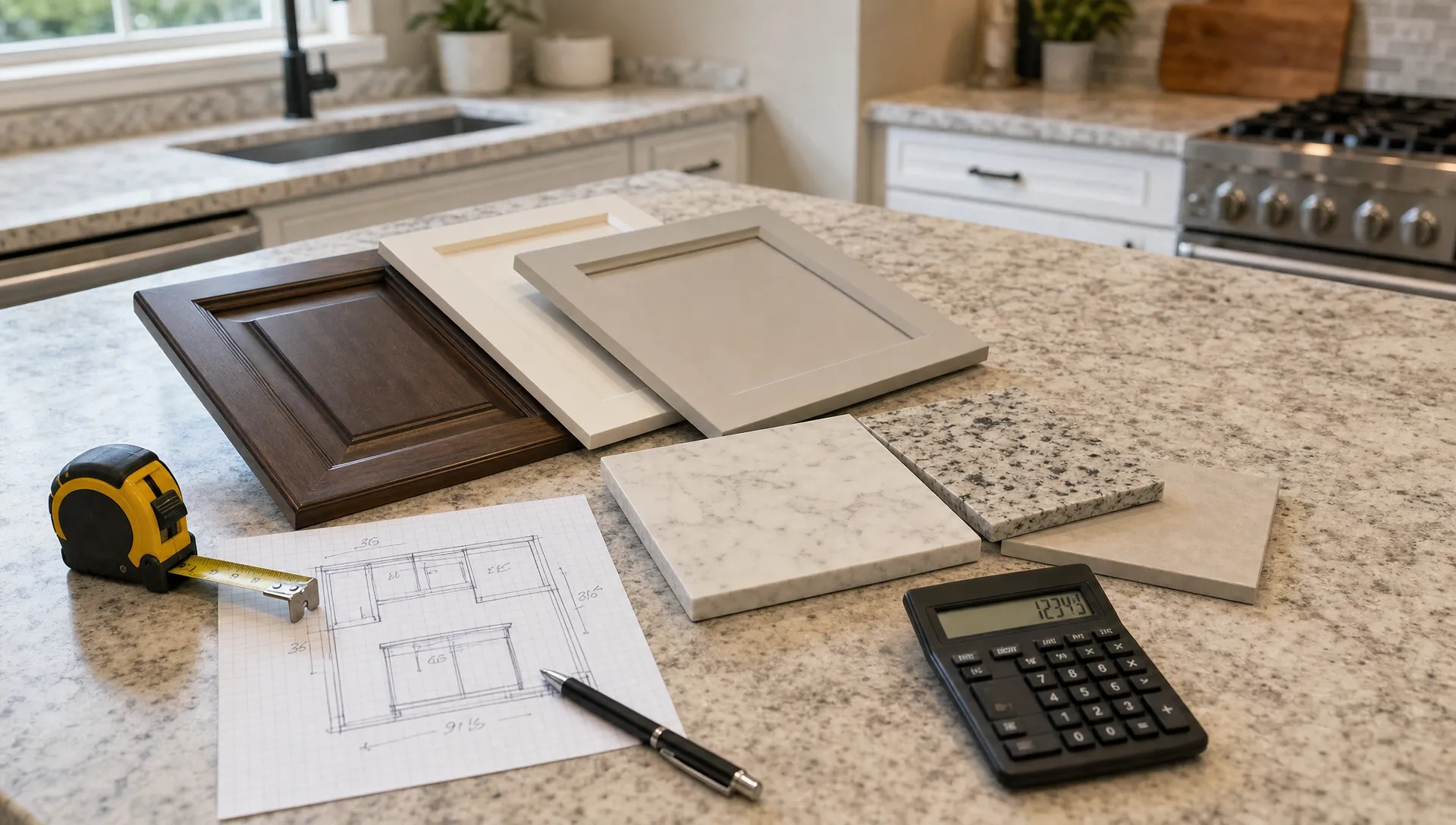
Allowances are placeholders in renovation of kitchen quote. They might cover items like tile, lighting, faucets, hardware, or countertops before you have chosen exact products. Allowances are useful, but they can also create budget problems if they are unrealistic.
For example, if your contractor includes a basic allowance for backsplash tile but you later choose a handmade tile that costs significantly more, you pay the difference in material and sometimes in labor. The same applies to fixtures, flooring, and countertops.
To avoid allowance surprises, shop early. You do not have to buy everything immediately, but you should know whether your taste matches the numbers in the quote. If you prefer midrange or premium finishes, ask the contractor to revise the allowance before you sign.
Decide where to save and where not to cut corners
A budget-friendly renovation of kitchen is not about cutting every cost. It is about saving on changes that do not affect safety or long-term performance, then spending wisely on the elements that matter.
Good places to save often include cabinet hardware, decorative lighting, open shelving accents, backsplash selections, paint, and some cosmetic finishes. You can also save by choosing standard cabinet sizes, keeping the same layout, using durable midrange surfaces, and mixing statement details with simpler materials.
Places to be cautious about cutting include electrical work, plumbing, ventilation, subfloor repairs, waterproofing near sinks, countertop fabrication, and contractor quality. Poor work in these areas can create damage that costs more than doing it correctly the first time.
If your home was built before 1978, lead-safe renovation of kitchen practices may be required when disturbing painted surfaces. The EPA renovation of kitchen, Repair and Painting Program explains rules designed to reduce lead dust hazards in older homes.
Make selections before demolition begins
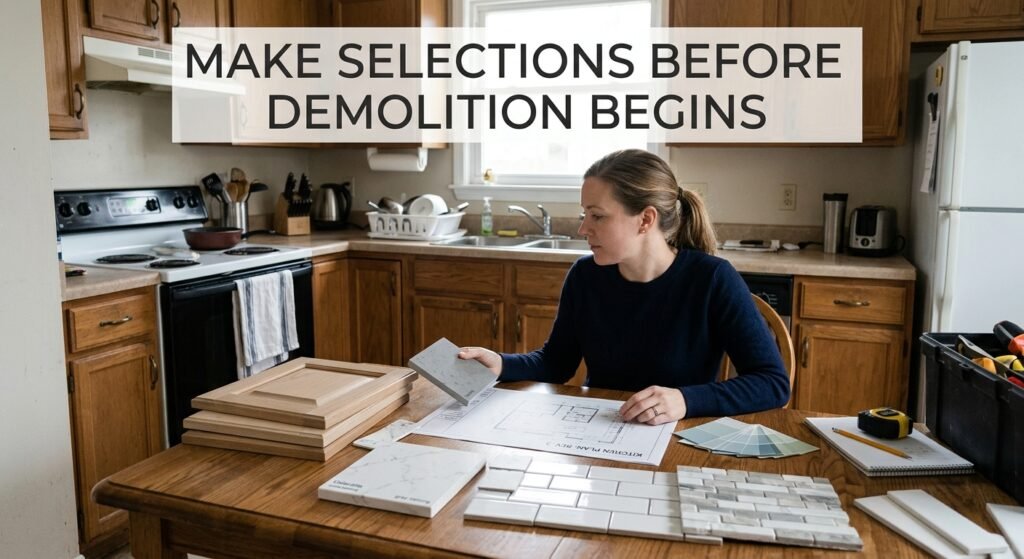
Indecision is expensive. A renovation of kitchen involves many connected choices, and one late decision can delay several trades. Countertops cannot be templated until cabinets are installed. Some appliances affect cabinet dimensions. Sink choices affect countertop cutouts. Lighting choices affect electrical planning.
Before demolition, try to finalize the following:
| Selection | Why it matters early |
|---|---|
| Appliances | Dimensions affect cabinets, panels, outlets, ventilation, and clearances |
| Sink and faucet | Countertop cutouts and plumbing details depend on exact models |
| Cabinet layout | Drives storage, appliance placement, countertop measurements, and labor |
| Countertop material | Affects lead time, edge details, sink mounting, and installation schedule |
| Lighting | Requires early electrical planning, especially for recessed and task lighting |
| Flooring | Thickness can affect appliance fit, transitions, and cabinet installation choices |
Finalizing selections early also gives you time to compare prices, watch for sales, and avoid rush shipping.
Control change orders like a project manager
Change orders are one of the most common reasons renovation of kitchens exceed budget. Some changes are unavoidable, such as hidden water damage or unsafe wiring. Others happen because a homeowner sees the room under construction and decides to upgrade.
To control change orders, create a simple rule: no change is approved unless it is written with the added cost, added time, and effect on other work. If you upgrade the backsplash, does it require more labor? If you move the microwave, does it require electrical changes? If you change the cabinet layout, does it delay countertops?
A written change order may feel formal, but it protects both you and the contractor. It also gives you a clear running total so the final invoice is not a shock.
Time the project to reduce stress and extra spending
A delayed renovation of kitchen can cost more than money. It can mean extra takeout, temporary cooking setups, storage rentals, missed work, and frustration. Planning the timeline carefully helps reduce those indirect costs.
Order long-lead items before demolition when possible. Confirm appliance delivery windows. Ask when countertops will be templated and installed. Decide where you will cook, wash dishes, and store food during the project. Even a small temporary kitchen with a microwave, coffee maker, toaster oven, and dish bin can reduce the temptation to overspend on meals out.
For a better sense of project pacing, use this guide on how long a kitchen remodel takes to set realistic expectations before construction begins.
Build a budget tracker you will actually use
A budget only works if you update it. You do not need complicated software. A spreadsheet, notebook, or notes app can work as long as every cost goes into one place.
Track your original budget, committed costs, paid amounts, pending invoices, credits, and contingency balance. Include small purchases like outlet covers, caulk, cabinet knobs, paint samples, temporary kitchen supplies, delivery fees, and disposal charges. These small items are easy to forget, but together they can become a meaningful part of the total.
A simple tracker can use these columns:
| Category | Original budget | Current estimate | Paid | Remaining | Notes |
|---|---|---|---|---|---|
| Cabinets | |||||
| Countertops | |||||
| Appliances | |||||
| Labor | |||||
| Plumbing and electrical | |||||
| Flooring | |||||
| Lighting | |||||
| Contingency |
Update it weekly during planning and more often during active construction. The earlier you see an overage, the easier it is to adjust.
Think long term, not just low cost
The cheapest choice today is not always the most affordable choice over time. A low-quality faucet that leaks, flooring that cannot handle moisture, or cabinets that fail under daily use can turn savings into future repairs.
Look for durability, cleanability, and timelessness. Neutral cabinet colors, practical storage, efficient lighting, and sturdy surfaces often age better than trendy details. If you want personality, add it through items that are easier to change later, such as wall color, stools, window treatments, art, rugs, and hardware.
Energy-efficient appliances can also influence long-term costs. The ENERGY STAR program provides information on certified appliances that meet efficiency criteria, which may help when comparing models.
Plan your kitchen renovation with confidence

A renovation of kitchen that stays on budget is built on clear priorities, accurate measurements, complete quotes, early selections, and disciplined change management. You do not have to sacrifice style, but you do need a plan that tells every dollar where to go.
For more practical kitchen inspiration, cabinet ideas, smart solutions, and space-saving guidance, explore Kitchen Campaign as you shape a kitchen that works beautifully for your home and your budget.
Conclusion
A successful renovation of kitchen is not simply about choosing attractive cabinets, countertops, or appliances. It is about creating a space that fits your budget, lifestyle, and long-term needs. The best results come from deciding what truly needs to change before construction begins and separating essential improvements from optional upgrades.
Start with a realistic maximum budget and keep a contingency fund for unexpected costs. If your existing layout works well, consider keeping plumbing and major appliances in their current locations to reduce labor and installation expenses. Compare detailed contractor quotes, check allowances carefully, and finalize important materials before demolition to avoid expensive delays and last-minute decisions.
You can also make a noticeable difference without choosing the most expensive finishes. Fresh cabinet fronts, better lighting, improved storage, updated hardware, durable countertops, and carefully selected colors can transform the room while keeping spending under control.
Most importantly, remember that the goal of a renovation of kitchen is not to create the most expensive kitchen possible. It is to create a kitchen that works better, looks welcoming, and provides lasting value. With thoughtful planning, careful spending, and a clear understanding of your priorities, you can achieve a beautiful renovation without allowing the budget to get out of control.
FAQ’S…
What are some ideas for renovation of kitchen?
Some practical ideas for renovation of kitchen include updating cabinets, replacing countertops, improving lighting, adding a functional island, upgrading appliances, and using better storage solutions. Choose materials and colors that match your style while focusing on durability, workflow, and easy maintenance.
What is the 2026 trend for kitchens?
One major 2026 kitchen trend is creating warm, functional spaces with natural materials, earthy colors, layered lighting, and smarter storage. For a renovation of kitchen, homeowners are also choosing cleaner cabinet designs, integrated appliances, and practical layouts that combine comfort with modern style.
What is the newest trend in kitchens?
The newest kitchen trends focus on warmth, simplicity, and functionality. Natural wood, soft neutral colors, statement lighting, hidden storage, and integrated appliances are becoming popular. These ideas can give a renovation of kitchen a modern appearance without making the space feel overly trendy or difficult to maintain.
What is the most modern kitchen design?
The most modern kitchen designs combine clean lines, simple cabinetry, efficient layouts, and minimal visual clutter. Handleless cabinets, integrated appliances, large-format surfaces, and smart storage can create a sleek look. During a renovation of kitchen, these features can improve both appearance and everyday functionality.
What are the trendy colors for kitchens in 2026?
Popular kitchen colors in 2026 include warm whites, soft greige, earthy greens, muted blues, natural wood tones, and warm neutrals. For a renovation of kitchen, these shades can create a welcoming look while remaining versatile enough to work with different cabinet styles, countertops, and flooring.
What makes a kitchen look outdated?
Outdated kitchens often have worn cabinets, poor lighting, cluttered countertops, old appliances, and colors or finishes that no longer suit the space. During a renovation of kitchen, updating these elements, improving storage, and choosing timeless materials can make the room feel fresher and more functional.