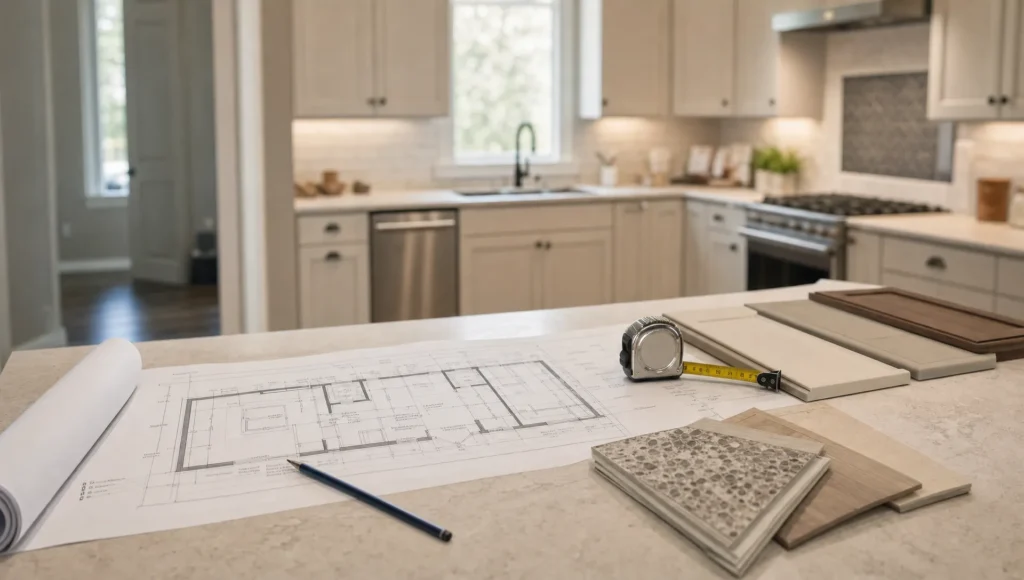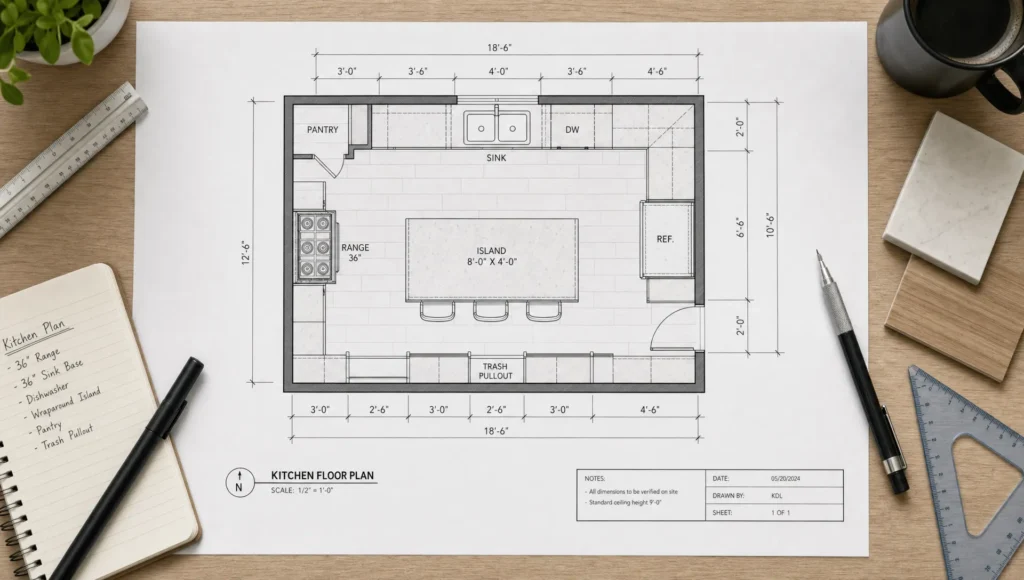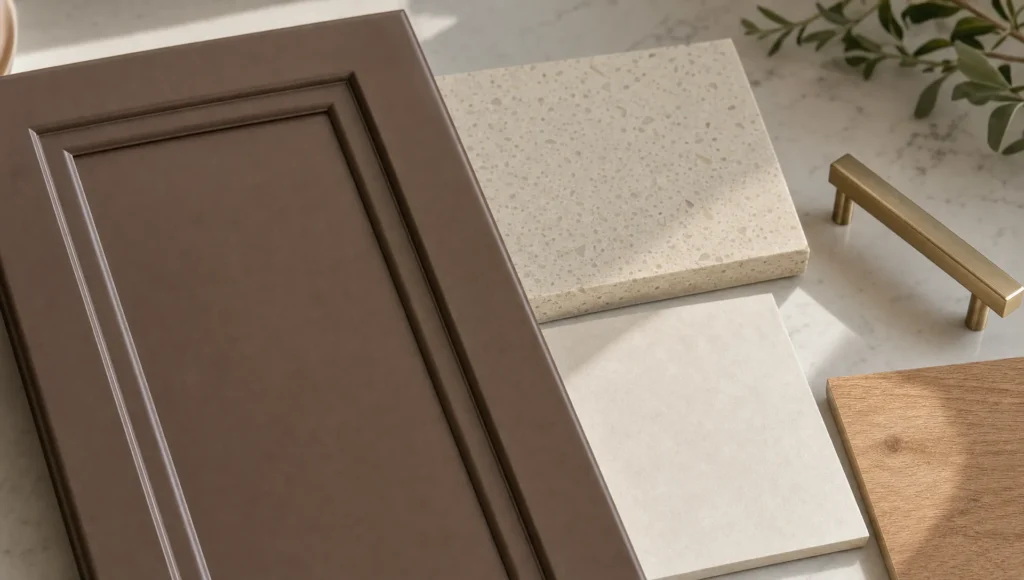
Brown has a way of making a kitchen feel grounded, comfortable, and lived-in. The challenge is that the same color family can also feel heavy if the room lacks contrast, natural light, or texture. The secret is not avoiding brown. It is choosing the right shade, pairing it with brightening materials, and using lighting intentionally.
A brown kitchen can be modern, rustic, traditional, organic, or quietly luxurious. Think walnut cabinets with cream quartz, cocoa-stained lowers with white uppers, mushroom brown walls with stone tile, or a rich wood island surrounded by soft neutral cabinetry. When brown is layered well, it feels warm, not dark.
Why Brown Kitchens Are Back
For years, white and gray dominated kitchen design because they felt clean and safe. Now, homeowners are craving spaces with more depth and personality. Brown brings that in a natural way. It connects the kitchen to wood, earth, leather, coffee, clay, and stone, all materials and tones that feel timeless rather than trendy.
The modern brown kitchen is not the orange-heavy oak kitchen many people remember from decades past. Today’s best versions use more refined stains, softer neutrals, matte finishes, organic textures, and simple silhouettes. Brown can look especially current when it is paired with warm white, stone, brass, black accents, soft green, or creamy beige.
Brown also works because it is flexible. A pale taupe-brown can act almost like a neutral paint color, while deep espresso can create drama. Walnut can feel mid-century modern, rustic wood can feel farmhouse, and a flat-panel brown cabinet can look sleek and contemporary.
The key question is not “Should I use brown?” It is “How do I keep brown balanced?”
Start With the Right Brown Undertone
Not every brown behaves the same in a kitchen. Some browns are red, some are yellow, some are gray, and some are nearly black. Before choosing cabinets, paint, flooring, or tile, look closely at the undertone. This one decision affects every other finish in the room.
| Brown shade | Best for | Pairs well with | Use carefully with |
|---|---|---|---|
| Honey brown | Traditional, cottage, casual kitchens | Cream, warm white, soft green, aged brass | Cool gray, blue-white counters |
| Walnut brown | Modern, mid-century, transitional kitchens | White quartz, marble-look stone, black, brass | Very orange flooring |
| Cocoa brown | Cozy, classic, earthy kitchens | Beige, ivory, terracotta, bronze | Dark brown floors in the same tone |
| Espresso brown | Dramatic, elegant, high-contrast kitchens | White countertops, light backsplashes, warm metals | Low lighting, dark wall colors |
| Mushroom brown | Soft modern, organic, neutral kitchens | Greige, stone, linen, brushed nickel | Strong yellow woods |
If you love the depth of dark brown but want a polished look, explore how espresso kitchen cabinets can be styled with lighter counters, thoughtful paint colors, and modern finishes. If you want something softer than true brown, greige kitchen cabinets can give you a warm neutral effect without going fully wood-toned.
Use Contrast So Brown Does Not Feel Heavy
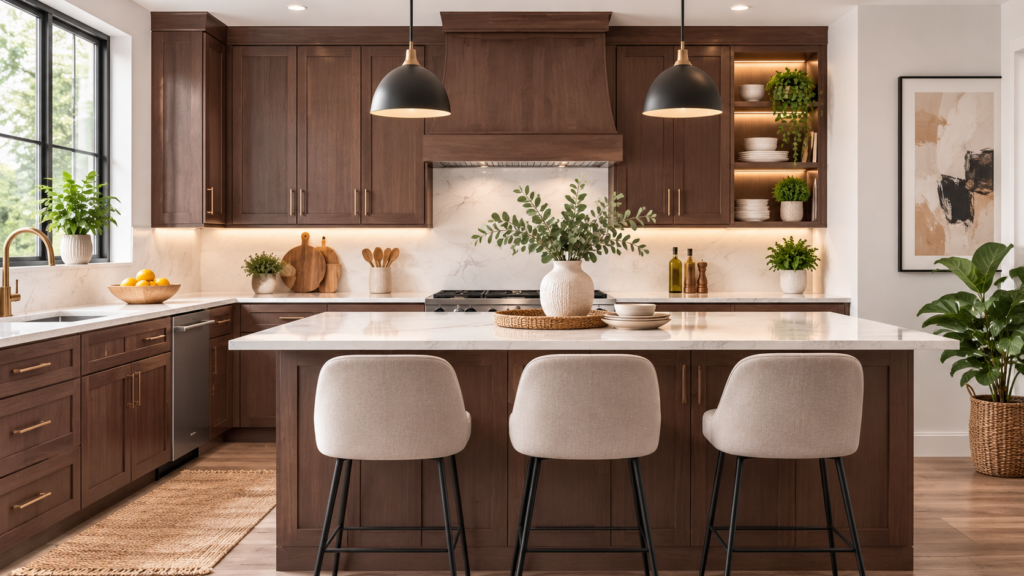
The easiest way to make a brown kitchen feel warm instead of dark is to give the eye places to rest. Brown needs contrast. That contrast can come from countertops, backsplash tile, walls, flooring, hardware, or even open shelving.
White is the most obvious brightening choice, but it does not have to be stark white. In fact, warm whites often work better with brown because they do not fight the natural warmth of wood or stain. Look for shades described as ivory, cream, soft white, warm white, or alabaster rather than icy white or blue-white.
Light countertops are especially powerful. A cream quartz, white marble-look quartz, pale granite, or light butcher block can lift the entire room. If your brown cabinets are deep, a light countertop keeps the kitchen from feeling like a cave. If your cabinets are medium brown, a light counter creates a clean, balanced look.
Walls matter too. Brown cabinets next to dark tan or chocolate walls can quickly feel flat. Instead, try warm white, pale taupe, muted sage, soft clay, or a very light beige. These colors keep the palette cozy while reflecting more light.
Brown Cabinet Ideas That Feel Warm, Not Dark
Cabinets are usually the largest visual surface in a kitchen, so brown cabinetry deserves careful planning. The good news is that you do not need to cover every cabinet in the same dark finish to enjoy the warmth of brown.
One of the most approachable ideas is using brown lower cabinets with light upper cabinets. This grounds the kitchen while keeping the upper half open and airy. Cream, warm white, or pale greige uppers work beautifully with walnut, coffee, or medium brown base cabinets.
Another elegant option is a brown island with lighter perimeter cabinets. A stained wood island adds warmth and character without making the entire room feel dark. This works especially well in open-concept kitchens where the island acts like a furniture piece.
For a modern look, consider flat-panel walnut cabinets. The clean lines keep the wood grain feeling sophisticated rather than busy. Pair them with slim hardware or no visible hardware, then add a pale countertop and simple backsplash.
For a more classic look, brown Shaker cabinets can work beautifully when the stain is not too red or glossy. Choose a satin or matte finish, then balance the cabinetry with light stone, brass pulls, and a backsplash that has subtle movement.
If you already have brown cabinets and want to refresh them without replacing everything, changing the surrounding finishes can make a major difference. New hardware, lighter walls, a brighter backsplash, or under-cabinet lighting can completely shift the mood.
Countertops and Backsplashes That Brighten a Brown Kitchen
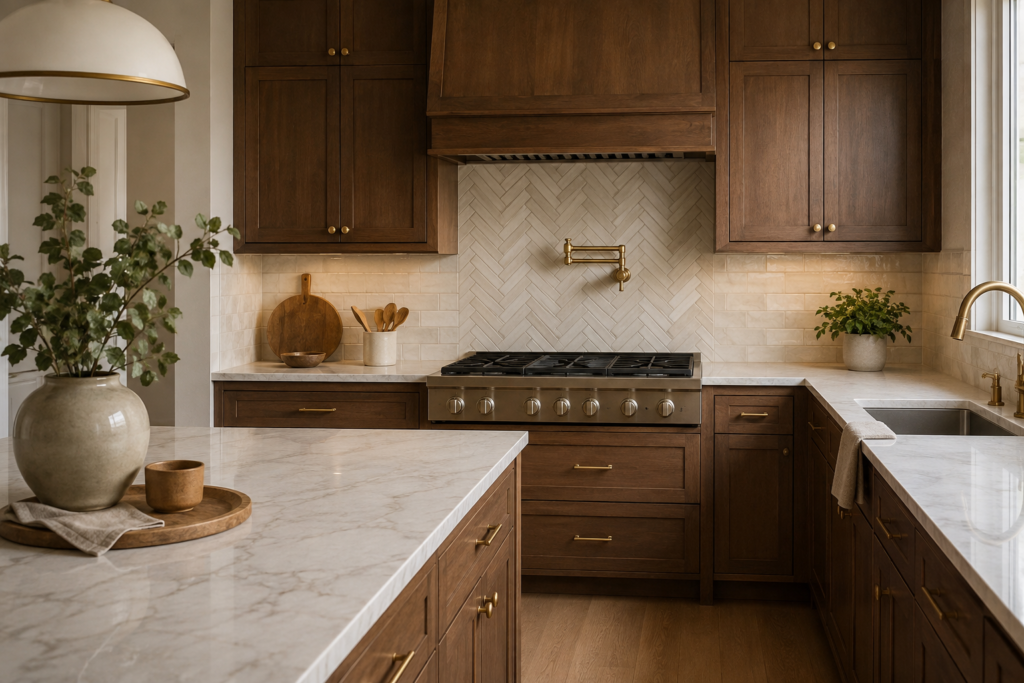
A brown kitchen becomes much easier to love when the countertop and backsplash add brightness, texture, and movement. These surfaces sit directly beside the cabinets, so they can either lighten the room or intensify the darkness.
For dark brown cabinets, light quartz is one of the safest and most versatile choices. A soft white slab with faint beige, gray, or gold veining adds polish without creating a harsh contrast. Marble-look quartz also works well because the veining breaks up large flat surfaces.
For medium brown cabinets, you have more flexibility. Cream granite, beige quartz, soapstone-look surfaces, and light butcher block can all work depending on the style. The goal is to avoid choosing a counter that is the exact same depth as the cabinets. When everything is similar in value, the design can feel muddy.
Backsplashes should support the mood of the kitchen. Glossy zellige-style tile can bounce light around a brown kitchen. Cream subway tile offers a classic look. Handmade-look square tile adds texture. A pale stone slab backsplash can make the kitchen feel calm and elevated.
| Brown kitchen style | Countertop idea | Backsplash idea | Overall effect |
|---|---|---|---|
| Modern walnut | White quartz with subtle veining | Cream slab or stacked tile | Clean, warm, refined |
| Rustic brown | Light butcher block or honed stone | Handmade cream tile | Cozy and natural |
| Dark espresso | Bright quartz or pale granite | Glossy white or ivory tile | Dramatic but balanced |
| Soft taupe-brown | Beige quartz or limestone-look surface | Greige or warm white tile | Calm and tonal |
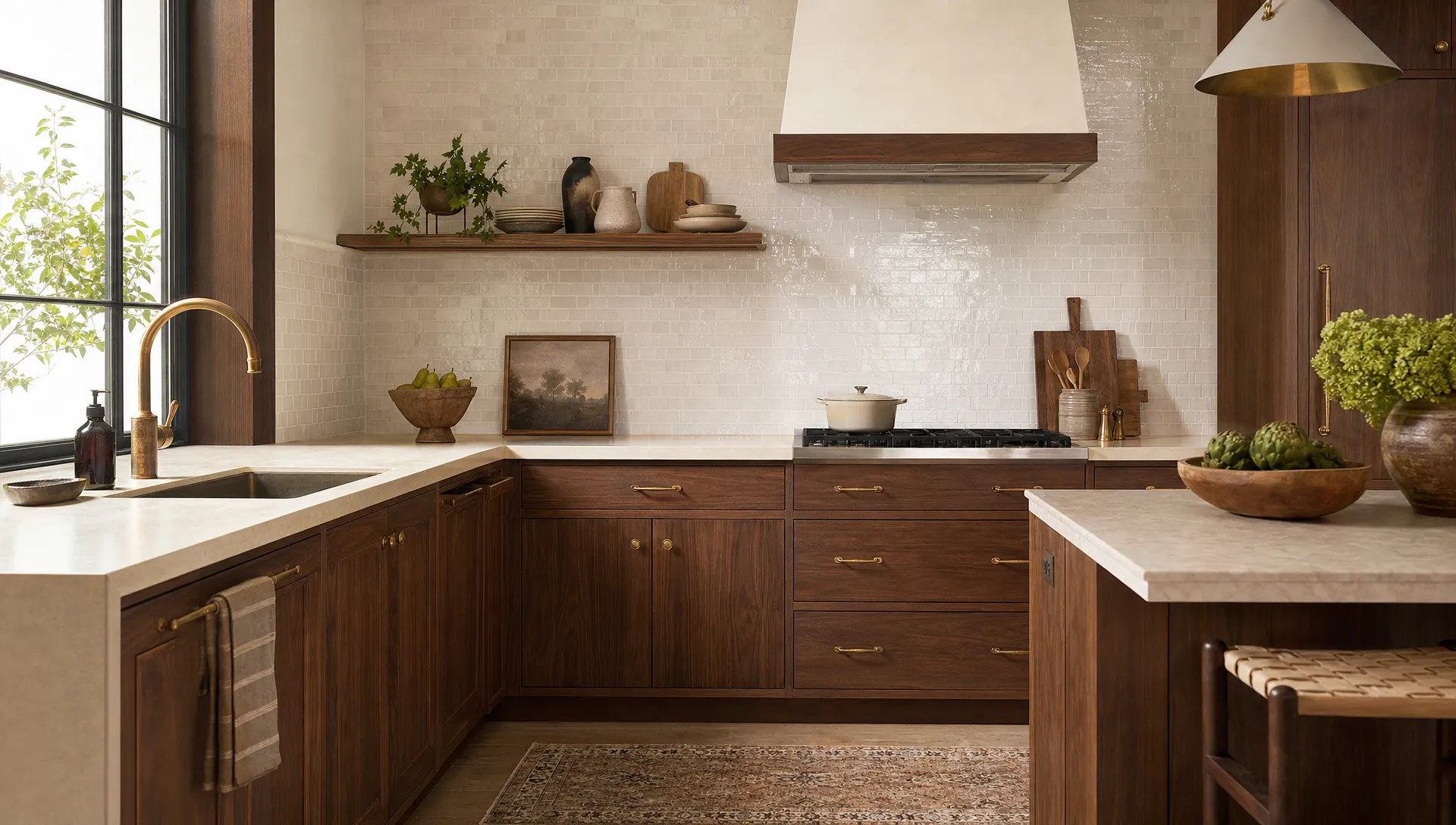
Lighting Is What Makes Brown Feel Rich Instead of Gloomy
Lighting can make or break a brown kitchen. The same cabinet color can look cozy in one room and dull in another simply because of the light temperature, fixture placement, or lack of task lighting.
Start with layered lighting. Ceiling lights provide general brightness, but they are rarely enough on their own. Under-cabinet lights help illuminate countertops and backsplashes, which is especially important when cabinets are dark. Pendant lights over an island can add warmth and style, while sconces or interior cabinet lighting can create a more custom feel.
Color temperature also matters. Very cool bulbs can make brown cabinets look gray, flat, or even slightly green. Very yellow bulbs can make the room feel dated. Many kitchens work well with bulbs around 2700K to 3000K for a warm, welcoming glow. If you prefer a cleaner modern look, 3000K to 3500K can still feel bright without becoming too cold.
Natural light should be used strategically. If your kitchen has a window, keep window treatments light and simple. Linen-look Roman shades, woven shades, or sheer cafe curtains can soften the room without blocking daylight. If the kitchen is naturally dim, lean harder into reflective finishes such as glossy tile, pale countertops, glass cabinet doors, or brushed metal.
Flooring, Hardware, and Decor That Lift a Brown Kitchen
Because brown is already a warm color, the supporting details should prevent the room from feeling too visually dense. Flooring is one of the biggest decisions. If you have brown cabinets and brown floors, make sure the tones are clearly different. Medium walnut cabinets on a nearly identical medium walnut floor can blur together. A lighter oak floor, pale stone tile, or patterned neutral floor can create separation.
Hardware is another simple way to change the personality of brown cabinets. Brass and bronze enhance warmth. Matte black adds contrast and a modern edge. Polished nickel or brushed nickel can cool the palette slightly, which is useful if the room feels too warm.
Decor should be edited but not empty. Brown kitchens benefit from natural materials: ceramic bowls, woven trays, linen towels, wood cutting boards, stoneware, glass jars, and greenery. A few well-chosen pieces can make the kitchen feel inviting without cluttering the counters.
If your kitchen has open shelves, use them to introduce lighter tones. White dishes, clear glass, pale pottery, and small plants can break up the brown and keep the wall area from feeling heavy.
Small Brown Kitchen Ideas
A small brown kitchen can absolutely work, but it needs contrast and smart layout choices. The smaller the room, the more important it becomes to control where the darkest colors go.
Try using brown on the lower cabinets only, then keep upper cabinets, walls, and backsplash light. This creates a grounded look without visually shrinking the room. Another option is to use brown as an accent through a small island, floating shelves, trim, or a pantry wall rather than on every cabinet.
Reflective surfaces help small brown kitchens feel brighter. Glossy tile, satin cabinet finishes, glass pendants, and metallic hardware all catch light. You can also use vertical elements, such as tall cabinet doors or vertically stacked backsplash tile, to draw the eye upward.
In narrow kitchens, avoid making both long walls visually heavy. If you are working with a compact or corridor-style space, these galley kitchen layout ideas can help you plan storage, lighting, and traffic flow without sacrificing style.
Color Palettes for a Warm Brown Kitchen
A successful brown kitchen usually has a clear palette. Without one, it is easy to keep adding warm tones until the room feels overly beige or too dark. Choose one main brown, one light neutral, one accent color, and one metal finish.
| Palette | Main colors | Best style | Why it works |
|---|---|---|---|
| Walnut and cream | Walnut brown, warm white, brass | Modern organic | Bright but still cozy |
| Cocoa and sage | Cocoa brown, soft green, ivory | Cottage or transitional | Earthy and calming |
| Espresso and white | Deep brown, white quartz, black accents | Contemporary | High contrast and crisp |
| Taupe-brown and stone | Mushroom brown, beige, brushed nickel | Soft modern | Neutral and understated |
| Brown and terracotta | Medium brown, clay, cream | Rustic or Mediterranean | Warm and character-rich |
Green is one of the best accent colors for brown because it reinforces the natural feeling of wood. Sage, olive, and muted eucalyptus tones all pair well with brown cabinets. Blue can also work, especially dusty blue or slate blue, but avoid overly cool blues if your brown has strong orange undertones.
Cream and beige are classic partners, but the trick is variety. Use different textures so the kitchen does not look flat. For example, pair brown cabinets with a creamy stone counter, handmade tile, linen curtains, and brushed brass. The colors are simple, but the textures make the room feel layered.
Common Brown Kitchen Mistakes to Avoid
Brown is forgiving, but it still needs balance. If your kitchen feels darker than expected, one of these design mistakes may be the reason.
- Choosing dark brown cabinets, dark counters, dark floors, and dark walls all at once.
- Using cool white lighting that makes warm wood tones look dull or gray.
- Matching the cabinet stain too closely to the floor color.
- Forgetting under-cabinet lighting in a kitchen with deep-toned cabinets.
- Selecting a backsplash that is too busy when the wood grain is already strong.
- Using too many orange or red undertones without a calming neutral.
The most timeless brown kitchens usually include restraint. Let the wood or brown finish be the star, then support it with lighter surfaces, simple lines, and carefully chosen accents.
Bring Your Brown Kitchen Vision Together
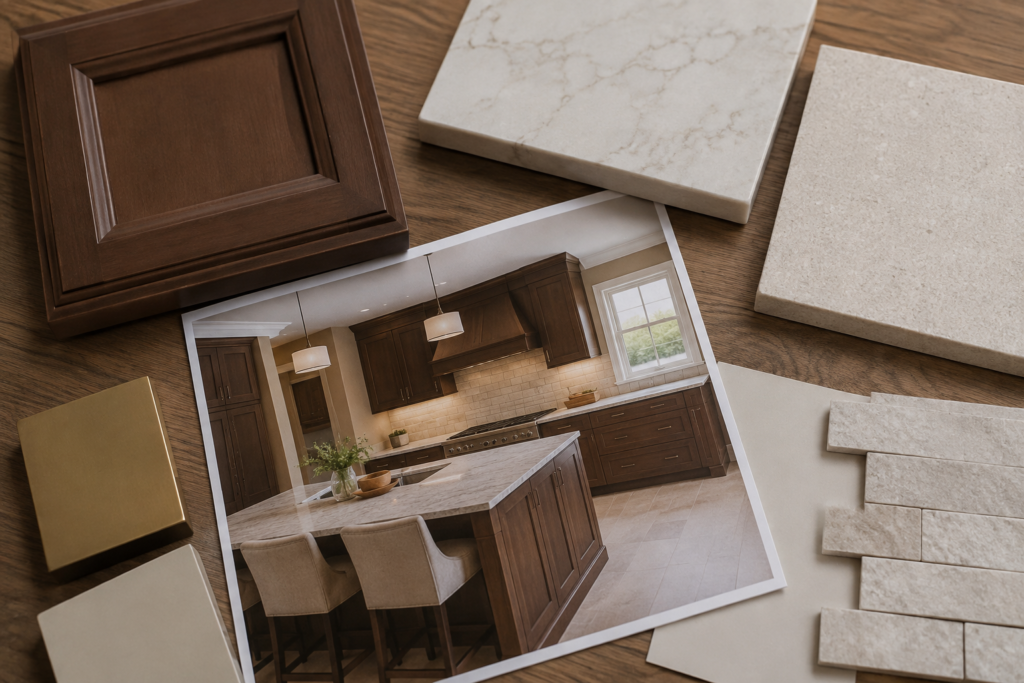
A brown kitchen should feel like a warm invitation, not a dark box. The difference comes down to balance: the right undertone, enough contrast, layered lighting, and materials that add texture without overwhelming the room.
Whether you love walnut, cocoa, espresso, taupe, or soft wood tones, brown can create a kitchen that feels timeless and personal. Start with one strong brown element, surround it with light and texture, then refine the details until the space feels bright, comfortable, and beautifully connected.
Conclusion
Brown kitchens can feel warm, inviting, and timeless rather than dark or outdated when the right balance of color, light, and texture is used. The key is to choose a brown shade that works with your kitchen’s natural lighting, then pair it with light countertops, warm neutrals, layered lighting, and contrasting finishes.
Whether you choose walnut cabinets, espresso tones, cocoa brown, or soft taupe, you do not have to cover the entire kitchen in dark finishes. Brown lower cabinets, a stained wood island, or a single wood feature can add plenty of character while keeping the space bright and open.
Ultimately, the best brown kitchen ideas are those that reflect your personal style while maintaining visual balance. With thoughtful combinations of cabinetry, backsplash, flooring, hardware, and lighting, brown can create a kitchen that feels cozy, modern, sophisticated, and welcoming for years to come.
Are brown kitchens outdated?
No, brown kitchens are not outdated when they are designed with modern finishes, balanced contrast, and updated lighting. The most current brown kitchens use refined wood stains, warm neutrals, light countertops, and simple hardware rather than glossy orange-toned finishes.
What colors go best with a brown kitchen?
Warm white, cream, beige, sage green, olive, soft black, brass, stone gray, and muted terracotta all pair well with brown. The best choice depends on the undertone of the brown. Red-brown, yellow-brown, gray-brown, and espresso brown each need slightly different supporting colors.
How do I make dark brown cabinets look brighter?
Use light countertops, a pale backsplash, warm white walls, under-cabinet lighting, and reflective finishes. Replacing heavy hardware with brass, nickel, or slim black pulls can also make dark brown cabinets feel more current.
What countertop looks best with brown cabinets?
Light quartz, marble-look quartz, cream granite, pale stone, and warm white solid surfaces are all strong choices. For a richer natural look, butcher block can work, but it should contrast enough with the cabinet color.
Can a small kitchen have brown cabinets?
Yes, but use brown strategically. Brown lower cabinets with light uppers, a brown island, or a single stained wood feature can add warmth without making the room feel cramped. Good lighting and a light backsplash are especially important in small kitchens.