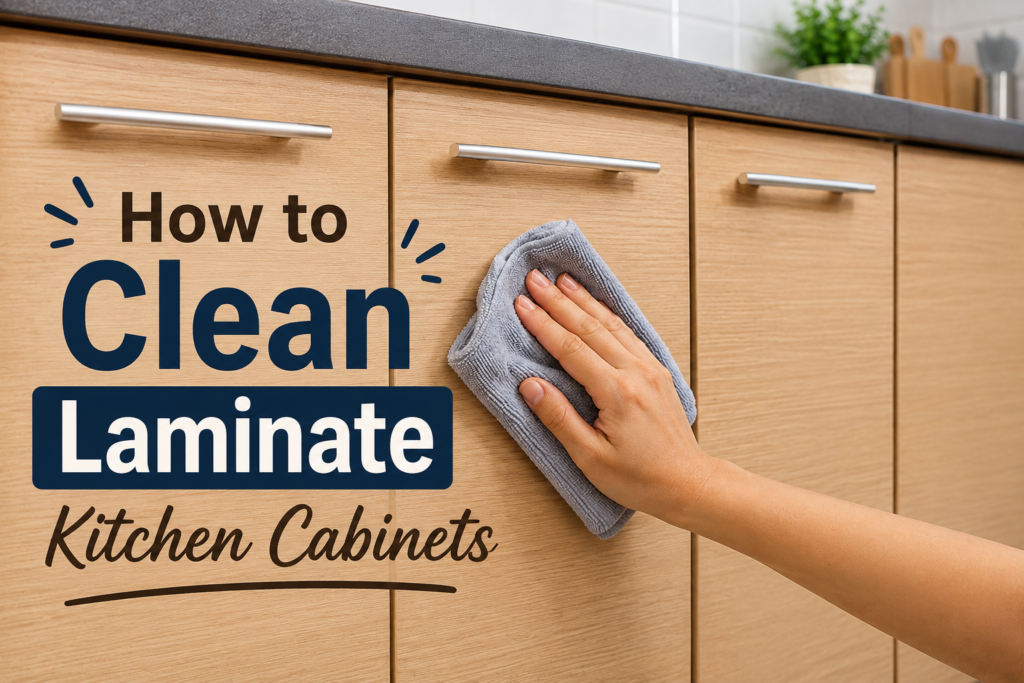
Laminate how to clean laminate kitchen cabinets are one of the most popular choices for modern homes—and for good reason. They’re stylish, affordable, durable, and available in countless colors and finishes. However, like every surface in your kitchen, they gradually collect grease, fingerprints, food splatters, dust, and moisture. Without proper care, even the most beautiful laminate cabinets can lose their shine and begin to look dull.
The good news is that learning how to clean laminate kitchen cabinets is much easier than many homeowners think. You don’t need expensive cleaners or professional services. With the right cleaning techniques, a few everyday household supplies, and regular maintenance, you can safely remove dirt and grease while protecting the laminate finish for years.
Whether your cabinets have a glossy, matte, textured, or wood-look laminate finish, this comprehensive guide will show you how to clean laminate kitchen cabinets safely, remove stubborn grease, avoid common cleaning mistakes, and keep your kitchen looking fresh every day.
Why Learning How to Clean Laminate Kitchen Cabinets Matters
Many how to clean laminate kitchen cabinets homeowners choose laminate cabinets because they require less maintenance than natural wood. While that’s true, laminate surfaces still need regular cleaning to prevent grease buildup, stains, and discoloration.
Every time you cook, tiny grease particles become airborne. These invisible droplets settle on nearby cabinet doors, especially around the stove and range hood. Dust sticks to this greasy film, creating the sticky residue many homeowners eventually notice.
I remember visiting a friend’s newly renovated kitchen. She was convinced her white laminate cabinets had already started to lose their shine after only a year. We mixed a few drops of mild dish soap with warm water, grabbed a microfiber cloth, and cleaned just one cabinet door.
The difference surprised both of us.
The laminate hadn’t faded—it was simply hidden beneath months of cooking grease and fingerprints.
That’s exactly why knowing how to clean laminate kitchen cabinets correctly can extend their lifespan and keep your kitchen looking brand new without costly replacements.
Regular cleaning helps you:
- Remove grease before it hardens.
- Prevent sticky residue from building up.
- Protect the laminate finish from premature wear.
- Maintain the cabinet’s original color and shine.
- Reduce bacteria on frequently touched cabinet handles.
- Keep your kitchen looking clean and inviting.
- Extend the life of your kitchen cabinets.
The best part is that once you understand how to clean laminate kitchen cabinets, weekly maintenance usually takes only a few minutes.
What You’ll Need Before You Clean Laminate Kitchen Cabinets
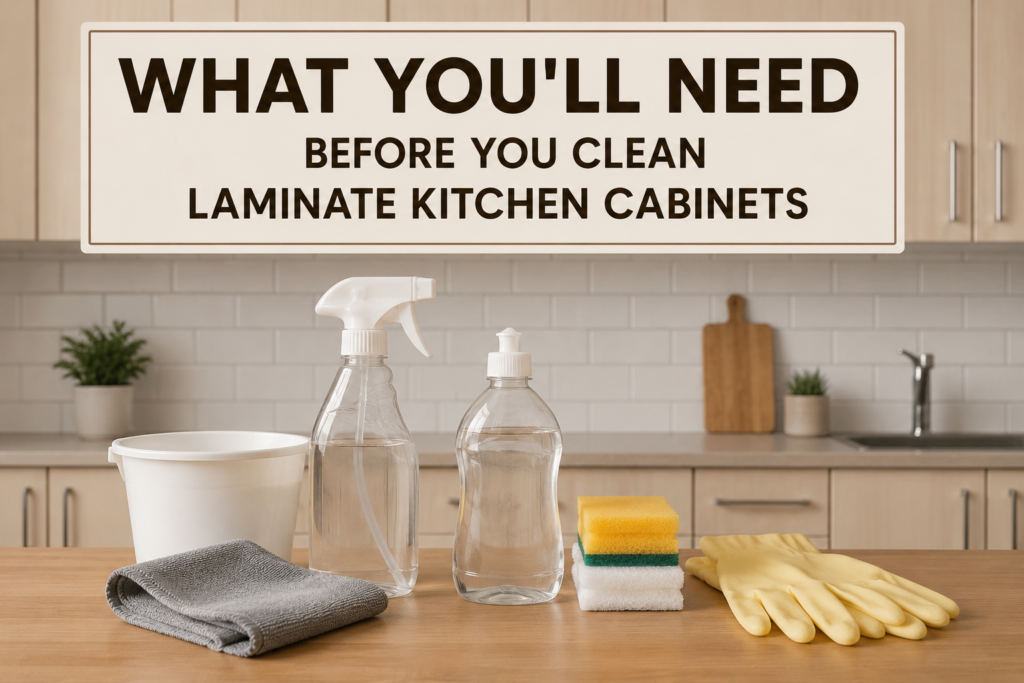
One of the biggest myths about how to clean laminate kitchen cabinets is that specialty cleaners are required.
In reality, most routine cleaning can be done using gentle household supplies that are safe for laminate finishes.
Essential Cleaning Supplies
Before you begin, gather the following items:
- Warm water
- Mild dishwashing liquid
- Soft microfiber cloth
- Non-abrasive sponge
- Soft lint-free drying towel
- Spray bottle
- Bucket or bowl
- Soft toothbrush
- Soft nylon detailing brush
These simple tools safely remove dust, grease, and fingerprints without scratching laminate how to clean laminate kitchen cabinets surfaces.
Optional Supplies for Heavy Grease
If your cabinets haven’t been cleaned in several months, you may also need:
- Cabinet-safe laminate cleaner
- Citrus-based degreaser labeled safe for laminate
- Baking soda (for isolated stubborn stains only)
- White vinegar diluted with water (use cautiously and only if appropriate for your cabinet finish)
Always test any commercial cleaner on a hidden section before cleaning the entire cabinet.
What NOT to Use on Laminate Kitchen Cabinets
Understanding how to clean laminate kitchen cabinets also means knowing what products to avoid.
Using harsh cleaners can permanently damage the protective laminate surface.
Avoid using:
- Steel wool
- Abrasive scouring pads
- Wire brushes
- Bleach
- Ammonia
- Strong solvents
- Highly alkaline cleaners
- Highly acidic cleaners
- Excessive water
- Steam cleaners
Although how to clean laminate kitchen cabinets these products may remove grease quickly, they can dull the finish, leave scratches, weaken adhesive layers, or cause laminate edges to lift over time.
Golden Rule: Always begin with the gentlest cleaning method before moving to stronger products.
Why Mild Soap Works Best
Many homeowners assume stronger cleaners produce better results.
In reality, laminate surfaces respond best to gentle cleaning.
A mild dish soap solution can effectively remove:
- Cooking grease
- Fingerprints
- Dust
- Food splatters
- Everyday grime
without damaging the protective outer layer of the laminate.
Using harsh chemicals repeatedly may dull the surface over time, while gentle routine cleaning helps preserve the cabinet’s original appearance.
How to Clean Laminate Kitchen Cabinets: A Step-by-Step Guide
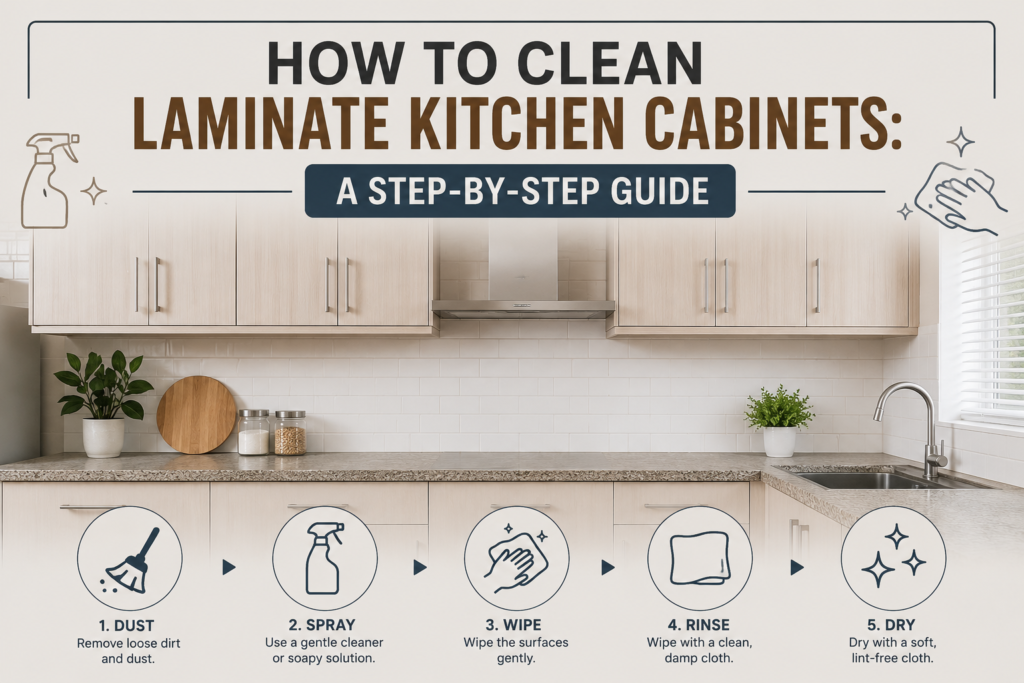
Now that you’ve prepared your cleaning supplies, it’s time to learn how to clean laminate kitchen cabinets safely and effectively. The key is to clean gently, use minimal moisture, and avoid harsh scrubbing that could damage the laminate finish.
Unlike natural wood, laminate is designed to resist stains and moisture. However, excessive water, abrasive cleaners, or rough scrubbers can still shorten its lifespan. Following the proper cleaning process will help your cabinets stay beautiful for years.
Step 1: Dust the Cabinets First
Before using any cleaning solution, remove loose dust and crumbs.
Using a dry microfiber cloth, gently wipe:
- Cabinet doors
- Drawer fronts
- Handles
- Hinges
- Decorative trim
- Cabinet edges
- Corners
Dust acts like sandpaper when mixed with water. Removing it first prevents tiny scratches on the laminate surface.
Pro Tip: Always clean from the top cabinets downward so falling dust doesn’t land on already-cleaned surfaces.
Step 2: Prepare a Gentle Cleaning Solution
One of the safest methods for how to clean laminate kitchen cabinets is a simple mixture of warm water and mild dish soap.
Mix:
- 1 bowl of warm water
- 2–3 drops of mild dishwashing liquid
Stir gently.
You don’t need lots of soap. Too much detergent leaves behind a sticky film that requires additional rinsing.
Step 3: Dampen—Don’t Soak—Your Cloth
Dip a microfiber cloth into the cleaning solution.
Then wring it out thoroughly.
The cloth should feel damp—not dripping.
Although laminate is more moisture-resistant than wood, excessive water can seep into seams, joints, and edges, eventually causing swelling or lifting.
Step 4: Wipe One Cabinet at a Time
Cleaning one cabinet completely before moving to the next prevents streaks and missed spots.
For each cabinet:
- Start at the top.
- Wipe downward.
- Clean using smooth, overlapping strokes.
- Pay extra attention to handles and frequently touched areas.
Avoid scrubbing aggressively.
Most everyday dirt and grease will lift away with gentle wiping.
Step 5: Clean Handles, Knobs, and Edges
Cabinet hardware collects oils from your hands every day.
Using your damp microfiber cloth or a soft toothbrush, carefully clean:
- Handles
- Knobs
- Drawer pulls
- Decorative grooves
- Corners
- Cabinet edges
These areas often collect grime long before the larger cabinet surfaces begin looking dirty.
Step 6: Rinse Away Soap Residue
After cleaning each cabinet, dampen another clean microfiber cloth with plain warm water.
Wipe every cleaned surface to remove any remaining soap.
Leaving detergent behind can attract dust and reduce the cabinet’s shine over time.
Step 7: Dry Every Surface Immediately
This is one of the most overlooked parts of how to clean laminate kitchen cabinets.
Using a clean lint-free towel, dry:
- Cabinet doors
- Drawer fronts
- Handles
- Edges
- Corners
Drying immediately helps prevent:
- Moisture buildup
- Water spots
- Swollen laminate edges
- Adhesive failure over time
Never allow standing water to remain on laminate cabinets.
How to Clean Matte Laminate Kitchen Cabinets
Matte laminate cabinets create a modern, elegant appearance, but they require slightly different care than glossy finishes.
Because matte finishes don’t reflect light, fingerprints, grease, and smudges may become noticeable in high-touch areas.
Fortunately, they’re easy to maintain.
Step 1: Remove Dust
Using a dry microfiber cloth, wipe away loose dust before applying any cleaner.
Step 2: Clean with Mild Soap
Mix warm water with a few drops of mild dish soap.
Dampen a microfiber cloth and gently wipe the cabinet surfaces.
Avoid excessive rubbing.
Step 3: Remove Stubborn Marks
If necessary, apply a small amount of baking soda paste to isolated stains.
Allow it to sit briefly before wiping gently with a soft cloth.
Step 4: Dry Immediately
Use a clean microfiber towel to dry every cabinet.
Drying helps prevent streaks and keeps matte laminate looking uniform.
Common Mistakes to Avoid When Cleaning Laminate Kitchen Cabinets
Many laminate cabinets become damaged not because of age—but because of improper cleaning methods.
- Avoid these common mistakes:
- Using steel wool or abrasive scrubbers
- Scrubbing aggressively
- Leaving standing water on cabinet surfaces
- Spraying cleaning products directly onto laminate
- Using bleach or ammonia-based cleaners
- Ignoring greasy areas for months
- Allowing food spills to dry before cleaning
- Forgetting to dry cabinets after washing
Small changes in your cleaning routine can dramatically extend the life and appearance of your laminate kitchen cabinets.
Best Products for Cleaning Laminate Kitchen Cabinets
One of the biggest advantages of laminate cabinets is that they don’t require expensive specialty cleaners. In most cases, a few simple cleaning supplies are enough to keep them looking spotless.
Here are the products professionals recommend for cleaning laminate kitchen cabinets safely.
1. Microfiber Cloth (Best Overall)
A high-quality microfiber cloth should be your first choice.
It easily removes:
- Dust
- Fingerprints
- Light grease
- Food splatters
Unlike rough cloths or paper towels, microfiber traps dirt instead of dragging it across the laminate surface.
Best for:
- Daily cleaning
- Weekly maintenance
- Drying cabinet doors
- Polishing laminate finishes
2. Mild Dish Soap
If you’re wondering how to clean laminate kitchen cabinets without damaging them, mild dish soap remains one of the safest cleaning solutions.
Simply mix:
- A few drops of dish soap
- Warm water
This removes grease while protecting the laminate finish.
Perfect for:
- Matte laminate
- Gloss laminate
- High-pressure laminate
- Textured laminate
- Wood-look laminate
3. White Vinegar (Diluted Only)
Diluted white vinegar works well for removing:
- Fingerprints
- Sticky residue
- Water spots
- Light grease
Always mix it with warm water first.
Never use undiluted vinegar on laminate.
Always test first on an inconspicuous area.
4. Baking Soda
Baking soda helps remove stubborn stains without using harsh chemicals.
Mix:
- 2 tablespoons baking soda
- 1 tablespoon water
Apply gently using a microfiber cloth.
Avoid aggressive scrubbing.
5. Cabinet-Safe Multi-Surface Cleaner
If grease has built up for months, a cabinet-safe cleaner can make the job easier.
Choose products labeled safe for:
- Laminate
- Finished cabinets
- Kitchen cabinetry
Avoid industrial-strength degreasers unless the manufacturer specifically approves them.
Cleaning Products to Avoid
Many homeowners accidentally damage laminate by using the wrong products.
Avoid using:
- Steel wool
- Scouring pads
- Abrasive powders
- Bleach
- Ammonia
- Acetone
- Paint thinner
- Oven cleaner
- Steam cleaners
- Highly alkaline degreasers
These cleaners may:
- Scratch laminate
- Fade colors
- Damage protective coatings
- Cause peeling
- Reduce shine
When learning how to clean laminate kitchen cabinets, gentle cleaning always wins.
How to Prevent Grease Buildup on Laminate Kitchen Cabinets
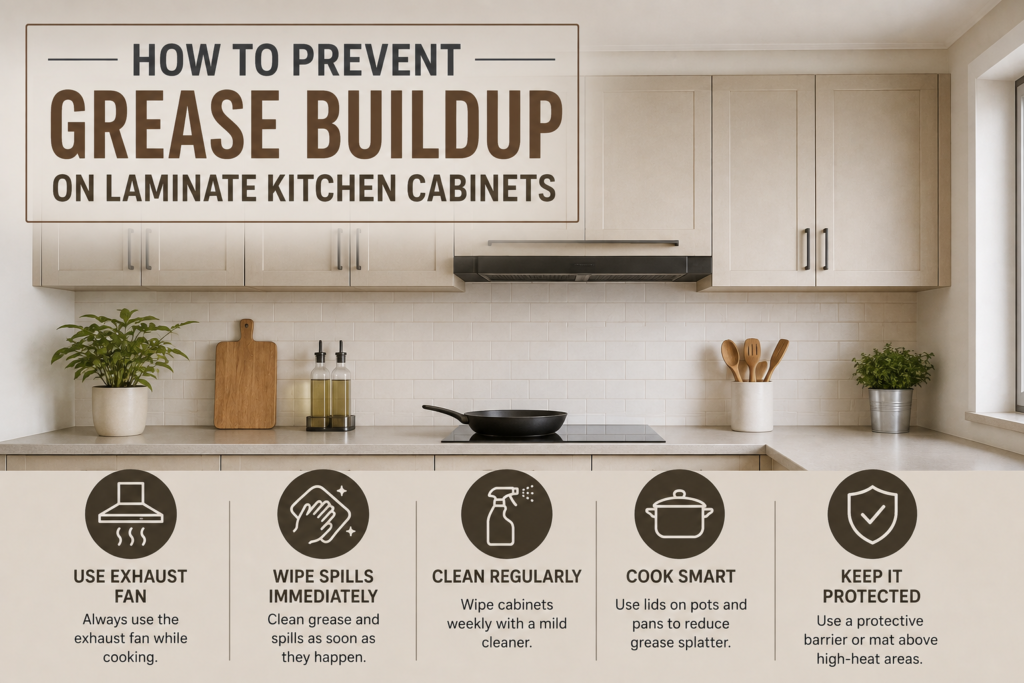
Preventing grease is much easier than removing it later.
These simple habits reduce cleaning time and help preserve your laminate finish.
1. Turn On the Range Hood Every Time You Cook
Cooking releases tiny grease particles into the air.
Those particles eventually settle on:
- Cabinet doors
- Drawer fronts
- Handles
- Trim
Using your range hood removes much of this airborne grease before it reaches your cabinets.
2. Clean Spills Immediately
Fresh stains wipe away easily.
Old stains become sticky and require more effort.
Whenever food splashes onto cabinets:
- Sauce
- Coffee
- Tea
- Oil
- Juice
Clean it immediately with a damp microfiber cloth.
3. Dust Weekly
Dust combines with cooking grease to create sticky residue.
A weekly wipe prevents buildup.
Pay special attention to:
- Upper cabinets
- Crown molding
- Decorative trim
- Tops Kitchen Cabinets
4. Keep Cabinet Handles Clean
Handles receive constant contact.
Oils from your hands slowly spread across cabinet doors.
Once a week, wipe:
- Knobs
- Pulls
- Handles
- Drawer fronts
This simple habit keeps fingerprints under control.
5. Never Leave Cabinets Wet
One mistake homeowners often make while learning how to clean laminate kitchen cabinets is forgetting to dry them.
Moisture can eventually seep into:
- Seams
- Corners
- Cabinet edges
Always dry laminate immediately after cleaning.
6. Avoid Hanging Wet Towels on Cabinet Doors
Wet towels may seem harmless.
However, constant moisture can eventually:
- Loosen adhesive
- Swell engineered wood
- Damage cabinet edges
Use towel hooks instead.
Common Mistakes to Avoid
Even quality laminate can be damaged by poor cleaning habits.
Avoid these common mistakes.
Using Too Much Water
Laminate resists moisture—but cabinet cores often do not.
Always use a damp cloth instead of a soaking wet one.
Using Abrasive Pads
Rough scrubbers permanently scratch laminate.
Always choose:
- Soft microfiber cloths
- Soft sponges
Spraying Cleaner Directly onto Cabinets
Instead:
- Spray your cloth first.
- Then wipe the cabinet.
This prevents excess liquid from reaching seams.
Ignoring Grease for Too Long
Grease hardens over time.
Cleaning every week is much easier than heavy scrubbing every few months.
Skipping the Drying Step
Always dry cabinet surfaces after cleaning.
This protects:
- Seams
- Edges
- Laminate finish
Signs Your Laminate Kitchen Cabinets Need More Than Cleaning
Sometimes cleaning how to clean laminate kitchen cabinets simply isn’t enough.
Consider replacing laminate cabinets if you notice:
- Peeling laminate
- Bubbling surfaces
- Swollen cabinet doors
- Loose edges
- Cracked laminate
- Water damage
- Burn marks
- Warped cabinet panels
Cleaning removes dirt.
It cannot repair structural damage.
Professional Tips for Keeping Laminate Cabinets Looking New
Professional Painted Kitchen Cabinets installers often recommend these simple habits.
Open Cabinets Gently
Repeated slamming loosens hinges.
Soft-close hinges reduce long-term wear.
Don’t Overload Shelves
Heavy cookware puts pressure on cabinet boxes.
Spread weight evenly.
Inspect Cabinets Every Few Months
Check for:
- Loose hinges
- Chipped edges
- Peeling laminate
- Water damage
- Loose handles
Small repairs prevent expensive replacements.
Protect Cabinets from Heat
Cabinets next to:
- Ovens
- Dishwashers
- Cooktops
experience more heat and moisture.
Allow steam to escape before opening the dishwasher fully.
Keep Sunlight Under Control
Long-term UV exposure may gradually fade laminate colors.
If possible:
- Use blinds
- Install curtains
- Apply UV window film
This helps preserve the cabinet finish.
Why Regular Maintenance Saves Money

How to clean laminate kitchen cabinets homeowners think cabinet replacement is inevitable after several years.
In reality, laminate cabinets often last 15–25 years or longer when properly maintained.
A simple weekly cleaning routine can:
- Preserve the finish
- Prevent grease buildup
- Reduce scratches
- Extend cabinet life
- Maintain your kitchen’s appearance
Replacing cabinets is expensive.
Maintaining them is not.
Final Thoughts
Learning how to clean laminate kitchen cabinets doesn’t require expensive products or complicated techniques. Most everyday dirt, fingerprints, and grease can be removed with warm water, a few drops of mild dish soap, and a soft microfiber cloth. By cleaning spills promptly, dusting regularly, and avoiding harsh chemicals or abrasive scrubbers, you can protect the laminate finish and keep your cabinets looking new for many years.
If you’ve been wondering how to clean laminate kitchen cabinets without causing scratches, fading, or peeling, the key is to use gentle cleaning products and stay consistent with your maintenance routine. Small habits, such as wiping away spills immediately, cleaning around handles, and drying cabinet surfaces after every wash, can make a significant difference over time.
Remember, knowing how to clean laminate kitchen cabinets is only part of the process—regular care is what keeps them looking their best. By following the step-by-step methods and preventive tips in this guide, you can avoid stubborn grease buildup, extend the lifespan of your cabinets, and maintain a clean, fresh, and welcoming kitchen for years to come. Whether you’re performing a quick weekly wipe-down or a seasonal deep clean, how to clean laminate kitchen cabinets the right way will help protect your investment and keep your kitchen looking as beautiful as the day your cabinets were installed.
FAQ’S…
What is the best cleaner for laminate surfaces?
The best cleaner for laminate surfaces is a mixture of warm water and mild dish soap. If you’re learning how to clean laminate kitchen cabinets, this gentle solution safely removes grease and dirt without affecting the finish. For stubborn stains, use a small amount of diluted white vinegar or a baking soda paste.
How to make laminate kitchen cabinets shine?
To restore shine while learning how to clean laminate kitchen cabinets, clean the surface with warm water and mild dish soap, then dry it thoroughly with a clean microfiber cloth. Regular dusting, prompt spill cleanup, and avoiding harsh chemicals help maintain the cabinet’s natural shine for years.
What cleaners are safe to use on laminate?
Safe cleaners include warm water, mild dish soap, diluted white vinegar, baking soda paste for stubborn stains, and cabinet-safe multi-surface cleaners. When deciding how to clean laminate kitchen cabinets, always choose gentle products and test any commercial cleaner on a hidden area first.
How to refresh laminate kitchen cabinets?
To refresh laminate kitchen cabinets, remove dust, clean grease with a mild soap solution, wipe away fingerprints, and dry the cabinets thoroughly. Following the proper steps for how to clean laminate kitchen cabinets regularly helps restore their appearance and keeps the finish looking fresh and well-maintained.
How do I know if my cabinets are laminate or veneer?
Laminate cabinets have a thin synthetic surface bonded to an engineered wood core, while veneer cabinets feature a thin layer of real wood. Before deciding how to clean laminate kitchen cabinets, identify the material, as laminate and wood veneer require slightly different cleaning and maintenance methods.