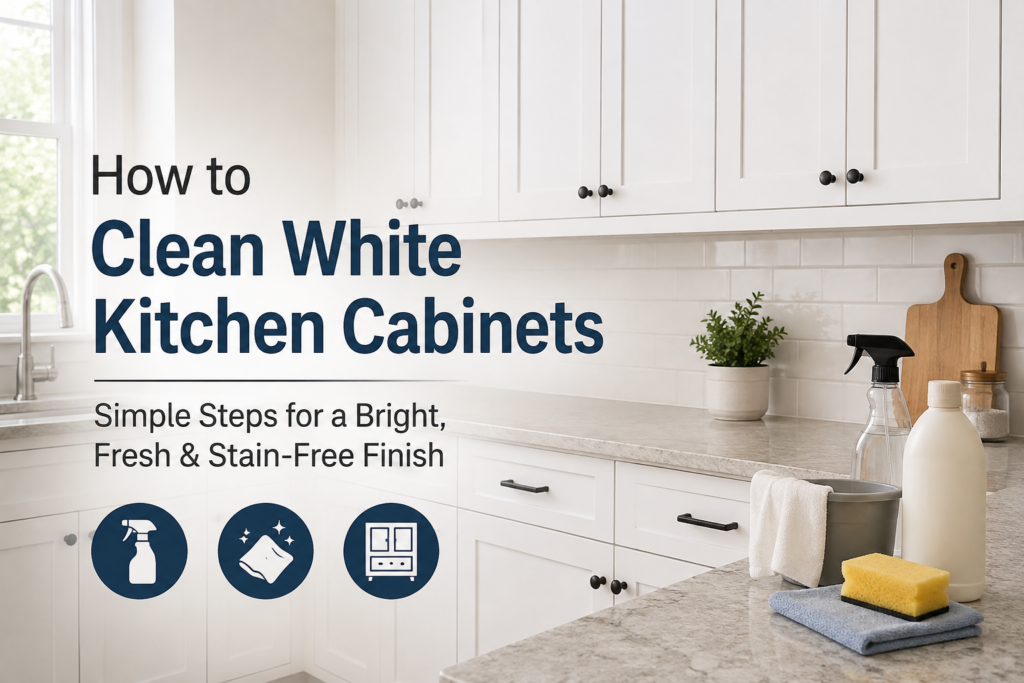
White kitchen cabinets never go out of style. They make your kitchen feel brighter, cleaner, and more spacious. Whether your cabinets are painted wood, laminate, MDF, or thermofoil, their crisp white finish instantly elevates the entire room. However, there’s one downside every homeowner discovers sooner or later—white cabinets reveal everything. Fingerprints, grease splatters, coffee stains, food spills, dust, and even tiny smudges become visible almost immediately.
The good news is that learning How to Clean White Kitchen Cabinets isn’t difficult. You don’t need expensive cleaning products or professional services. In fact, most homeowners already have everything they need sitting under the kitchen sink.
In this complete guide, you’ll learn How to Clean White Kitchen Cabinets safely without damaging the finish, remove stubborn grease, prevent yellowing, maintain their brilliant white appearance, and choose the best products to keep them looking like new. Whether you perform a quick weekly wipe-down or a deep seasonal clean, these proven methods will help protect your investment for years to come.
Why White Kitchen Cabinets Need Regular Cleaning
Unlike darker cabinets that naturally hide fingerprints and dust, white kitchen cabinets highlight every bit of dirt. That doesn’t mean they become dirty faster—it simply means dirt is easier to see.
Think about the cabinet door next to your stove. Every time you fry chicken, sauté vegetables, or boil pasta, tiny grease particles float through the air. Although they’re nearly invisible, they eventually settle on nearby cabinet doors. Once grease lands on the surface, dust quickly sticks to it, creating a dull, sticky layer.
One homeowner shared that she believed her white shaker cabinets had started turning yellow after only three years. She considered repainting them until she decided to thoroughly clean one cabinet door using warm water and a few drops of dish soap. After just a few minutes, the cabinet looked bright white again. The finish hadn’t failed—it was simply hidden beneath layers of cooking grease and everyday grime.
That’s why understanding How to Clean White Kitchen Cabinets regularly is much easier than trying to remove months or years of built-up residue later.
Regular cleaning helps you:
- Preserve the bright white finish.
- Remove grease before it hardens.
- Prevent stains from becoming permanent.
- Reduce fingerprints and sticky residue.
- Keep your kitchen looking fresh and hygienic.
- Extend the life of your cabinet finish.
- Avoid costly refinishing or replacement.
Pro Tip: Five minutes of weekly maintenance can save hours of deep cleaning later.
Essential Supplies for How to Clean White Kitchen Cabinets
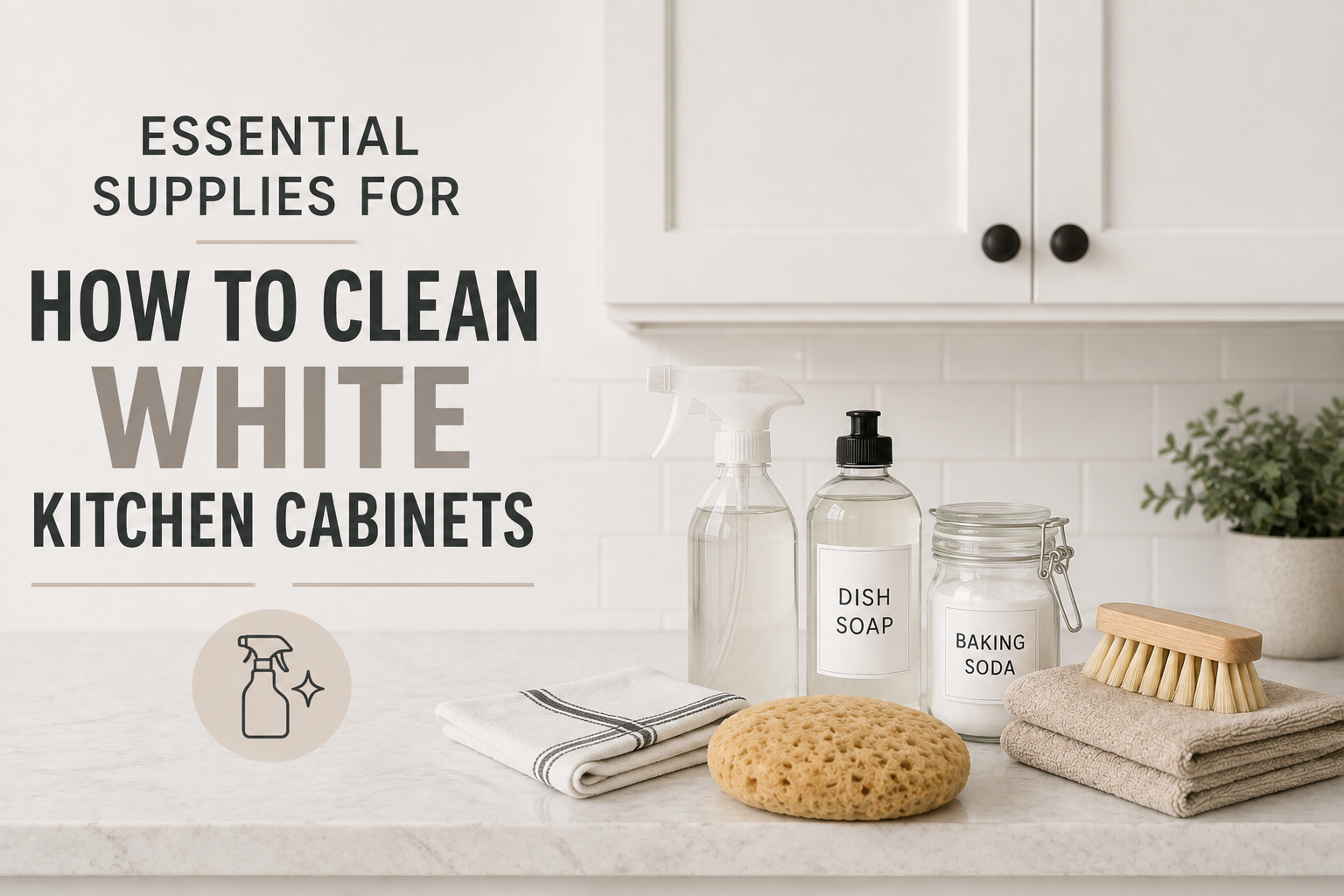
One of the biggest misconceptions about How to Clean White Kitchen Cabinets is that specialty cleaners are required. In reality, simple household products work extremely well when used correctly.
Before you begin, gather these supplies:
Basic Cleaning Supplies
- Soft microfiber cloth
- Mild dishwashing liquid
- Warm water
- Soft sponge
- Dry lint-free towel
- Spray bottle (optional)
- Small bucket or bowl
- Soft-bristled toothbrush
These gentle supplies are suitable for most painted, laminate, thermofoil, and sealed white cabinets.
Optional Supplies for Stubborn Grease and Stains
If your cabinets haven’t been cleaned for several months, these products can make deep cleaning easier:
- Baking soda
- White distilled vinegar
- Cabinet-safe multi-surface cleaner
- Citrus-based cabinet cleaner
- Cabinet-safe degreaser
- Soft cleaning sponge
Remember, stronger doesn’t always mean better. Gentle cleaning methods preserve your cabinet finish much longer.
What NOT to Use on White Kitchen Cabinets
Knowing How to Clean White Kitchen Cabinets also means understanding what should never touch them.
Many common household cleaners can permanently damage painted or laminated finishes.
Avoid These Products
- Steel wool
- Scouring pads
- Abrasive brushes
- Bleach
- Ammonia-based cleaners
- Harsh degreasers
- Strong solvents
- Steam cleaners
- Excessive water
- Magic Erasers (they act like very fine sandpaper and can dull painted finishes over time)
Even though some of these products remove grease quickly, they may scratch, fade, or strip the protective coating from your cabinets.
Rule of Thumb: Always start with the gentlest cleaning solution and only increase cleaning strength if absolutely necessary.
Prepare Before You Clean White Kitchen Cabinets
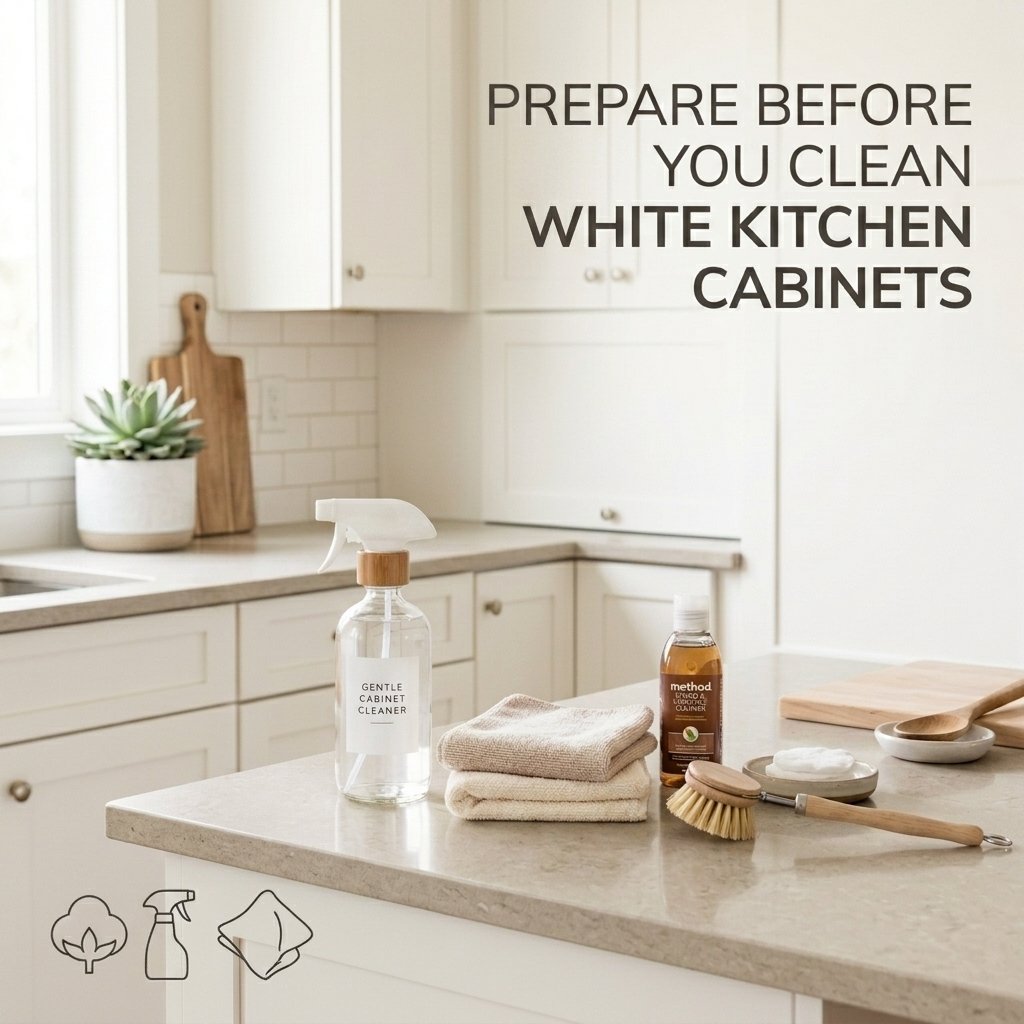
A few minutes of preparation can make cleaning faster and help prevent accidental damage.
Step 1: Remove Loose Dust
Before using any cleaning solution, wipe away loose dust with a dry microfiber cloth.
Focus on:
- Cabinet doors
- Drawer fronts
- Handles
- Decorative trim
- Cabinet edges
- Crown molding
Dust particles can act like tiny abrasives. Removing them first helps prevent scratches when you begin wiping with a damp cloth.
Step 2: Identify Your Cabinet Material
Different cabinet materials require slightly different care.
Your white cabinets may be:
- Painted wood
- Sealed wood
- Laminate
- Thermofoil
- MDF
- Metal
If you’re unsure, always test any cleaner on a hidden area before cleaning visible surfaces.
Step 3: Mix a Gentle Cleaning Solution
For everyday maintenance, you only need:
- Warm water
- A few drops of mild dish soap
Mix them together in a bowl or spray bottle.
The solution should be light and soapy—not heavily concentrated.
Using too much soap creates residue that’s harder to remove later.
Step 4: Prepare Two Cloths
Always keep:
- One damp microfiber cloth for cleaning.
- One dry microfiber cloth for drying.
Drying immediately is one of the most important parts of How to Clean White Kitchen Cabinets, especially if they’re made from wood or MDF.
How Often Should You Clean White Kitchen Cabinets?
Many homeowners wait until their cabinets look dirty before cleaning them. Unfortunately, by then grease has already started bonding with dust.
A simple cleaning schedule makes maintenance much easier.
Daily
- Wipe fresh food splatters.
- Remove visible fingerprints.
- Dry water splashes immediately.
Weekly
- Wipe cabinet doors.
- Clean drawer fronts.
- Remove grease around cooking areas.
- Clean handles and knobs.
Monthly
- Clean decorative grooves.
- Remove grease near the stove.
- Wipe cabinet sides.
- Inspect for stains.
Every 3–6 Months
Perform a complete deep clean, including:
- Cabinet interiors
- Shelves
- Drawer fronts
- Cabinet edges
- Hardware
Routine cleaning prevents stubborn buildup and keeps your cabinets looking bright all year long.
Step-by-Step: How to Clean White Kitchen Cabinets Safely
Now that your cleaning supplies are ready, it’s time to learn How to Clean White Kitchen Cabinets the right way. The goal isn’t to scrub as hard as possible—it’s to remove grease, dust, and stains while protecting the cabinet finish.
By following these simple steps, you can restore the bright white appearance of your cabinets without causing scratches, discoloration, or moisture damage.
Step 1: Dust the Cabinets First
Before introducing any moisture, remove loose dust and crumbs.
Using a dry microfiber cloth, gently wipe:
- Cabinet doors
- Drawer fronts
- Cabinet edges
- Crown molding
- Decorative trim
- Handles and knobs
This simple step prevents dust from turning into muddy streaks once water is applied.
Pro Tip: Always work from the top cabinets down to the lower cabinets.
Step 2: Prepare a Gentle Cleaning Solution
For routine cleaning, simplicity works best.
Mix:
- 2–3 drops of mild dish soap
- 1 bowl of warm water
Avoid using hot water because excessive heat may soften some painted finishes over time.
The solution should feel lightly soapy—not heavily concentrated.
Step 3: Dampen Your Cloth—Never Soak It
Dip your microfiber cloth into the cleaning solution.
Then wring it out thoroughly.
Your cloth should be:
✔ Damp
NOT
Dripping wet
Too much water can seep into cabinet joints, edges, hinges, and unfinished wood, leading to swelling or finish damage.
Step 4: Wipe One Cabinet at a Time
Learning How to Clean White Kitchen Cabinets is easier when you work methodically.
Instead of wiping the entire kitchen at once:
- Clean one cabinet.
- Dry it immediately.
- Move to the next.
Work from:
Top → Bottom
This prevents dirty water from dripping onto already-cleaned surfaces.
Step 5: Clean Around Handles and Knobs
Cabinet hardware collects the most fingerprints and grease.
Wrap your damp microfiber cloth around:
- Handles
- Knobs
- Pulls
Then wipe around the surrounding painted area.
If necessary, use a soft toothbrush to clean tiny grooves where grease often collects.
Step 6: Dry Every Surface Immediately
One of the most overlooked parts of How to Clean White Kitchen Cabinets is drying.
Using a clean microfiber towel:
- Dry cabinet doors.
- Dry corners.
- Dry edges.
- Dry around hardware.
Removing moisture immediately helps prevent:
- Water spots
- Streaks
- Swelling
- Finish damage
How to Remove Grease from White Kitchen Cabinets
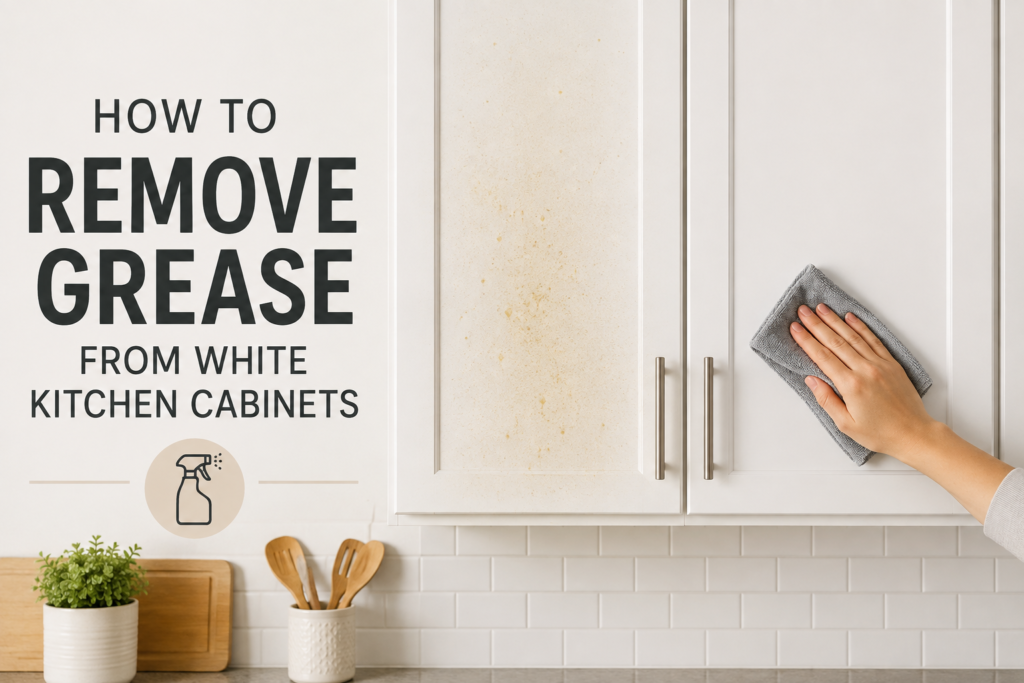
Grease is the biggest enemy of white cabinets.
It usually builds up:
- Around the stove
- Above the range hood
- Beside the microwave
- Near cooking areas
Luckily, removing grease doesn’t require harsh chemicals.
Method 1: Dish Soap
For light grease:
- Mix warm water and mild dish soap.
- Hold the damp cloth over greasy spots for 20–30 seconds.
- Gently wipe.
- Dry immediately.
Dish soap naturally breaks down cooking oils without damaging cabinet finishes.
Method 2: Baking Soda Paste
For stubborn grease:
Mix:
- 2 parts baking soda
- 1 part warm water
Create a thick paste.
Apply only to the greasy area.
Allow it to sit for 3–5 minutes.
Then gently wipe using a soft microfiber cloth.
Finish by wiping with clean water and drying thoroughly.
How to Remove Stubborn Stains
Sometimes you’ll notice:
- Coffee stains
- Sauce splashes
- Tea stains
- Food residue
- Sticky fingerprints
Instead of scrubbing harder, let your cleaner do the work.
Place a warm, damp cloth over the stain for one minute.
Then wipe gently.
If needed, repeat the process instead of applying excessive pressure.
Remember:
Gentle cleaning repeated twice is far safer than aggressive scrubbing once.
How to Clean Cabinet Corners and Decorative Details
Raised-panel cabinets and shaker cabinets often collect dirt inside grooves.
Use:
- A soft toothbrush
- A microfiber cloth
- Mild soap solution
Clean gently around:
- Decorative trim
- Raised panels
- Corners
- Hinges
- Door edges
Avoid using stiff brushes.
Natural Methods for How to Clean White Kitchen Cabinets
Many homeowners prefer avoiding commercial cleaning products.
Fortunately, natural solutions work surprisingly well.
White Vinegar Solution
Mix:
- Equal parts distilled white vinegar
- Warm water
Apply the solution to a microfiber cloth—not directly onto the cabinet.
Wipe gently.
Then dry immediately.
This solution works well for:
- Light grease
- Fingerprints
- Water spots
Always test vinegar on an inconspicuous area first because some painted finishes may react differently.
Baking Soda for Tough Stains
Baking soda is excellent for:
- Grease
- Sticky residue
- Food stains
However:
Never scrub aggressively.
The paste should loosen stains—not sand away the cabinet finish.
How to Remove Yellow Stains from White Kitchen Cabinets
One of the biggest concerns homeowners have after learning How to Clean White Kitchen Cabinets is yellowing.
Not every yellow cabinet has permanently discolored paint.
Sometimes the yellow appearance comes from years of grease buildup.
Step 1: Perform a Deep Cleaning
Wash the cabinet using:
- Warm water
- Mild dish soap
- Microfiber cloth
Dry thoroughly.
Check the cabinet in natural daylight.
If it looks brighter, grease was the problem.
Step 2: Spot-Treat Yellow Areas
If yellow spots remain:
Apply baking soda paste.
Leave it for five minutes.
Wipe gently.
Dry immediately.
Step 3: Evaluate the Finish
If the cabinet still appears yellow after cleaning:
The finish itself may have aged.
Common causes include:
- Sunlight exposure
- Heat
- Cooking smoke
- Natural paint aging
Unfortunately, no cleaner can restore aged paint.
At that point, repainting or replacing cabinet doors may be the only permanent solution.
Cleaning Different Types of White Kitchen Cabinets
Not every cabinet material should be cleaned the same way.
Understanding your cabinet type helps prevent accidental damage.
How to Clean Painted White Kitchen Cabinets
Painted cabinets require the gentlest approach.
Use:
- Mild dish soap
- Warm water
- Soft microfiber cloth
Avoid:
- Abrasive pads
- Strong degreasers
- Magic Erasers
These products may dull or scratch painted finishes.
How to Clean Laminate White Cabinets
Laminate is durable but dislikes excessive moisture.
Use:
- Damp cloth
- Mild soap
Dry immediately.
Pay special attention to seams and edges because trapped water may cause lifting over time.
How to Clean Thermofoil Cabinets
Thermofoil cabinets clean easily with warm water and mild soap.
Avoid:
- Steam cleaners
- Excessive heat
- Strong solvents
Heat may weaken the adhesive beneath the thermofoil surface.
How to Clean White Wood Cabinets
White-painted wood cabinets need regular maintenance.
Always:
- Wipe with a soft cloth.
- Remove moisture immediately.
- Clean gently around wood joints.
- Never soak the surface.
Proper care helps preserve both the paint and the wood underneath.
How to Keep White Kitchen Cabinets Clean Longer
Learning How to Clean White Kitchen Cabinets is only part of the equation. The real secret is preventing dirt, grease, and stains from building up in the first place. With a few simple habits, you can spend less time scrubbing and more time enjoying a bright, beautiful kitchen.
1. Wipe Spills Immediately
Fresh spills are much easier to remove than dried stains.
Whether it’s:
- Tomato sauce
- Coffee
- Tea
- Cooking oil
- Juice
- Wine
Always wipe it away as soon as possible using a damp microfiber cloth.
This prevents:
- Permanent staining
- Sticky residue
- Yellow discoloration
- Extra scrubbing later
2. Use Your Range Hood Every Time You Cook
Many homeowners overlook this simple habit.
Every time you fry, sauté, or boil food, tiny grease particles float through the air and settle on nearby cabinet doors.
Running your range hood helps:
- Reduce airborne grease
- Minimize sticky buildup
- Protect white cabinet finishes
- Improve indoor air quality
It’s one of the easiest ways to keep How to Clean White Kitchen Cabinets from becoming a major cleaning project.
3. Clean Cabinet Handles Weekly
Most fingerprints collect around:
- Door knobs
- Drawer pulls
- Cabinet handles
Natural oils from your hands attract dust and cooking grease.
A quick weekly wipe around the hardware prevents dark smudges from forming.
4. Dust Cabinets Regularly
Dust may seem harmless, but when it mixes with grease, it creates a sticky film that’s much harder to remove.
Use a dry microfiber cloth once a week to dust:
- Cabinet doors
- Crown molding
- Decorative trim
- Cabinet tops
- Open shelving
Regular dusting helps preserve the bright white finish.
5. Avoid Direct Sunlight
One of the biggest causes of yellowing isn’t dirt—it’s prolonged exposure to sunlight.
Over time, UV rays can gradually discolor some painted finishes.
To reduce yellowing:
- Install blinds or curtains.
- Use UV-filtering window films.
- Keep direct afternoon sunlight off cabinet doors whenever possible.
6. Keep Moisture Under Control
White kitchen cabinets, especially those made from wood or MDF, don’t like excessive moisture.
After cooking:
- Turn on the exhaust fan.
- Wipe away condensation.
- Never leave wet towels hanging over cabinet doors.
Too much moisture may eventually cause swelling, peeling, or finish failure.
7. Deep Clean Every Few Months
Even with regular maintenance, cabinets benefit from occasional deep cleaning.
Every three to six months:
- Empty cabinets.
- Vacuum crumbs.
- Clean inside shelves.
- Wipe cabinet interiors.
- Wash cabinet fronts.
- Clean decorative trim.
- Dry every surface thoroughly.
A deep clean restores brightness and removes hidden grease.
Common Mistakes to Avoid
Even if you know How to Clean White Kitchen Cabinets, a few common mistakes can shorten the life of the finish.
Using Too Much Water
Water is one of the biggest enemies of cabinet finishes.
Never soak cabinet doors or spray cleaning solution directly onto them.
Instead:
✔ Spray the cloth.
✔ Wipe the cabinet.
✔ Dry immediately.
Scrubbing Too Hard
If a stain won’t come off, don’t press harder.
Aggressive scrubbing can:
- Scratch paint
- Dull glossy finishes
- Remove protective coatings
Instead, allow the cleaning solution to sit on the stain for a few minutes before wiping gently.
Using Abrasive Cleaners
Avoid:
- Steel wool
- Scouring pads
- Magic Erasers
- Harsh degreasers
- Bleach
- Ammonia-based cleaners
These products may permanently damage painted, laminate, or thermofoil finishes.
Ignoring Small Grease Spots
Grease becomes much harder to remove once it hardens.
Instead of waiting until cabinets look dirty, clean small Greasy Kitchen Cabinets spots as soon as you notice them.
Regular maintenance saves time and protects the finish.
Leaving Cabinets Wet
Always dry cabinets after cleaning.
Standing moisture can lead to:
- Water spots
- Swollen wood
- Peeling paint
- Rusty hinges
- Finish damage
A dry microfiber cloth takes only a few extra seconds but makes a big difference.
Best Products for Cleaning White Kitchen Cabinets
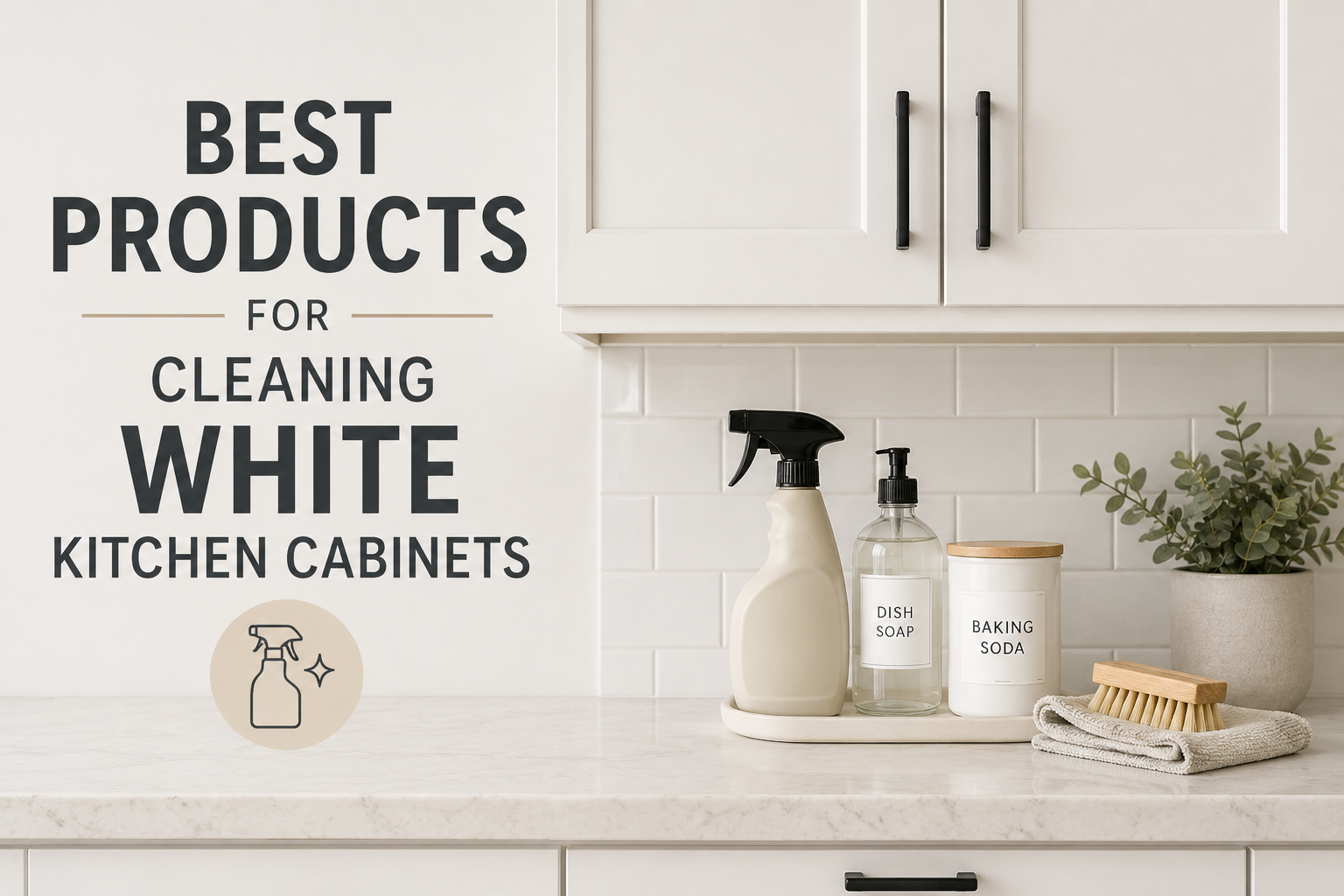
You don’t need expensive specialty cleaners to keep your cabinets looking their best.
Here are some of the safest and most effective options.
Mild Dish Soap
Best for: Everyday cleaning
Cuts through grease without damaging painted or sealed finishes.
Microfiber Cloth
Best for: Dusting and wiping
Soft fibers lift dirt without scratching delicate surfaces.
Cabinet-Safe Multi-Surface Cleaner
Best for: Deep cleaning
Choose a cleaner specifically labeled as safe for painted or finished cabinetry.
Baking Soda
Best for: Removing stubborn grease and stains
Use as a paste with water and apply only to affected areas.
White Distilled Vinegar
Best for: Natural cleaning
Dilute with water before use and always test on an inconspicuous area first.
How Often Should You Deep Clean White Kitchen Cabinets?
Following a simple schedule helps keep your cabinets bright and prevents heavy buildup.
Daily
- Wipe spills immediately.
- Remove visible fingerprints.
- Dry water splashes.
Weekly
- Dust cabinet doors.
- Clean handles and knobs.
- Wipe areas around the stove.
- Remove light grease.
Monthly
- Clean decorative trim.
- Wash cabinet edges.
- Remove buildup around hardware.
- Check for yellowing or stains.
Every 3–6 Months
Complete a thorough deep clean:
- Cabinet interiors
- Shelves
- Drawer fronts
- Door fronts
- Cabinet sides
- Decorative moldings
- Hardware
Yearly
Inspect cabinets for:
- Loose hinges
- Chipped paint
- Peeling laminate
- Water damage
- Worn finish
Addressing small issues early helps extend the life of your cabinets.
When Should You Replace Instead of Clean?
Sometimes cleaning can restore white cabinets to their original beauty. Other times, the finish has reached the end of its life.
Consider replacing or refinishing your cabinets if you notice:
- Peeling paint
- Cracked or chipped finishes
- Swollen wood from water damage
- Yellowing that remains after deep cleaning
- Loose or damaged cabinet doors
- Delaminating thermofoil surfaces
If your cabinets only have grease, dust, fingerprints, or light stains, a proper cleaning routine is usually all they need.
Recommended Products for White Kitchen Cabinets
These products make How to Clean White Kitchen Cabinets easier while protecting the finish.
Mild Dish Soap
Perfect for everyday cleaning and grease removal.
Microfiber Cloth
Safely removes dust, fingerprints, and light dirt without scratching.
Cabinet-Safe Cleaner
Ideal for seasonal deep cleaning of painted and laminate cabinets.
Baking Soda
Excellent for stubborn grease and stain removal.
Distilled White Vinegar
A natural cleaner that works well when diluted and tested on a hidden area first.
Final Thoughts
Learning How to Clean White Kitchen Cabinets is one of the easiest ways to preserve the beauty, brightness, and value of your kitchen. White cabinets may show dirt more easily than darker finishes, but with the right cleaning routine, they can stay fresh and beautiful for many years.
The key is consistency. Regular dusting, prompt spill cleanup, gentle cleaning solutions, and periodic deep cleaning will prevent grease, fingerprints, and stains from becoming difficult to remove. By avoiding harsh chemicals, abrasive scrubbers, and excessive moisture, you’ll protect the finish while keeping your cabinets looking as bright as the day they were installed.
Whether your are painted Wood Kitchen Cabinets, laminate, MDF, or thermofoil, following this complete guide on How to Clean White Kitchen Cabinets will help you clean confidently, maintain a spotless kitchen, and extend the life of your cabinetry without unnecessary repairs or replacement.
FAQ’S…
How to Clean White Kitchen Cabinets without damaging the finish?
The safest way to How to Clean White Kitchen Cabinets is by using a microfiber cloth, warm water, and a few drops of mild dish soap. Wipe gently without applying excessive pressure, clean one cabinet at a time, and always dry the surface immediately to protect the finish.
What is the best cleaner for How to Clean White Kitchen Cabinets?
The best cleaner for How to Clean White Kitchen Cabinets is a simple solution of warm water and mild dish soap. It safely removes fingerprints, grease, and everyday dirt without harming painted, laminate, or thermofoil cabinet finishes.
Can I use vinegar for How to Clean White Kitchen Cabinets?
Yes. Distilled white vinegar diluted with equal parts warm water can be used for How to Clean White Kitchen Cabinets. Always apply the solution to a microfiber cloth instead of spraying it directly on the cabinets, and test it on a hidden area first.
How often should I clean white kitchen cabinets?
For the best results with How to Clean White Kitchen Cabinets, wipe cabinet doors weekly, clean spills immediately, and deep clean both the inside and outside of your cabinets every three to six months.
What should I avoid when following How to Clean White Kitchen Cabinets?
When practicing How to Clean White Kitchen Cabinets, avoid steel wool, abrasive scrubbers, bleach, ammonia-based cleaners, harsh solvents, excessive water, steam cleaners, and Magic Erasers because they can damage or dull the cabinet finish.