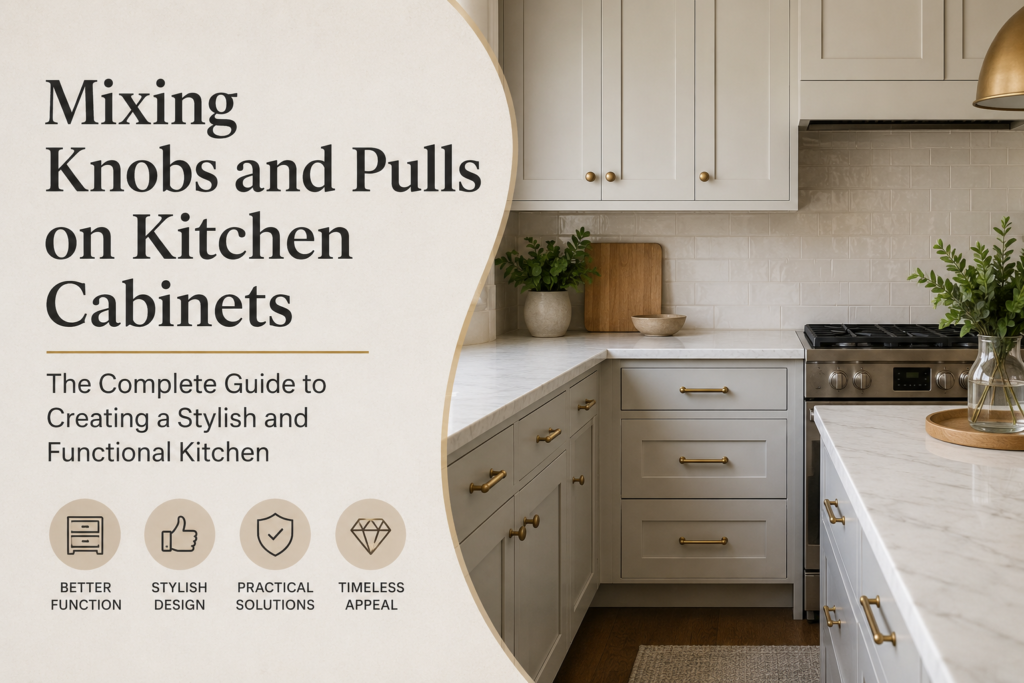
Mixing Knobs and Pulls on Kitchen Cabinets is one of the easiest ways to improve both the style and functionality of your kitchen without a major renovation. When homeowners renovate a kitchen, they usually spend hours choosing cabinets, countertops, backsplashes, and appliances. Surprisingly, one of the smallest details—cabinet hardware—can have one of the biggest impacts on the overall design.
If you’re wondering whether mixing knobs and pulls on kitchen cabinets is a good idea, the answer is yes. In fact, many professional designers intentionally combine cabinet knobs and cabinet pulls to improve both functionality and appearance. The key is knowing where each type of hardware works best and how to create a balanced, cohesive look.
Imagine visiting two nearly identical kitchens. One has the same hardware on every cabinet and drawer, while the other uses elegant knobs on the cabinet doors and sleek pulls on the drawers. Although both kitchens may have the same cabinets, the second often feels more polished, thoughtfully designed, and easier to use. That’s the power of choosing the right hardware.
In this guide, you’ll learn the practical rules designers follow, discover modern design ideas, and gain the confidence to choose hardware that complements your kitchen perfectly.
Can You Mix Knobs and Pulls on Kitchen Cabinets?
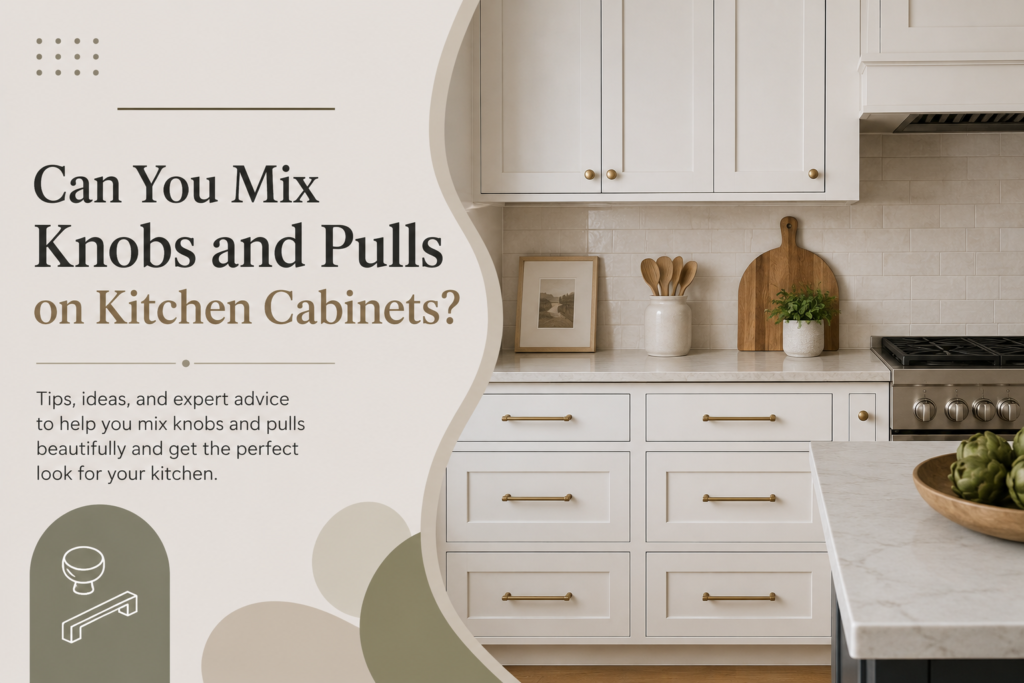
Absolutely. Can you mix knobs and pulls on kitchen cabinets? Yes—and it’s one of the most popular approaches in modern kitchen design.
Rather than choosing one hardware style for every cabinet, many homeowners combine both because each serves a different purpose Mixing Knobs and Pulls on Kitchen Cabinets.
Generally:
- Cabinet knobs work beautifully on cabinet doors.
- Cabinet pulls are often the better choice for drawers.
- Large pantry doors usually look and function better with longer pulls.
- Heavy drawers become much easier to open with pulls instead of knobs.
This combination isn’t just about aesthetics. Pulls provide more gripping surface, making heavy drawers easier to open, while knobs offer a simple, classic appearance for cabinet doors.
The goal isn’t to make every cabinet look identical—it’s to make the entire kitchen feel intentional.
Rules for Cabinet Knobs and Pulls
When Mixing Knobs and Pulls on Kitchen Cabinets, it’s important to maintain consistency in finish, placement, and overall design. Although there are no strict laws in interior design, experienced designers follow several rules for cabinet knobs and pulls to create a balanced look.
1. Match the Overall Design Style
Choose hardware that complements your kitchen style.
For example:
- Shaker cabinets pair beautifully with simple bar pulls or round knobs.
- Traditional kitchens often feature decorative knobs with classic cup pulls.
- Modern kitchens usually showcase sleek linear pulls with minimal detailing.
- Farmhouse kitchens often combine matte black or antique brass hardware.
Keeping the hardware style consistent creates visual harmony throughout the room.
2. Keep the Finish Consistent
One of the easiest ways to successfully combine hardware is by choosing one finish throughout the kitchen.
Popular finishes include:
- Matte Black
- Brushed Brass
- Satin Nickel
- Champagne Bronze
- Polished Chrome
Using the same finish for both knobs and pulls makes different hardware styles feel like part of the same collection.
3. Think About Function First
Beautiful kitchens should also be practical.
Ask yourself:
- Which drawers are opened dozens of times every day?
- Which cabinets store heavy cookware?
- Which doors are rarely used?
For example, a deep drawer filled with pots and pans can become frustrating if fitted with a small knob. A sturdy pull provides better leverage and makes opening the drawer much easier Mixing Knobs and Pulls on Kitchen Cabinets.
Meanwhile, lightweight upper cabinet doors open effortlessly with compact knobs.
Design should always support everyday living.
4. Maintain Consistent Placement
Consistency is what separates a professionally designed kitchen from one that feels unfinished.
Once you decide where your knobs and pulls belong, install them in the same location on similar cabinets throughout the kitchen.
For example:
- Place knobs in the same corner of every cabinet door.
- Install drawer pulls at the same height across all drawers.
- Keep pull lengths proportional to drawer width.
These small details create a clean and organized appearance.
Kitchen Cabinets with Knobs and Handles: Which Hardware Works Best?
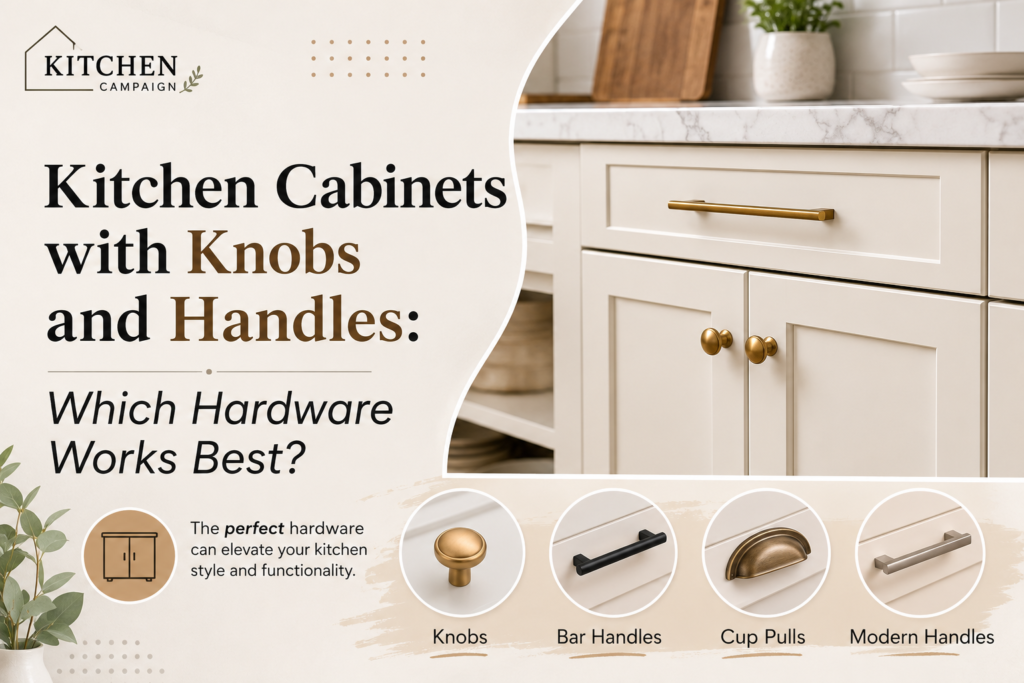
Many homeowners wonder whether kitchen cabinets with knobs and handles are better than using only one hardware style.
The truth is that each offers unique advantages.
Benefits of Cabinet Knobs
- Affordable
- Easy to install
- Timeless appearance
- Excellent for cabinet doors
- Available in countless styles and finishes
Benefits of Cabinet Pulls
- Easier to grip
- Better for heavy drawers
- More comfortable for everyday use
- Modern appearance
- Available in many different lengths
Many homeowners prefer Mixing Knobs and Pulls on Kitchen Cabinets because it offers the perfect balance between aesthetics and everyday usability.
A friend of mine recently remodeled her kitchen on a modest budget. She originally planned to install brushed brass knobs on every cabinet and drawer. After living with sample hardware for a few days, she realized that opening deep drawers filled with dishes required much more effort than expected. She switched to pulls for the drawers while keeping knobs on the doors. The final result looked professionally designed, and the kitchen became noticeably easier to use every single day.
That’s a perfect example of how thoughtful hardware choices improve both style and functionality.
Mixing and Matching Cabinet Hardware Ideas
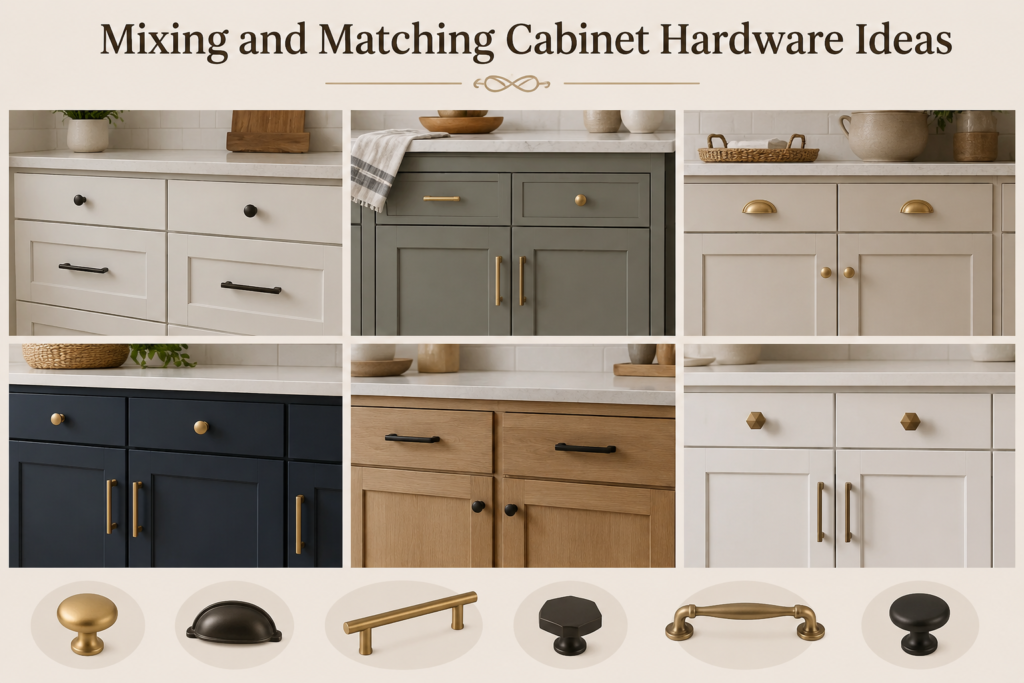
One of the biggest advantages of mixing knobs and pulls on kitchen cabinets is the flexibility it gives you to personalize your space. Whether your kitchen is modern, traditional, farmhouse, or transitional, combining different hardware styles can create a designer-inspired look without increasing your renovation budget.
Here are some popular combinations that work beautifully:
Modern Kitchens
- Long matte black bar pulls on drawers
- Small matching round knobs on upper cabinets
- Flat-panel cabinet doors
- Clean, minimalist design
Farmhouse Kitchens
- Antique brass cup pulls on drawers
- Round ceramic or bronze knobs on cabinet doors
- White shaker cabinets
- Natural wood accents
Traditional Kitchens
- Decorative brass knobs
- Matching cup pulls
- Raised-panel cabinet doors
- Warm wood finishes
Contemporary Kitchens
- Satin nickel pulls
- Square geometric knobs
- Minimal decorative details
- Neutral color palette
The secret is maintaining consistency in Mixing Knobs and Pulls on Kitchen Cabinets finish while allowing the hardware style to complement each cabinet’s function.
Modern Kitchen Cabinet Hardware Ideas
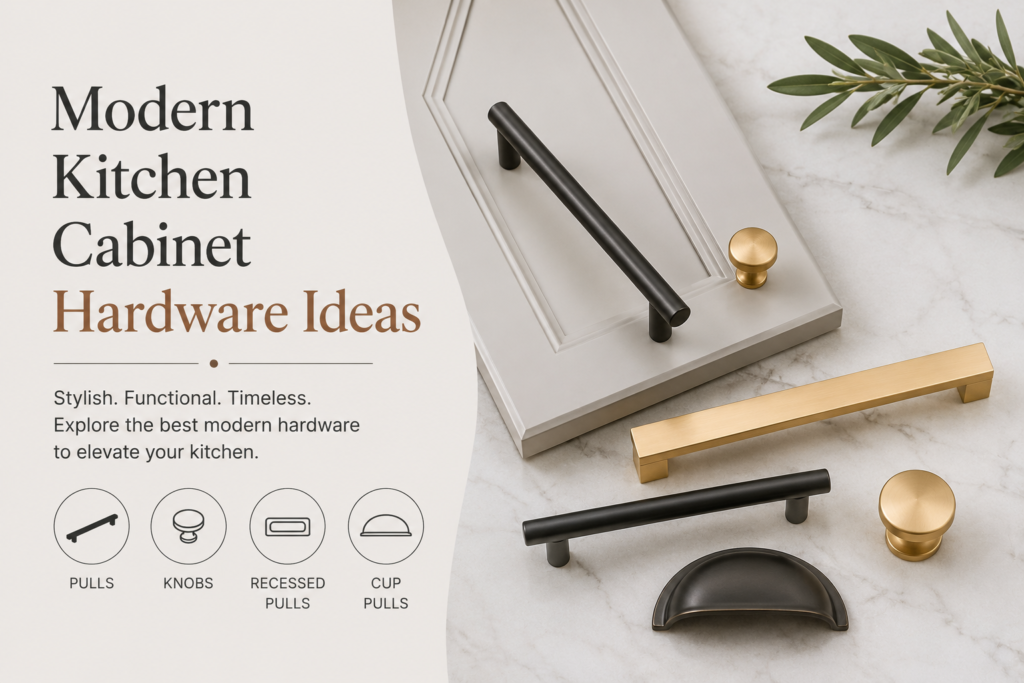
If you’re planning on Mixing Knobs and Pulls on Kitchen Cabinets, choose hardware that complements your cabinet style and kitchen décor. Today’s modern kitchen cabinet hardware ideas focus on simplicity, clean lines, and functionality.
Some of the most popular trends include:
- Matte black cabinet hardware for bold contrast
- Brushed brass pulls for warmth and elegance
- Champagne bronze hardware for luxury-inspired kitchens
- Satin nickel hardware for timeless versatility
- Long linear pulls on pantry cabinets
- Slim edge pulls for minimalist cabinetry
- Soft-close hinges for quieter operation
Another growing trend is oversized pulls on large drawers. Besides creating a striking visual statement, they also make heavy drawers much easier to open.
Remember that modern design isn’t about following every trend—it’s about choosing quality hardware that complements your kitchen for years to come.
Pictures of Kitchen Cabinets with Knobs and Pulls
If you’re searching for Mixing Knobs and Pulls on Kitchen Cabinets, you’ll notice a common pattern among professionally designed kitchens.
Popular design combinations include:
- White shaker cabinets with brushed brass knobs and matching drawer pulls.
- Navy blue cabinets paired with gold hardware.
- Green cabinets featuring matte black pulls and round knobs.
- Walnut cabinets with satin nickel hardware.
- Two-tone kitchens using black lower cabinets and white upper cabinets with matching hardware.
As you browse inspiration photos, don’t just focus on the hardware itself. Notice how designers use consistent finishes, proportional sizing, and symmetrical placement to create a polished appearance.
Can You Mix and Match Kitchen Hardware Throughout the Home?
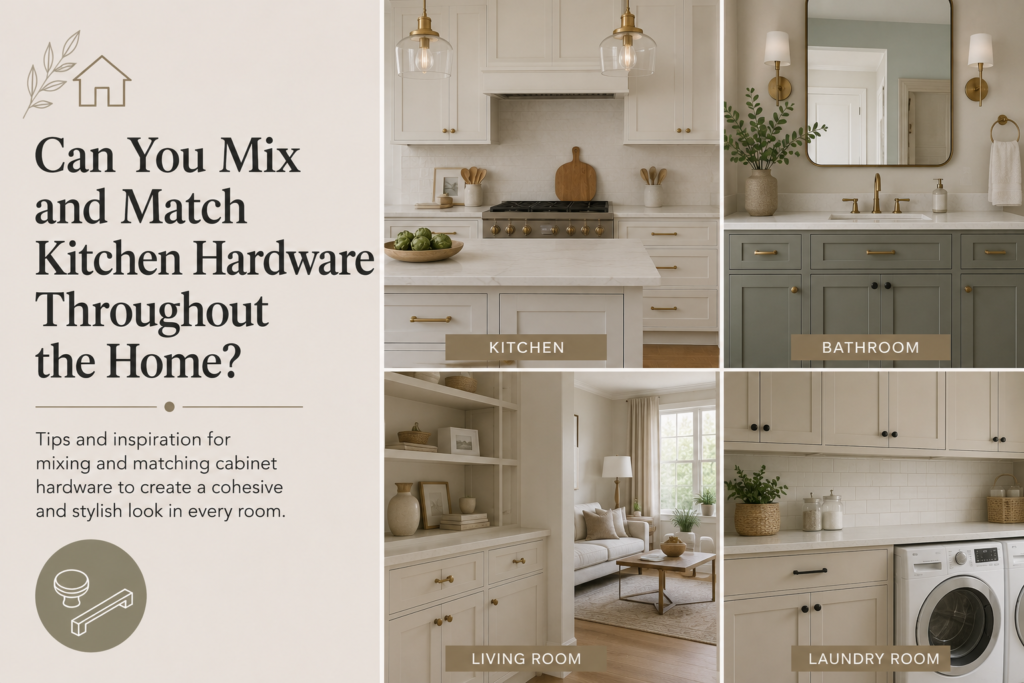
Many homeowners ask, “Can you mix and match kitchen hardware?” The answer is yes—as long as you maintain a consistent design language throughout your home.
For example:
- Use the same finish in the kitchen, pantry, and laundry room.
- Coordinate hardware with faucets and lighting fixtures.
- Match your cabinet hardware to nearby door handles where practical.
- Repeat similar shapes and styles across connected spaces.
Consistency creates flow, making your home feel professionally designed rather than randomly decorated Mixing Knobs and Pulls on Kitchen Cabinets.
Mixing Knobs and Pulls on Bathroom Cabinets
The same design principles also apply when mixing knobs and pulls on bathroom cabinets.
For bathroom vanities:
- Use pulls on larger drawers that store toiletries.
- Install knobs on cabinet doors below the sink.
- Choose moisture-resistant finishes like stainless steel, brushed nickel, or matte black.
- Coordinate the hardware with your faucet, towel bars, and mirror frame.
Since bathrooms experience higher humidity than kitchens, investing in durable finishes helps maintain their appearance for years.
Step-by-Step Guide to Choosing the Right Cabinet Hardware
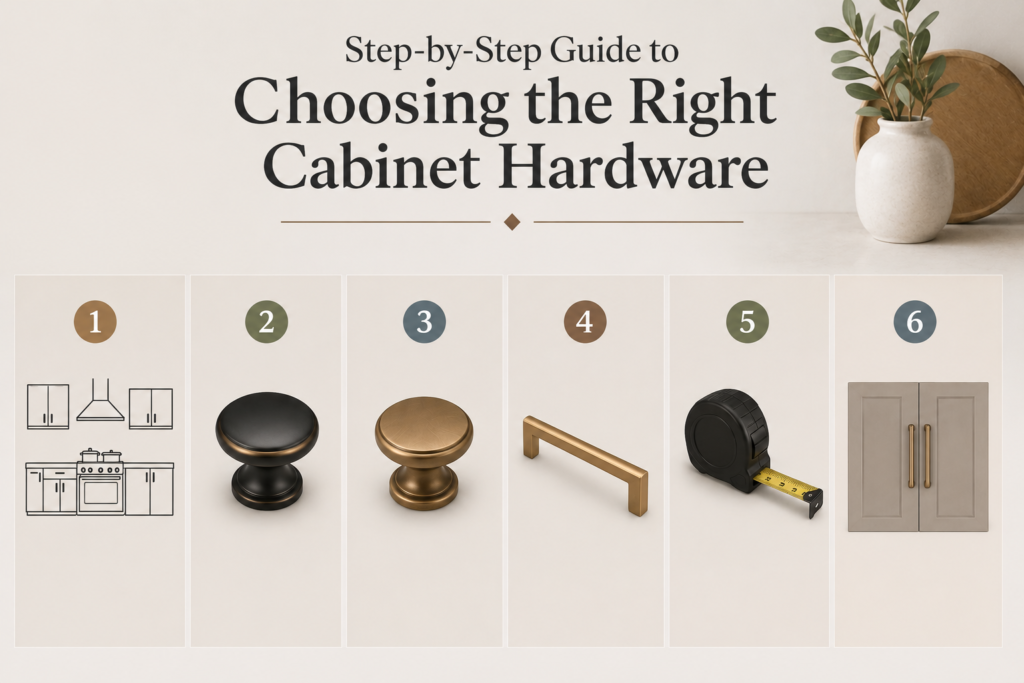
Choosing cabinet hardware becomes much easier when you follow a simple process.
Step 1: Identify Your Kitchen Style
Decide whether your kitchen is modern, farmhouse, traditional, transitional, or contemporary.
Step 2: Select One Finish
Choose a finish that complements your cabinets, appliances, and lighting fixtures.
Step 3: Decide Where Knobs Belong
Knobs typically work best on:
- Upper cabinet doors
- Small cabinet doors
- Decorative cabinets
Step 4: Decide Where Pulls Belong
Pulls are ideal for:
- Deep drawers
- Pots and pans drawers
- Pantry cabinets
- Pull-out trash bins
Step 5: Measure Carefully
Before ordering hardware, measure drawer widths and cabinet dimensions to ensure the hardware is proportional.
Step 6: Install Consistently
Keep placement uniform throughout the kitchen for a clean, professional finish.
Common Mistakes to Avoid
Even beautiful hardware can look out of place if it’s installed incorrectly. One of the biggest mistakes when Mixing Knobs and Pulls on Kitchen Cabinets is using different finishes that clash with each other.
Avoid these common mistakes:
- Mixing too many finishes.
- Choosing hardware that’s too small for large drawers.
- Ignoring cabinet proportions.
- Installing hardware at inconsistent heights.
- Prioritizing appearance over comfort.
- Buying low-quality hardware that wears out quickly.
Taking time to plan your hardware layout before installation can prevent costly mistakes later.
Expert Tips for a Designer Look

Professional designers rely on a few simple tricks to create cohesive kitchens Professionals recommend Mixing Knobs and Pulls on Kitchen Cabinets to create a custom, designer-inspired appearance.:
- Keep all hardware finishes consistent.
- Match cabinet hardware with your faucet and lighting where possible.
- Upgrade to soft-close hinges for a premium feel.
- Use larger pulls on wide drawers for both style and functionality.
- Test sample hardware before purchasing your entire collection.
These small decisions often have the biggest impact on the finished kitchen.
Final Thoughts
Whether you’re remodeling or simply updating your hardware, Mixing Knobs and Pulls on Kitchen Cabinets is a timeless design choice that enhances both beauty and functionality. Choosing the right cabinet hardware may seem like a small detail, but it plays a major role in both the appearance and functionality of your kitchen. Mixing knobs and pulls on kitchen cabinets allows you to combine timeless style with everyday practicality, giving each cabinet and drawer the hardware that suits it best.
By following simple design principles—keeping finishes consistent, using knobs for lighter cabinet doors, selecting pulls for heavier drawers, and maintaining uniform placement—you can create a kitchen that feels thoughtfully designed and effortless to use.
Whether you’re refreshing existing cabinetry or completing a full kitchen renovation, investing in high-quality cabinet knobs, cabinet pulls, and durable hardware finishes is a decision that pays off every day. Well-made hardware not only enhances the beauty of your space but also improves comfort, durability, and long-term value.
With the right combination of style, proportion, and functionality, your kitchen can achieve the polished, custom look you’ve always wanted—without the need for a complete remodel.
FAQ’S…
Should all cabinet hardware match?
Not necessarily. Different hardware styles can work beautifully together when they share a consistent finish and design style.
Are cabinet knobs outdated?
No. Cabinet knobs remain a timeless option and continue to be widely used in both traditional and Mixing Knobs and Pulls on Kitchen Cabinets.
Should drawers always have pulls?
While it’s not a strict rule, pulls are generally easier to grip and work especially well on larger or heavier drawers.
Can I mix different hardware finishes?
Yes, but it requires careful planning. Most homeowners achieve a cleaner, more cohesive look by sticking to one finish throughout the kitchen.
Is Mixing Knobs and Pulls on Kitchen Cabinets a Good Idea?
Yes. Mixing Knobs and Pulls on Kitchen Cabinets is a popular design approach because it combines visual appeal with practical everyday use while giving your kitchen a custom look.