
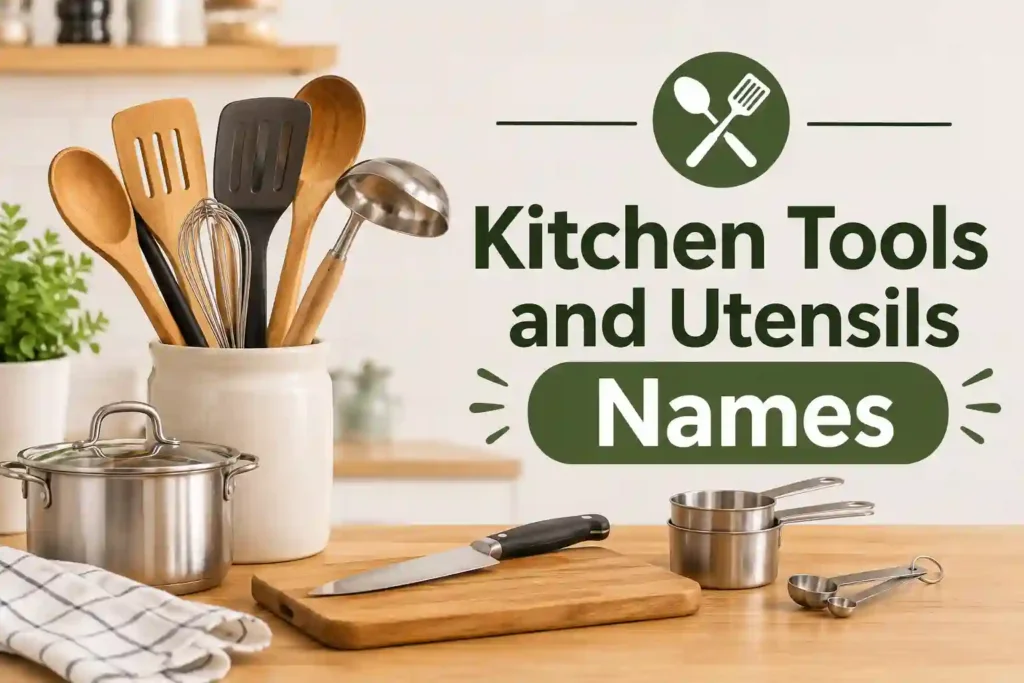
Introduction
Kitchen tools and utensils names are useful to learn whether you are setting up a new kitchen, improving your cooking skills, or replacing old equipment. Every kitchen needs practical tools that make food preparation, cooking, serving, and cleaning easier. However, with so many products available, it can be difficult to understand which items are essential and what each one does.
Imagine preparing a simple meal without a chopping board, knife, mixing bowl, or measuring cup. Even a basic recipe could become more difficult and take longer than expected. The right equipment helps you work comfortably, organize your kitchen, and prepare meals with better results.
In this guide, you will discover 20 common kitchen tools and utensils names, understand their uses, and learn how to choose and organize them. Whether you are a beginner or an experienced home cook, this guide will help you build a more practical kitchen.
What Are Kitchen Tools and Utensils?

kitchen tools and utensils names are equipment used for preparing, cooking, serving, and storing food. Some are designed for specific jobs, such as peeling vegetables or opening cans, while others can perform several tasks.
Understanding kitchen tools and utensils names makes it easier to follow recipes, communicate about cooking equipment, and decide which products you actually need. For example, a whisk is used to combine ingredients, while a grater helps turn vegetables and cheese into smaller pieces.
These items come in different materials, including stainless steel, silicone, wood, plastic, and glass. Each material has its own benefits, so choosing the right one depends on its purpose, durability, and cleaning requirements.
20 Essential Kitchen Tools and Utensils Names and Their Uses
A well-equipped kitchen tools and utensils names hundreds of products. Instead, it needs a practical collection of reliable tools that cover everyday cooking tasks. Below are 20 useful items, along with explanations of how they work.
1. Vegetable Peeler
A vegetable peeler is a small handheld tool used to remove the outer skin of vegetables and fruits. It is commonly used for potatoes, carrots, cucumbers, apples, and other produce.
Most peelers have a sharp blade attached to a comfortable handle. Some models include swivel blades that move with the shape of the food, making peeling easier. Choose a sturdy peeler that feels comfortable to hold and is easy to clean.
2. Kitchen Tongs
Kitchen tongs are used to grip, lift, turn, and serve food. They are particularly helpful when handling hot items in a pan, oven, or grill.
Stainless steel tongs are popular because they are durable and easy to maintain. Silicone-tipped versions can also be useful with non-stick cookware because they are designed to be gentler on coated surfaces.
3. Whisk
A whisk is a kitchen utensil made with several thin wires joined to a handle. It helps mix ingredients, remove lumps, and incorporate air into mixtures.
You can use it to prepare eggs, pancake batter, kitchen tools and utensils names sauces, cream, and salad dressings. A balloon whisk is suitable for many general mixing tasks, while a smaller whisk is useful for preparing dressings or mixing ingredients in narrow containers.
4. Grater
A grater is used to break food into smaller pieces by rubbing it against a surface with sharp holes or edges. It is commonly used for cheese, carrots, potatoes, chocolate, and citrus zest.
A box grater offers different grating surfaces, making it a versatile choice for everyday cooking. When selecting one, check that it has a stable base and a comfortable handle.
5. Mesh Strainer or Sieve
A mesh strainer, also called a sieve, separates solid ingredients from liquids or removes small particles from dry ingredients.
It is useful for washing rice, draining small food items, sifting flour, and straining sauces. Fine-mesh models are particularly helpful when a recipe requires a smooth texture.
6. Mixing Bowl
A mixing bowl is a container used to combine, prepare, and hold ingredients. It is an important item for baking, marinating, preparing salads, and mixing sauces.
Mixing bowls are available in stainless steel, glass, ceramic, and plastic. A set with different sizes is often more practical because you can use smaller bowls for individual ingredients and larger ones for complete mixtures.
7. Can Opener
A can opener is designed to open sealed metal food cans. Manual models usually have a turning handle and cutting wheel, while electric versions open cans with less manual effort.
Choose a model with a comfortable grip and a smooth operating mechanism. Cleaning it regularly is important because food residue can collect around its cutting parts.
8. Cutting Board or Chopping Board
A cutting board provides a stable surface for chopping, slicing, and preparing ingredients. It helps protect kitchen countertops from knife marks and makes food preparation more organized.
Common materials include wood, bamboo, and plastic. It is a good idea to use separate boards for raw meat and ready-to-eat foods to reduce cross-contamination. Follow reliable food-safety guidance from the USDA Food Safety and Inspection Service.
9. Kitchen Tray
A kitchen tray is a flat surface with raised edges that can be used for carrying, arranging, baking, or serving items. Baking trays are especially useful for preparing cookies, vegetables, and other oven-based dishes.
Before buying a tray, consider its size, material, and whether it is suitable for your oven. A strong, easy-to-clean tray can serve several purposes in a home kitchen.
10. Kitchen Shears
Kitchen shears are specially designed scissors used for cutting food packaging, herbs, leafy vegetables, and other kitchen materials.
Some models have detachable blades for easier cleaning. If you regularly prepare herbs or open food packaging, a dedicated pair of kitchen shears can be a convenient addition.
11. Measuring Cup or Jug
A measuring cup or jug helps measure liquid and dry ingredients when following recipes. Many models include measurement markings in millilitres, cups, or other units.
A transparent measuring jug makes it easier to read liquid levels. For accurate results, place it on a flat surface and check the measurement at eye level.
12. Measuring Spoons
Measuring spoons are small utensils used to measure ingredients in specific quantities. They are especially useful when preparing recipes that require small amounts of salt, spices, baking powder, or flavouring.
A standard set usually includes several spoon sizes. Look for clear markings that are easy to read and durable materials that can handle regular washing.
13. Colander
A colander is a bowl-shaped kitchen tool with holes that allow water to drain away from food. It is commonly used for draining pasta, washing vegetables, and rinsing fruits.
Plastic and stainless steel are two common options. Choose a colander with a stable base and handles that make it comfortable to lift when full.
14. Kitchen Knives
Kitchen knives are essential for slicing, chopping, trimming, and cutting ingredients. Different knives are designed for different jobs, but a general-purpose chef’s knife is a useful starting point for many home cooks.
A knife should have a comfortable handle, a suitable blade, and a protective storage option. Keep knives clean, dry, and stored safely. For basic knife-care guidance, consult a reputable kitchen-equipment manufacturer or cooking education resource.
15. Garlic Press
A garlic press crushes garlic cloves into small pieces or a paste. It can save preparation time when a recipe requires finely crushed garlic.
Most presses have two handles and a small chamber where the garlic is placed. Choose a model that is easy to operate and has a design that allows food residue to be removed without difficulty.
16. Spatula
A spatula is used to turn, lift, spread, scrape, and mix ingredients. It is available in several designs, including flat metal spatulas and flexible silicone versions.
A silicone spatula is useful for scraping mixtures from bowls and working with many non-stick pans. A flat turner is more suitable for lifting or turning certain foods during cooking.
17. Wooden Spoon
A wooden spoon is a simple utensil used for stirring sauces, mixing ingredients, and combining food during cooking. Its smooth surface is generally suitable for use with many types of cookware.
Wooden spoons should be washed and dried properly. Avoid leaving them soaking in water for long periods because excessive moisture can affect the wood.
18. Ladle
A ladle is a deep-bowled spoon with a long handle. It is designed for serving soups, gravies, sauces, and other liquids.
Its deep shape helps transfer liquid from a pot into bowls with less spilling. Stainless steel, silicone, and plastic versions are available, so choose one that suits your cookware and serving needs.
19. Slotted Spoon
A slotted spoon has openings in its bowl that allow liquid to drain while lifting solid food. It is useful for removing vegetables, pasta, and other ingredients from hot water or cooking liquid.
The openings make it different from an ordinary serving spoon. A heat-resistant version is a practical choice for regular cooking.
20. Oven Mitts
Oven mitts are protective gloves designed to help handle hot oven trays, baking dishes, and cookware. They provide a barrier between your hands and hot surfaces.
Look for mitts made from suitable heat-resistant materials with a comfortable fit. Always check the manufacturer’s temperature guidance and avoid using wet or damaged mitts.
How to Choose the Right Kitchen Equipment
Knowing kitchen tools and utensils names is only the first step. You also need to understand which products are worth buying. A good purchase should suit your cooking habits, available space, and budget.
Step 1: Identify Your Daily Cooking Needs
Start by thinking about the meals you prepare most often. If you regularly cook vegetables, a peeler, cutting board, knife, and grater may be useful. If you enjoy baking, measuring cups, measuring spoons, and mixing bowls may be more important.
Make a short list before shopping. This helps you focus on equipment that solves real problems instead of buying products simply because they look attractive.
Step 2: Choose Durable Materials
Material affects how long a utensil lasts and how easy it is to maintain. Stainless steel is commonly used for durable kitchen tools and utensils names equipment, while silicone is useful for flexible utensils and many non-stick cooking applications.
Wood offers a traditional appearance and comfortable handling, but it needs proper care. Glass bowls allow you to see their contents, although they require careful handling to prevent breakage.
Step 3: Check Comfort and Handling
A kitchen tool should feel comfortable in your hand. Handles that are too small, slippery, or difficult to grip can make everyday tasks less convenient.
Whenever possible, check the weight, balance, and handle design before buying. Comfortable equipment is especially valuable when you prepare meals regularly.
Step 4: Consider Cleaning Requirements
Some utensils have complicated shapes that make cleaning difficult. Food particles can remain around joints, holes, and narrow spaces.
Choose products that are easy to wash and maintain. If a product is labelled dishwasher-safe, follow its manufacturer’s instructions rather than assuming every material can go into a dishwasher.
Step 5: Compare Price and Quality
The cheapest option is not always the best value. A low-cost utensil that breaks quickly may need frequent replacement, while a reasonably priced durable product can serve you for longer.
Compare materials, product details, customer feedback, and warranties where available. You do not need to purchase the most expensive equipment; you need products that offer suitable quality for their intended use.
Step 6: Think About Storage Space
Before buying a large utensil set, consider where you will keep it. Small kitchens benefit from compact, stackable, and multifunctional products.
Choose items that fit your drawers, cabinets, and available counter space. A practical collection is often better than a crowded kitchen full of rarely used gadgets.
Common Buying Mistakes to Avoid
When exploring kitchen tools and utensils names, beginners sometimes focus only on appearance or price. However, a few simple checks can help prevent unnecessary purchases.
- Buying too many tools at once: You may not need every product in a large kitchen set. Start with the essentials and add specialized items when a genuine need arises.
- Ignoring material quality: Weak handles, poor joints, and unsuitable materials can make utensils difficult to use. Check the product description carefully before ordering.
- Choosing the wrong size: A large mixing bowl or oversized tray may not suit a small kitchen. Measure your available storage and cooking space first.
- Forgetting cleaning needs: A tool that is difficult to clean may become inconvenient over time. Look for simple designs and follow the care instructions.
- Buying single-purpose gadgets unnecessarily: Some products perform only one small task. Before purchasing, consider whether an existing utensil can do the same job effectively.
How to Organize Kitchen Utensils
Once you understand kitchen tools and utensils names, organizing your equipment becomes easier. A well-arranged kitchen saves time because you can find the right item without searching through crowded drawers.
Keep frequently used utensils close to your main preparation area. For example, store knives, peelers, and chopping boards where you normally prepare ingredients. Place measuring cups and mixing bowls near the area where you bake or mix food.
Use drawer dividers to separate small utensils such as measuring spoons, peelers, and kitchen shears. Larger tools can be arranged in a container or dedicated drawer. Keep trays and baking equipment together kitchen tools and utensils names so they are easy to find when needed.
It is also helpful to review your collection occasionally. Remove damaged products and set aside items you no longer use. This keeps your kitchen organized and makes room for equipment that genuinely supports your cooking routine.
Why Quality Kitchen Utensils Matter
Choosing the right kitchen tools and utensils names is important, but understanding their quality and purpose is equally valuable. Good kitchen equipment can make everyday tasks easier, reduce preparation time, and help maintain an organized cooking space. For example, a sharp and comfortable knife makes chopping more convenient, while a durable mixing bowl can be used for preparing salads, mixing ingredients, and storing food.
Instead of purchasing every available gadget, focus on versatile products that match your cooking habits. With proper cleaning, careful storage, and regular maintenance, quality kitchen utensils can remain useful for years and make your daily kitchen routine more enjoyable.
Benefits of Keeping Essential Kitchen Tools Organized
A clean and organized kitchen tools and utensils names makes cooking more comfortable and saves valuable time during meal preparation. When every utensil has a proper place, you can quickly find the equipment you need without opening multiple drawers or searching through crowded cabinets. It is also easier to identify damaged or unused items and keep your cooking area clutter-free.
Try arranging similar utensils together, keeping frequently used tools within easy reach, and storing sharp equipment safely. These simple habits help you maintain an efficient kitchen and get better use from the equipment you already own.
Final Thoughts
A practical kitchen is built around useful equipment rather than an unnecessarily large collection of products. Learning kitchen tools and utensils names helps you understand what each item does, choose the right equipment, and prepare food more efficiently.
Start with the essentials, consider your daily cooking routine, and invest in durable products that are comfortable to use and easy to clean. You can expand your collection gradually as your needs change.
For more kitchen inspiration, useful ideas, and practical guides, visit Kitchen Campaign. A thoughtfully equipped kitchen can make everyday preparation more organized, comfortable, and enjoyable.
FAQ’S…
What are 20 common kitchen utensils?
Some common kitchen utensils include spoons, forks, knives, spatulas, whisks, tongs, ladles, peelers, graters, measuring cups, cutting boards, colanders, rolling pins, can openers, and mixing bowls. These are popular examples of kitchen tools and utensils names used in everyday cooking.
What are 50 common kitchen utensils?
Some common kitchen tools and utensils names include knives, cutting boards, spatulas, whisks, ladles, peelers, graters, tongs, measuring cups, measuring spoons, rolling pins, colanders, sieves, mixing bowls, kitchen scissors, wooden spoons, and many other tools used for food preparation and cooking.
What are the 10 kitchen tools?
The 10 essential kitchen tools include a chef’s knife, cutting board, spatula, whisk, peeler, grater, tongs, ladle, measuring cups, and mixing bowls. These kitchen tools and utensils names are useful for everyday cooking and food preparation.
What are the 15 kitchen tools?
Fifteen useful kitchen tools include a knife, cutting board, spatula, whisk, ladle, peeler, grater, tongs, measuring cups, measuring spoons, rolling pin, colander, sieve, can opener, and kitchen scissors. These kitchen tools and utensils names cover many everyday cooking needs.
What are the top 10 kitchen utensils?
The top 10 kitchen utensils include a chef’s knife, spatula, wooden spoon, whisk, ladle, tongs, peeler, grater, measuring spoons, and vegetable peeler. These kitchen tools and utensils names are commonly found in home kitchens.
What are basic kitchen tools?
Basic kitchen tools include knives, cutting boards, spatulas, mixing bowls, measuring cups, whisks, peelers, graters, and wooden spoons. Learning these kitchen tools and utensils names helps beginners understand which items they need for simple food preparation and everyday cooking.

