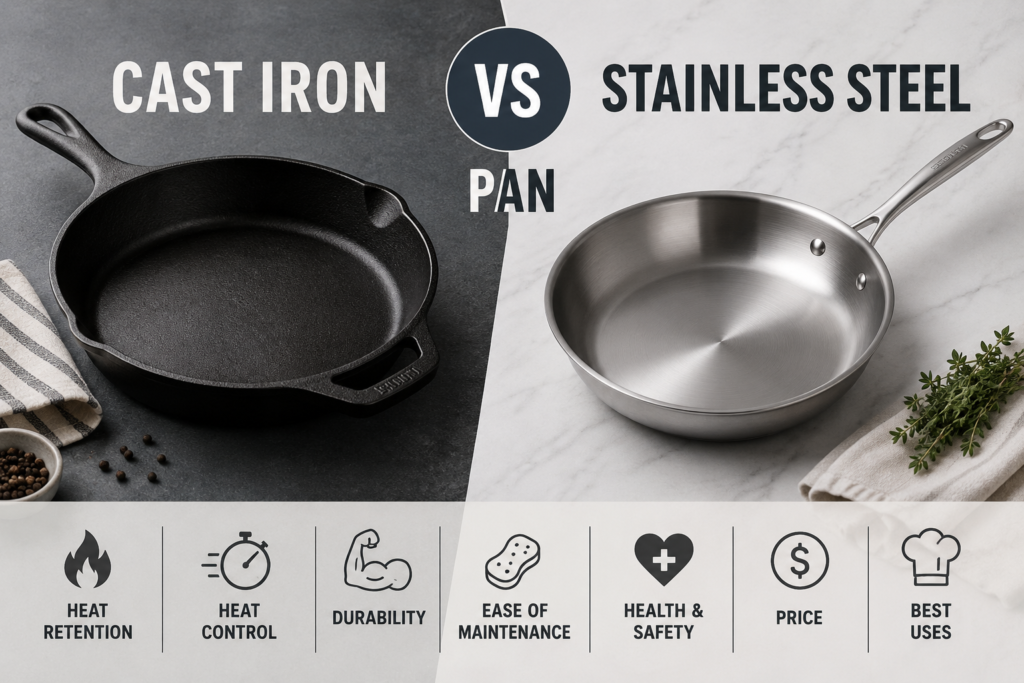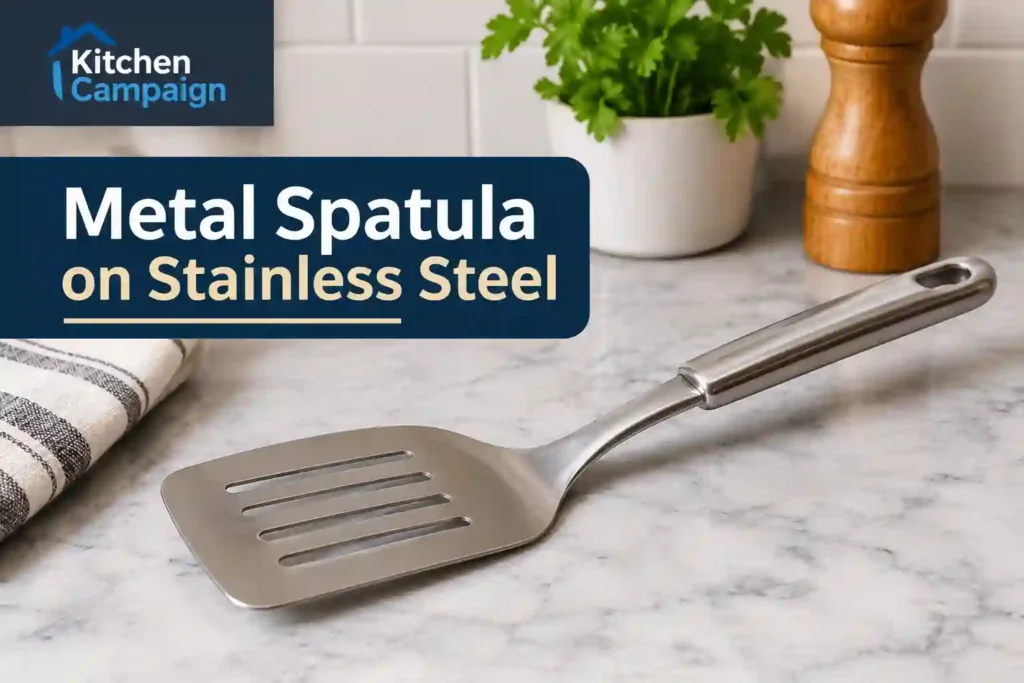
Using a metal spatula on stainless steel cookware is a common practice in many kitchens. Stainless steel pots and pans are popular because they are durable, versatile, and suitable for many everyday cooking tasks. Metal spatulas are equally useful because they provide a firm surface for flipping, lifting, and turning food.
However, many home cooks wonder whether using a metal spatula on stainless steel utensil can scratch or damage their cookware. The answer depends on the type of cooking surface and how the utensil is used. Uncoated stainless steel can generally handle metal cooking tools, although small cosmetic scratches may appear over time. Nonstick and ceramic-coated cookware needs different care.
For example, imagine preparing pancakes or sautéed vegetables for breakfast. A firm metal spatula on stainless steel spatula can help you lift food without bending too much. However, using excessive force or scraping the pan aggressively can leave unnecessary marks.
This guide explains how to choose and use the right spatula, protect your cookware, and make a confident buying decision.
1. Can You Use a Metal Spatula on Stainless Steel?
Yes, you can generally use a metal spatula on stainless steel cookware if its cooking surface is uncoated. Stainless steel is a durable material, and many manufacturers permit metal spatula on stainless steel utensils on their uncoated stainless steel products.
According to Tramontina’s stainless steel cooking guide, metal utensils can be used with its stainless steel cookware. However, ordinary use may leave cosmetic marks. Similarly, Made In’s stainless-clad cookware information discusses the possibility of scratches from sharp metal tools and explains why careful handling matters.
The important point is that not all cookware has the same interior finish. Some stainless steel pans have an additional nonstick or ceramic coating. Even if the outside is stainless steel, the cooking surface may need gentler utensils.
Uncoated vs. coated cookware
| Cookware type | Metal utensil suitability |
|---|---|
| Uncoated stainless steel | Generally suitable with reasonable care |
| Nonstick-coated stainless steel | Avoid metal utensils |
| Ceramic-coated cookware | Avoid metal utensils unless approved |
| Painted or decorative surfaces | Follow manufacturer instructions |
If your pan has a coated interior, silicone, wood, or nylon utensils are usually a better option.
Therefore, before using a metal spatula on stainless steel utensil, check the product description or manufacturer’s care guide. This simple step can help prevent damage to cookware that is not designed for metal tools.
2. Can a Metal Spatula Scratch Stainless Steel Cookware?
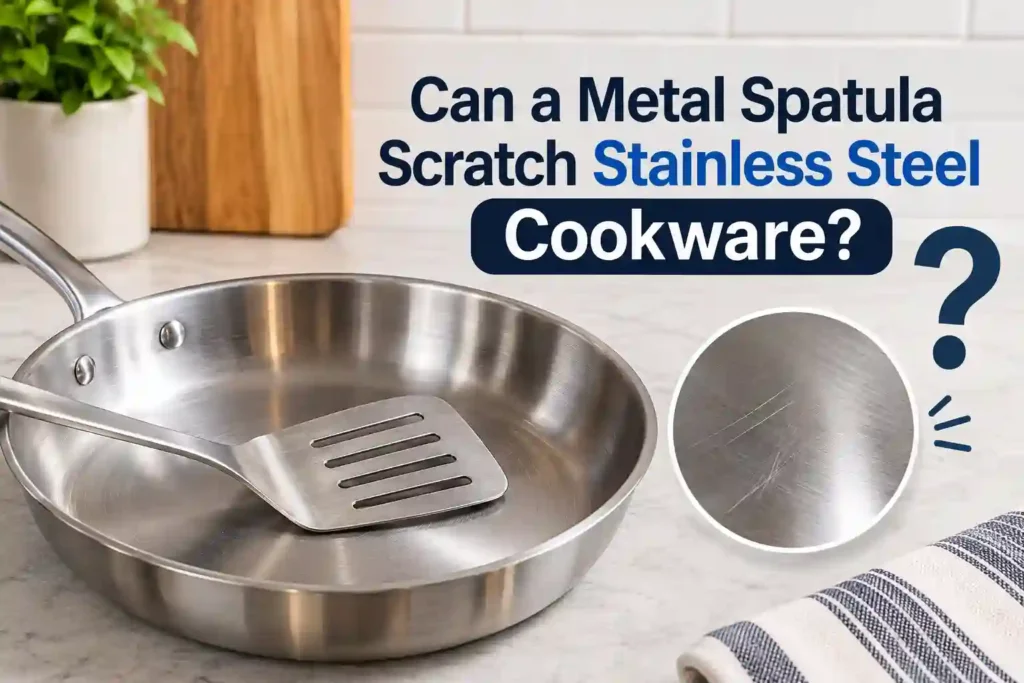
Yes, a metal spatula on stainless steel can leave visible marks, especially when the utensil has sharp edges or is pressed firmly against the cooking surface.
However, light scratches are generally cosmetic on uncoated stainless steel. They do not automatically mean that the cookware is damaged or unsuitable for everyday cooking.
Think about a frying pan used regularly for breakfast, lunch, and dinner. Over time, stirring, turning, and moving food may create small surface marks. This is normal wear metal spatula on stainless steel for many frequently used kitchen items.
What causes scratches?
Several common habits can contribute to scratches:
- Pressing a spatula too firmly against the pan.
- Dragging a rough-edged utensil repeatedly across the surface.
- Using a damaged or poorly finished metal tool.
- Cutting food directly inside the cookware.
- Storing metal utensils where they rub against the pan.
A smooth-edged utensil used with controlled movements is different from a rough tool used aggressively.
Are scratched stainless steel pans safe?
Light surface marks on uncoated stainless steel are not usually a reason to replace a pan. Nevertheless, the condition of the cookware matters.
Inspect it if you notice deep gouges, sharp raised edges, cracks, severe pitting, or separated layers. These problems can make the surface harder to clean properly.
Research on food-contact surfaces also highlights how scratches and leftover food residue can make cleaning more difficult. For this reason, keeping cookware clean is important even when the marks are only cosmetic.
For additional information, read Made In’s stainless-clad cookware FAQ.
3. Benefits of Using a Metal Spatula
A metal spatula on stainless steel can be a practical combination because both products are designed for regular kitchen use when the pan is uncoated.
Metal spatulas offer firmness, control, and stability. Unlike some flexible utensils, a well-made metal spatula on stainless steel spatula is less likely to bend when lifting heavier food.
Better control when flipping food
A thin metal spatula can slide under foods such as pancakes, grilled sandwiches, and vegetables. Its firm construction can make lifting and turning easier.
The shape also matters. A wide spatula supports larger portions, while a narrow design can be more convenient for smaller pieces.
Useful for browning and turning ingredients
Stainless steel cookware is commonly used for browning, sautéing, and searing. A suitable spatula can help move ingredients and turn food during cooking.
However, avoid aggressively scraping the cooking surface. If food is sticking, allow it to cook appropriately rather than forcing the utensil underneath it.
Durable construction
A quality stainless steel spatula can last for years when it is made well and cared for properly.
Look for a strong handle, a smooth working edge, and a comfortable grip. A simple design with good construction can be more useful than one with unnecessary features.
Convenient everyday cleaning
Many metal spatula on stainless steel are easy to clean with warm water and dish soap. Some models are dishwasher-safe, although this depends on their handle material and construction.
Always check the manufacturer’s cleaning instructions before washing your utensil.
4. Metal Spatula vs. Silicone, Wood, and Nylon Utensils
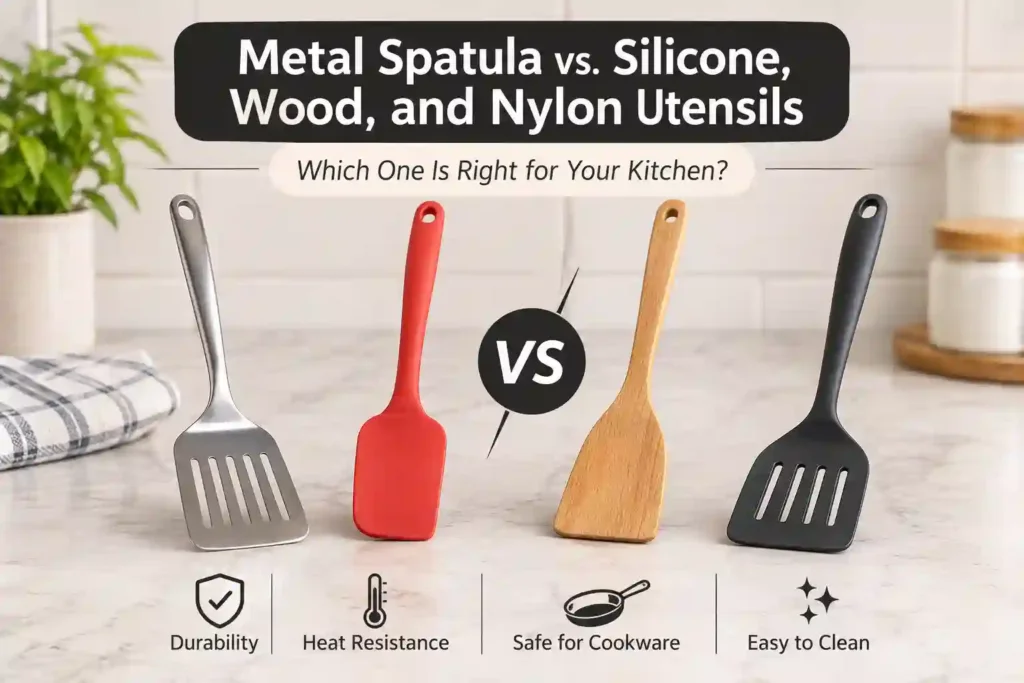
A metal spatula on stainless steel is not the only option for stainless steel cookware. Silicone, wood, and nylon utensils also have useful qualities.
The best choice depends on your cooking habits, cookware finish, and preference for maintaining a polished surface.
| Utensil material | Main advantage | Important consideration |
|---|---|---|
| Metal | Firm and useful for lifting food | May leave cosmetic scratches |
| Silicone | Flexible and gentle on cookware | Can bend under heavier food |
| Wood | Comfortable and gentle on surfaces | Needs proper drying and care |
| Nylon | Lightweight and generally gentle | Must be suitable for cooking temperatures |
Metal spatulas
A metal spatula on stainless steel cookware can be useful for turning and lifting food. It offers a firm edge and does not bend easily.
However, choose a smooth-edged product and avoid aggressive scraping.
Silicone spatulas
Silicone spatulas are flexible and useful for stirring, folding, and scraping food from bowls. They are also a good option when you want to reduce marks on polished cookware.
Check the manufacturer’s heat-resistance information before buying.
Wooden spatulas
Wooden spatulas are gentle on cooking surfaces and useful for stirring sauces, mixing ingredients, and everyday cooking.
They should be washed and dried properly to maintain their condition.
Nylon spatulas
Nylon utensils are lightweight and often affordable. They can be useful for coated cookware, provided the product is approved for the cooking temperature.
Which utensil should you choose?
For uncoated stainless steel, a metal spatula is a reasonable choice if you do not mind possible cosmetic marks. For nonstick or ceramic-coated cookware, choose a utensil approved by the manufacturer.
You can also keep different utensils in your kitchen for different pans. This gives you more flexibility without risking damage to delicate coatings.
5. How to Use a Metal Spatula on Stainless Steel Safely
Using the right utensil is only part of good cooking. Your technique matters too.
Here is a simple approach to using a metal spatula with uncoated stainless steel cookware.
Step 1: Check the cooking surface
Before using a metal spatula, confirm that your pan has an uncoated stainless steel interior.
Read the manufacturer’s instructions if you are unsure. A stainless steel exterior does not necessarily mean that the inside is also uncoated.
Step 2: Choose a suitable spatula
Select a spatula with smooth edges and a comfortable handle.
A wide design can help with larger portions, while a smaller spatula may be easier to control when preparing individual servings.
Avoid tools with rough surfaces, damaged edges, or visible defects.
Step 3: Prepare the pan properly
Follow the cookware manufacturer’s instructions for preheating. For many everyday cooking tasks, starting with low or medium heat is a sensible approach.
Add a suitable amount of cooking oil or fat according to your recipe.
Proper preheating and cooking technique can help reduce food sticking. Tramontina’s stainless steel cooking guide provides useful information about preheating, adding oil, and allowing food to release naturally.
Step 4: Use controlled movements
When turning or lifting food, slide the spatula underneath it with gentle, controlled movements.
There is no need to press the utensil forcefully against the bottom of the pan. Let the shape of the spatula do most of the work.
Step 5: Avoid unnecessary scraping
If food is not releasing easily, give it more time when appropriate. Some foods release more easily after developing a browned surface.
Do not use the spatula to attack stubborn burnt food or scrape the pan aggressively.
Step 6: Clean the cookware after cooking
Allow the pan to cool before cleaning it. Wash it with warm water, dish soap, and a suitable soft sponge.
Following these habits can help you enjoy your cookware while keeping its surface in good condition.
6. How to Prevent Scratches on Stainless Steel Pans
Even though uncoated stainless steel is durable, you may want to keep it looking clean and polished.
You do not need to stop using metal utensils completely. Instead, make a few small changes to your cooking habits.
Choose smooth-edged utensils
Inspect your spatula before using it. Rough edges, dents, and damaged areas can create unnecessary marks.
A properly finished utensil is a better everyday choice.
Avoid forceful scraping
Use controlled movements when turning or lifting food. Avoid pressing down hard or repeatedly dragging the spatula across the pan.
Use a separate cutting board
Prepare ingredients on a suitable cutting board rather than directly inside your cookware. Cutting food inside a pan can leave deeper marks and is not a good everyday habit.
Store utensils separately
Avoid placing metal utensils loosely inside a pan where they can rub against the cooking surface.
A utensil holder or drawer organizer can help keep your kitchen tools in better condition.
Use alternatives when appearance matters
If you have a polished stainless steel pan and want to reduce visible marks, use a silicone or wooden spatula for everyday stirring.
You can still keep a metal spatula available for tasks where its firm design is useful.
7. How to Clean and Maintain Stainless Steel Cookware
Good cleaning habits help maintain the appearance and condition of your cookware.
After cooking, allow the pan to cool before washing it metal spatula on stainless steel. Avoid placing very hot cookware directly under cold water unless the manufacturer specifically permits it. Sudden temperature changes can affect some cookware.
Follow these basic cleaning steps:
- Remove leftover food from the pan.
- Add warm water and a small amount of dish soap.
- Use a soft sponge or cloth to clean the cooking surface.
- Soak stubborn food residue instead of scraping it aggressively.
- Rinse the pan thoroughly.
- Dry it with a clean towel or allow it to air-dry.
What about water spots and stains?
Stainless steel may develop water spots, discoloration, or rainbow-like marks during regular use.
These marks are not necessarily signs of serious damage. Their causes can vary, so follow your cookware manufacturer’s cleaning recommendations.
For example, Made In’s stainless-clad cookware FAQ provides information about stainless steel cookware care and common surface concerns.
Do not use harsh cleaners or abrasive products without checking whether they are suitable for your particular cookware.
How should you care for a metal spatula?
Your spatula needs regular care too. Wash it after use, remove food residue, and dry it according to the manufacturer’s instructions.
Check the handle and working edge occasionally. If the utensil becomes loose, rough, or damaged, consider replacing it.
8. How to Choose the Best Metal Spatula
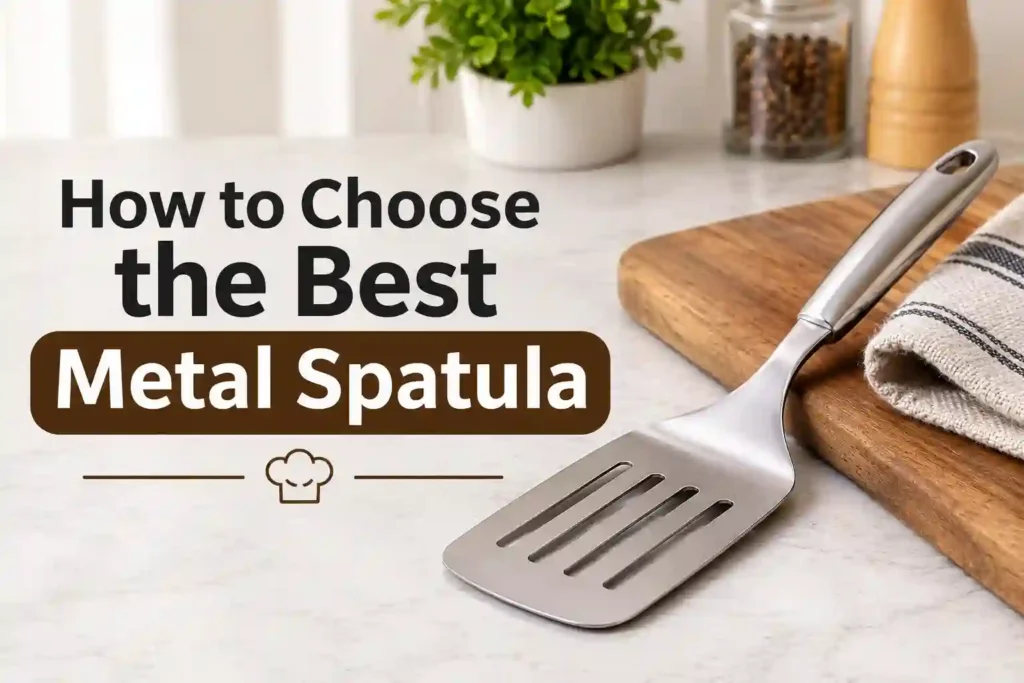
If you are planning to buy a new spatula, do not focus only on its appearance. A useful cooking utensil should be comfortable, practical, and suitable for your cookware.
Here are some features worth checking before making a purchase.
Material quality
Look for clearly described materials and construction. A stainless steel spatula is a common option for uncoated stainless steel cookware.
Check the product details rather than relying only on words such as premium or professional.
Smooth edges and finish
The working edge should be properly finished, without rough areas or visible defects.
This is important for comfortable handling and helps avoid unnecessary marks from poorly finished edges.
Comfortable handle
A good handle should feel secure and comfortable. Consider its shape, length, grip, and connection to the spatula head.
Some products have stainless steel handles, while others use different materials. Choose a design that suits your cooking habits.
Suitable size and shape
Think about the meals you prepare most often.
- A wide spatula may suit larger portions.
- A narrow spatula can offer more control in smaller pans.
- A slotted design allows excess liquid or oil to drain away.
- A solid design may be useful for lifting food that needs extra support.
Heat resistance and care instructions
Check the manufacturer’s information about heat exposure, dishwasher use, and cleaning.
Do not assume that every handle or component has the same heat resistance as the spatula head.
Price and value
A higher price does not automatically mean a better product. Compare material quality, construction, handle comfort, warranty information, and customer feedback.
A simple, durable spatula that suits your cookware may offer better value than an expensive product with features you do not need.
What should you check before buying?
Before ordering, read the product description and confirm that the spatula is suitable for the type of cookware you own.
If you use both coated and uncoated pans, consider keeping separate utensils for each type. This makes it easier to follow the care instructions for all your cookware.
9. Common Mistakes to Avoid
Even a good-quality metal spatula can be used incorrectly. Avoiding a few common mistakes can make everyday cooking easier.
Using metal tools on nonstick coatings
This is one of the most important mistakes to avoid. Metal utensils can scratch or damage nonstick and ceramic coatings.
For coated cookware, use silicone, wood, nylon, or another material specifically approved by the manufacturer.
Pressing too hard against the pan
A spatula does not need to be forced against the cooking surface. Use controlled movements instead of aggressive scraping.
Ignoring damaged edges
If a spatula becomes rough, bent, or damaged, inspect it before using it again. Replace it when it can no longer be used comfortably and safely.
Buying without checking compatibility
A product may look suitable in a photograph but still be a poor match for your cookware. Check the material, dimensions, handle, and intended use before buying.
Expecting stainless steel to remain scratch-free
Uncoated stainless steel is designed for regular cooking, not for staying perfectly polished forever. Small marks may develop with normal use.
Understanding this can help you choose practical cookware and utensils without worrying about every tiny surface mark.
Final Thoughts
Using a metal spatula on stainless steel is generally fine when the cookware has an uncoated stainless steel cooking surface. Metal spatulas offer firmness, control, and convenience, making them useful for many everyday cooking tasks.
However, small cosmetic scratches can develop with regular use. If keeping your cookware polished is important, silicone or wooden utensils may be a better choice for certain tasks. Most importantly, avoid metal tools on nonstick and ceramic-coated surfaces unless the manufacturer specifically says they are suitable.
When buying a new spatula, focus on smooth edges, comfortable handling, suitable materials, and metal spatula on stainless steel clear care instructions. A practical utensil that matches your cookware can make cooking easier and help you get more value from your kitchen equipment.
Choose based on how you cook, what type of pan you own, and the features you genuinely need. That way, you can make a confident purchase instead of paying extra for features that may not improve your everyday cooking experience.
For more practical kitchen inspiration, visit Kitchen Campaign.
FAQ’S…
What type of spatula is best for stainless steel?
A metal spatula on stainless steel cookware is a good choice because it is durable and handles high heat. A thin, flexible stainless steel spatula works well for flipping, scraping, and turning food.
What utensils can I use on a stainless steel pan?
You can use a metal spatula on stainless steel pans, along with wooden and silicone utensils. Metal utensils are particularly useful for flipping food and scraping stuck-on bits during cooking.
Will metal utensils damage stainless steel?
A metal spatula on stainless steel cookware usually won’t cause serious damage when used properly. However, rough handling or sharp edges may leave scratches or marks on the cooking surface.
What can damage stainless steel?
Harsh chemicals, chlorine-based cleaners, abrasive scrubbers, and prolonged exposure to salt can damage stainless steel. Using a metal spatula on stainless steel carefully helps reduce unnecessary surface marks.