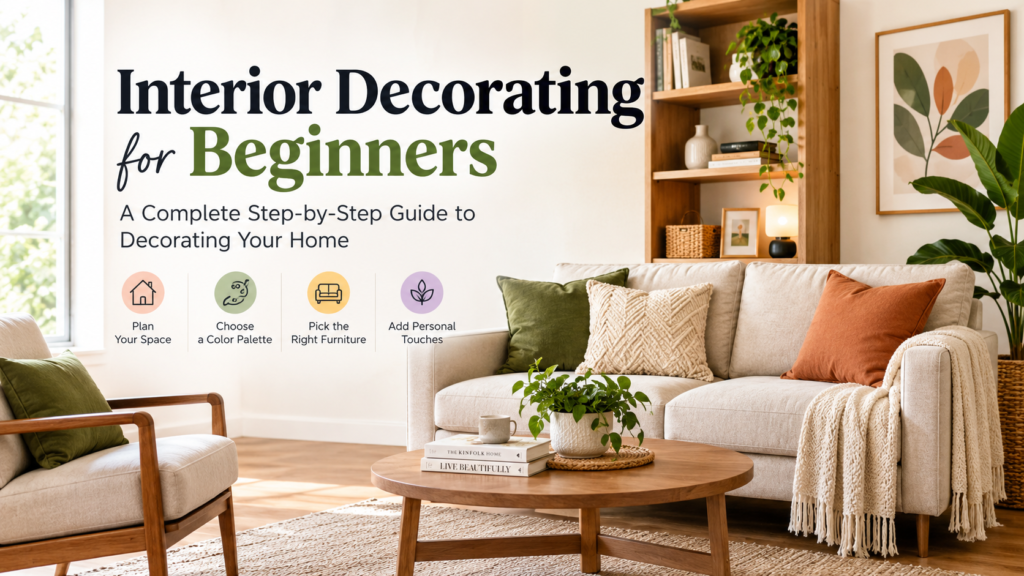
Have you ever walked into a beautifully decorated home and wondered how to create the same look in your own space? Perhaps you have saved pictures of stylish living rooms, cozy bedrooms, and modern kitchens but still feel unsure about where to begin.
You are not alone. Interior decorating for beginners can seem overwhelming because there are so many decisions to make, including choosing wall colors, arranging furniture, selecting lighting, and finding the right decorative accessories.
The good news is that you do not need professional training or a large budget to create a beautiful home. With a little planning, creativity, and patience, you can transform an ordinary room into a comfortable and welcoming space that reflects your personality.
This complete guide will walk you through the essential decorating principles, practical techniques, and affordable ideas you need to get started. You will also discover how to learn interior design for free, understand interior design basics for beginners, and explore useful interior decorating tips for beginners that make decorating easier.
Whether you live in a small apartment or a spacious house, these step-by-step instructions will help you make confident decisions and create a home you genuinely enjoy.
Interior Decorating for Beginners: Understand the Fundamentals
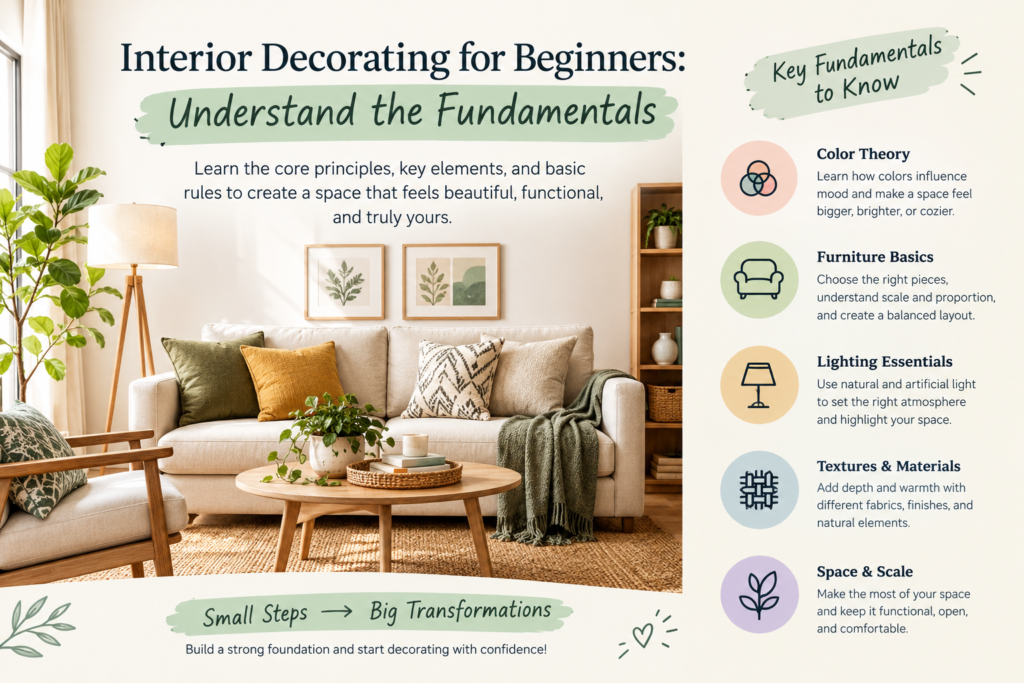
Before buying furniture or choosing paint colors, it helps to understand the difference between interior design and interior decorating.
Interior decorating focuses on improving the appearance and atmosphere of an existing space through furniture, colors, lighting, fabrics, artwork, and accessories. Interior design can cover a broader range of work, including space planning, functionality, and technical decisions about indoor environments.
Both fields share several important principles. Learning these basics will help you make better decorating decisions, even if you have never worked on a home improvement project before.
1. Understand Balance and Proportion
Balance means distributing visual weight throughout a room so that one area does not feel unnecessarily heavy or crowded.
For example, placing a large sofa on one side of a living room without any other substantial furniture nearby may make the room feel unbalanced. Adding an armchair, floor lamp, or appropriately sized side table can help create a more harmonious arrangement.
Proportion and scale refer to how furniture and accessories relate to one another and to the size of the room.
A large coffee table may overwhelm a small seating area, while a tiny rug may look out of place beneath a large sofa. Always consider the size of your room before purchasing furniture.
2. Learn How Color Influences a Room
Color affects the mood and appearance of an interior.
Warm colors, such as terracotta, soft yellow, and earthy brown, can create a welcoming atmosphere. Cool colors, such as blue and green, often feel calming. Neutral shades, including cream, beige, and gray, provide a flexible foundation for different decorating styles.
A simple starting point is to choose one dominant color, one secondary color, and one accent color.
For example, cream walls, wooden furniture, and green cushions can create a natural and comfortable living room without requiring complicated color combinations.
For more guidance, explore Sherwin-Williams’ color resources.
3. Understand Texture and Contrast
Texture adds depth and interest by combining different surfaces and materials.
A room with only smooth surfaces may feel flat, even when the colors are attractive. Adding a woven rug, linen curtains, wooden furniture, or soft cushions can make the space feel more inviting.
Contrast creates visual interest by combining different elements. You might pair light walls with darker furniture or combine a plain sofa with patterned cushions.
The goal is to create variety without making the room feel cluttered.
4. Use Lighting to Set the Mood
Lighting is another essential part of Interior Decorating for Beginners.
Most rooms benefit from three types of lighting:
- Ambient lighting: Provides general illumination through ceiling lights or similar fixtures.
- Task lighting: Supports specific activities through desk lamps, reading lights, and bedside lamps.
- Accent lighting: Highlights artwork, shelves, and other decorative features.
Combining these types of lighting makes a room more practical and allows you to create different moods throughout the day.
How to Learn Interior Design for Free: A Beginner’s Learning Plan
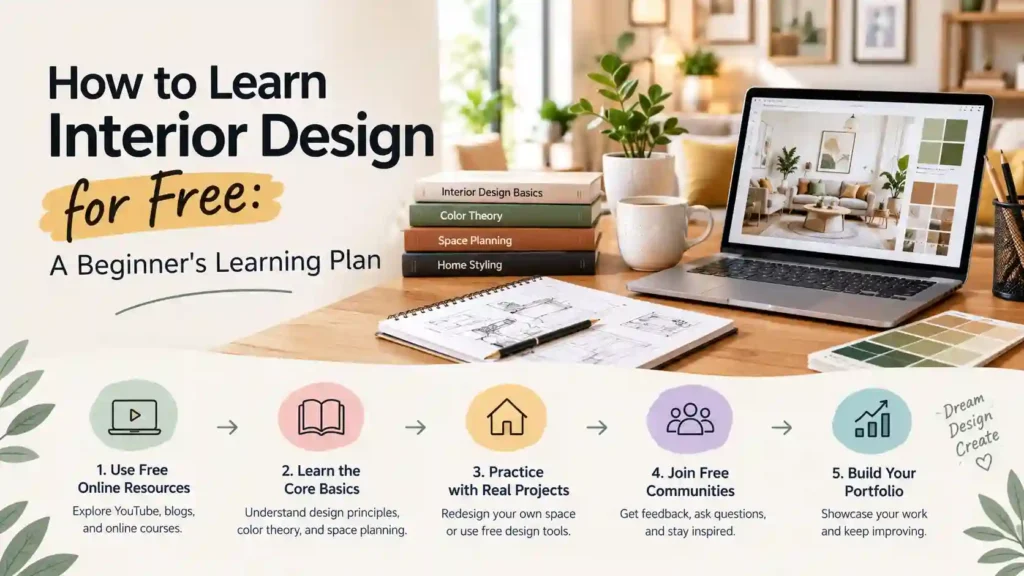
You do not need to enroll in an expensive course to begin learning about decorating. There are many free resources available online, and you can develop your skills by observing rooms, experimenting with layouts, and practicing with the furniture you already own.
The key is to learn one concept at a time rather than trying to master everything immediately.
Step 1: Study Free Online Decorating Resources
Start by exploring websites that publish decorating advice, room makeovers, and design inspiration.
Here are some useful places to begin:
- Houzz offers decorating ideas, room photographs, and practical home improvement articles.
- IKEA provides furniture inspiration, storage ideas, and solutions for small spaces.
- Apartment Therapy shares real-home tours, decorating ideas, and practical advice for different budgets.
- Architectural Digest features interior inspiration, designer projects, and decorating trends.
Many of these resources are free to browse. You can use them to understand how professional decorators combine furniture, lighting, colors, and accessories.
Step 2: Create a Decorating Inspiration Board
An inspiration board is a collection of images, colors, materials, and ideas that represent the look you want to achieve.
You can create one using a notebook, a digital document, or a collection of saved images.
Include examples of:
- Living rooms and bedrooms you like.
- Furniture shapes and materials.
- Wall colors and color combinations.
- Curtains, rugs, and cushions.
- Lighting fixtures and decorative accessories.
After collecting several examples, look for similarities. Perhaps you prefer natural wood, neutral colors, soft lighting, or colorful artwork.
These patterns will help you identify your personal style.
Step 3: Practice With Your Existing Furniture
One of the easiest ways to learn decorating is to experiment in your own home.
Choose a room and try rearranging its furniture. Move a chair closer to a window, change the position of a table, or group decorative items together.
Take photographs before and after each change. Comparing the results will help you understand how layout and balance affect the appearance of a room.
You can also experiment with different cushion arrangements or move accessories between rooms to see which combinations work best.
Step 4: Learn From Everyday Spaces
Pay attention to the rooms you visit, including homes, cafes, hotels, and other public spaces.
Notice how lighting changes the atmosphere, how furniture creates conversation areas, and how colors and materials work together.
Ask yourself why a particular room feels comfortable or why another seems crowded.
Over time, this habit will help you develop a stronger eye for Interior Decorating for Beginners.
Step 5: Follow a Simple Weekly Learning Plan
You can organize your learning into manageable sessions.
| Week | What to learn | Practical exercise |
| Week 1 | Color, balance, and proportion | Create a color palette |
| Week 2 | Furniture placement | Rearrange one room |
| Week 3 | Lighting and textiles | Improve lighting and add texture |
| Week 4 | Accessories and styling | Create a finished room arrangement |
By the end of four weeks, you should have a better understanding of the basics and some practical experience applying them.
Interior Decorating Tips for Beginners: Start With a Clear Plan
Once you understand the basics, it is time to put them into practice. The most effective Interior Decorating for Beginners tips focus on planning, making thoughtful choices, and improving one area at a time.
Step 1: Assess Your Space
Before shopping, measure your room and identify its main features.
Record the length and width of the room, the location of doors and windows, and the size of any existing furniture you plan to keep.
Also consider how you use the space. A family living room may need comfortable seating and storage, while a bedroom used for working may require a desk and task lighting.
Make a list of the problems you want to solve. Perhaps the room lacks storage, feels too dark, or has an awkward furniture arrangement.
This list will help you focus your budget on changes that matter.
Step 2: Choose Your Decorating Style
Your decorating style acts as a guide when choosing furniture, colors, and accessories.
Some popular options include:
- Modern: Clean lines, simple shapes, and practical furniture.
- Minimalist: Fewer objects, uncluttered surfaces, and purposeful choices.
- Scandinavian: Light colors, natural materials, and comfortable furnishings.
- Traditional: Classic furniture, coordinated fabrics, and timeless details.
- Bohemian: Layered textiles, natural materials, colorful patterns, and personal accessories.
You do not have to follow a single style strictly. Combining elements from different styles can work well when the colors, materials, and overall mood complement one another.
Step 3: Create a Color Palette
Choose your main colors before buying decorative accessories.
A useful guideline is the 60-30-10 rule:
- 60% dominant color: Usually used on walls or other large surfaces.
- 30% secondary color: Often found in furniture, curtains, or rugs.
- 10% accent color: Introduced through artwork, cushions, lamps, and smaller accessories.
For example, cream walls could provide the dominant color, wooden furniture could introduce warm brown tones, and green cushions could add contrast.
These proportions are flexible. The goal is to create a coordinated look rather than follow a strict formula.
Before painting, test samples on your walls and observe them in both daylight and artificial lighting.
Step 4: Arrange Your Furniture
Start with the largest furniture item in the room. In a living room, this is often the sofa. In a bedroom, it is usually the bed.
Arrange other pieces around it, keeping the room’s main walking paths clear.
Consider creating a focal point, such as a fireplace, a large window, an attractive artwork, or a television wall.
Avoid overcrowding the room with furniture. If space is limited, choose compact pieces, nesting tables, or furniture with built-in storage.
Before buying a new item, try rearranging what you already own. A better layout can sometimes solve the problem without additional spending.
Step 5: Add Lighting and Soft Furnishings
After arranging the furniture, improve the lighting and introduce soft furnishings.
Curtains can provide privacy and help control sunlight. Rugs can connect furniture and define seating areas. Cushions and throws can introduce new colors and textures.
Use a combination of ambient, task, and accent lighting where appropriate.
For example, a living room might have a ceiling light for general illumination, a floor lamp beside the sofa for reading, and a small table lamp for a softer evening atmosphere.
Step 6: Finish With Personal Details
Finally, add artwork, photographs, plants, books, and other objects that reflect your personality.
You do not need to fill every surface. Leave some empty space so that your favorite items stand out.
Try arranging accessories in small groups with varying heights and shapes. A framed photograph, a small plant, and a decorative object can make a console table look thoughtfully styled.
The most important thing is to create a room that feels like your home rather than a showroom.
Interior Decorating for Dummies: Simple Rules Anyone Can Follow
If you are completely new to decorating, the process may seem more complicated than it really is. The following beginner-friendly rules simplify the decisions that often cause confusion.
Rule 1: Start With What You Already Own
Do not assume that decorating requires new furniture.
Look around your home and identify items that can be reused, moved, repaired, or updated.
An old wooden table may look fresh with a new finish, while a chair from another room might work perfectly in your living room.
Rule 2: Keep Your Main Colors Simple
A limited color palette makes it easier to coordinate furniture and accessories.
Start with a few complementary shades and introduce additional colors gradually.
You can still use bold colors and patterns. Just give them a clear role in the overall arrangement.
Rule 3: Measure Before You Buy
Always check the dimensions of furniture, rugs, and other large items.
A beautiful sofa is not a good purchase if it blocks the doorway or leaves too little space to move around.
If possible, mark the item’s dimensions on the floor with masking tape before ordering it.
Rule 4: Use Different Textures
Combine materials such as wood, cotton, linen, wool, and woven fibers to add depth.
For example, a plain sofa can look more inviting with textured cushions, a soft throw, and a woven rug.
Rule 5: Avoid Buying Everything at Once
Decorating gradually gives you time to understand what works.
Start with essential furniture, then add lighting, textiles, artwork, and accessories as your budget allows.
This approach also reduces the chance of purchasing items that do not suit the room.
Rule 6: Prioritize Comfort and Function
A room should support your everyday activities.
Choose furniture that is comfortable, storage that is practical, and lighting that suits how you use the space.
A beautiful room that is difficult to use is unlikely to remain enjoyable in the long run.
Budget-Friendly Home Decorating Ideas
You can create an attractive home without spending a fortune. The secret is to focus on high-impact changes and avoid unnecessary purchases.
Rearrange Furniture Before Replacing It
Try different furniture layouts before deciding that you need something new.
Moving a sofa, repositioning chairs, or changing the location of a table may improve the flow of a room.
Refresh Walls and Accessories
A fresh coat of paint, updated cushion covers, or new curtain panels can change a room’s appearance without requiring a complete makeover.
Choose changes that complement the furniture you already own.
Shop Carefully
Compare prices across local shops and online retailers. Check dimensions, materials, return policies, and product quality before buying.
If you live in Pakistan, locally available wooden furniture, handmade textiles, and decorative crafts may offer attractive options for different budgets.
Spend on Essentials First
Prioritize items that affect everyday comfort, such as a suitable mattress, supportive seating, useful storage, and practical lighting.
Decorative accessories can be added later.
Common Interior Decorating Mistakes to Avoid
Even simple decorating projects can go wrong when important details are overlooked.
Choosing paint too early: Select your main furniture and fabrics first, then choose a wall color that complements them.
Ignoring room measurements: Oversized furniture can make a small room feel cramped. Measure before shopping.
Using too many competing colors: A coordinated palette generally creates a more balanced appearance.
Relying on one light source: Combine different types of lighting to support everyday activities and create a comfortable atmosphere.
Overdecorating every surface: Too many accessories can make a room feel cluttered. Leave space for the main features to stand out.
Following trends without considering your needs: Choose furniture and materials that suit your lifestyle rather than buying something simply because it is fashionable.
Final Thoughts
Interior decorating for beginners becomes much easier when you understand the fundamentals and follow a clear plan.
Start by learning about color, balance, lighting, and furniture arrangement. Explore free resources, identify your preferred style, and practice with the items you already own. Then improve your space gradually by adding useful furniture, comfortable textiles, and meaningful decorative details.
You do not need to achieve a perfect result immediately. Every room is different, and your preferences may change as you gain experience.
The goal is to create a home that feels comfortable, reflects your personality, and supports your everyday life.
Start with one room, make thoughtful choices, and build your decorating skills one step at a time. With patience and creativity, you can create a beautiful space without unnecessary expense.
1. How do I decorate my home for beginners?
Start by choosing a decorating style, setting a budget, and selecting a color palette. Arrange furniture for comfort, add layered lighting, and finish with rugs, curtains, plants, and decorative accessories.
2. What is the 3-5-7 rule in decorating?
The 3-5-7 rule involves grouping decorative objects in odd numbers, such as three, five, or seven, to create visually appealing arrangements. Vary heights, textures, and shapes for a balanced look.
3. What are the 7 basics of interior design?
The seven basics are space, line, form, light, color, texture, and pattern. Together, they help create functional, balanced, and attractive interiors.
4. Can ChatGPT do interior design?
Yes, ChatGPT can suggest color palettes, furniture layouts, decorating styles, and room makeover ideas. You can also share room photos for personalized design inspiration.
5. Which AI app is best for interior design?
Popular options include Planner 5D, Homestyler, RoomGPT, and ChatGPT. The best choice depends on whether you need 3D floor plans, AI room makeovers, or personalized decorating advice.
6. What is the 2026 decorating style?
The 2026 decorating style emphasizes warm minimalism, earthy colors, natural materials, curved furniture, layered textures, and personalized spaces. The focus is on creating comfortable, nature-inspired homes with individual character.