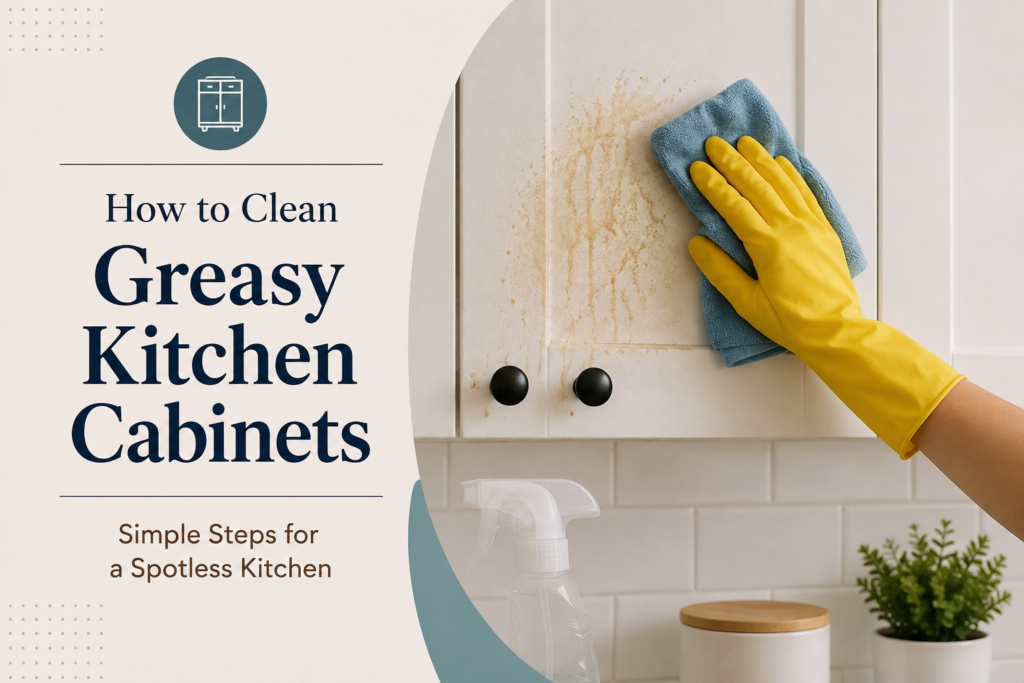
Learning how to clean greasy kitchen cabinets is about more than keeping your kitchen looking spotless. Grease buildup can trap dust, bacteria, and unpleasant odors while gradually dulling your cabinet finish. Regularly following the correct method for how to clean greasy kitchen cabinets helps preserve your cabinetry, improves kitchen hygiene, and reduces the need for expensive repairs or replacements in the future.
Greasy kitchen cabinets can make even the cleanest kitchen look dull and neglected. If you’ve been wondering how to clean greasy kitchen cabinets without damaging the finish, you’re not alone. Cooking oils, steam, food splatters, and everyday fingerprints slowly create a sticky layer that attracts dust and grime, making cabinet doors feel tacky and look dirty. The good news is that learning how to clean greasy kitchen cabinets is much easier than most homeowners think. In many cases, you don’t need harsh chemicals or expensive specialty cleaners. With the right cleaning method, a few common household supplies, and a little consistency, you can safely remove stubborn grease while protecting your cabinet finish for years.
Whether you have painted cabinets, solid wood, laminate, thermofoil, or modern matte finishes, this comprehensive guide will show you how to clean greasy kitchen cabinets step by step. You’ll also learn which cleaners actually work, which products to avoid, how to prevent grease from returning, and when it’s time to consider stronger solutions.
Quick Tip: The sooner you remove grease, the easier it is. Fresh grease wipes away in minutes, while months of buildup often require deep cleaning.
Why Kitchen Cabinets Get So Greasy
Many homeowners assume grease only lands around the stovetop.
Actually, every time you fry bacon, sauté vegetables, cook curry, or boil pasta, tiny droplets of cooking oil become airborne. These microscopic particles travel through your kitchen before settling on nearby surfaces.
Over time they combine with:
- Dust
- Steam
- Food particles
- Smoke
- Fingerprints
- Moisture
Eventually this creates the sticky film that makes cabinets difficult to clean.
I experienced this myself while helping my sister prepare for a family gathering. Her white upper cabinets looked slightly yellow despite cleaning tops of Kitchen Cabinets every day. We mixed warm water with a few drops of dish soap and cleaned just one cabinet door.
The result was surprising.
The cabinet hadn’t changed color at all—it was simply hidden beneath months of invisible cooking grease.
That’s why understanding how to clean greasy kitchen cabinets regularly saves far more work later.
Best Cleaner for Greasy Kitchen Cabinets: What Actually Works?
One of the biggest misconceptions is that strong industrial cleaners always produce better results.
In reality, professional cabinet installers and cleaning experts often recommend starting with the gentlest solution first.
For most kitchens, these cleaners work extremely well:
| Cleaner | Best For | Safe on Most Cabinets |
|---|---|---|
| Warm Water + Mild Dish Soap | Everyday grease | Yes |
| Microfiber Cloth | Weekly cleaning | Yes |
| Cabinet Degreaser | Heavy grease buildup | Check manufacturer |
| Murphy Oil Soap | Finished wood cabinets | Wood only |
| Diluted White Vinegar | Sticky fingerprints | Test first |
| Baking Soda Paste | Small stubborn spots | Use gently |
If your cabinets haven’t been cleaned for several months, begin with dish soap before moving to stronger degreasers.
Many people are surprised to discover that mild dish soap often outperforms expensive specialty cleaners because it is specifically designed to break down cooking grease.
Cleaning Supplies You’ll Need Before You Start
The best part about learning how to clean greasy kitchen cabinets is that you probably already own everything required.
Essential Supplies
- Warm water
- Mild dish soap
- Soft microfiber cloths
- Non-abrasive sponge
- Spray bottle
- Bucket or bowl
- Soft drying towel
- Soft toothbrush
- Nylon detailing brush
These simple tools remove grease without scratching delicate cabinet finishes.
Optional Supplies for Heavy Grease
If grease has accumulated for several months, you may also need:
- Cabinet-safe degreaser
- Murphy Oil Soap
- Baking soda
- White vinegar (diluted)
- Citrus-based grease remover approved for cabinetry
Always test any commercial cleaner on a hidden section before cleaning the entire cabinet.
How to Clean Greasy Kitchen Cabinets: Prepare Before You Clean
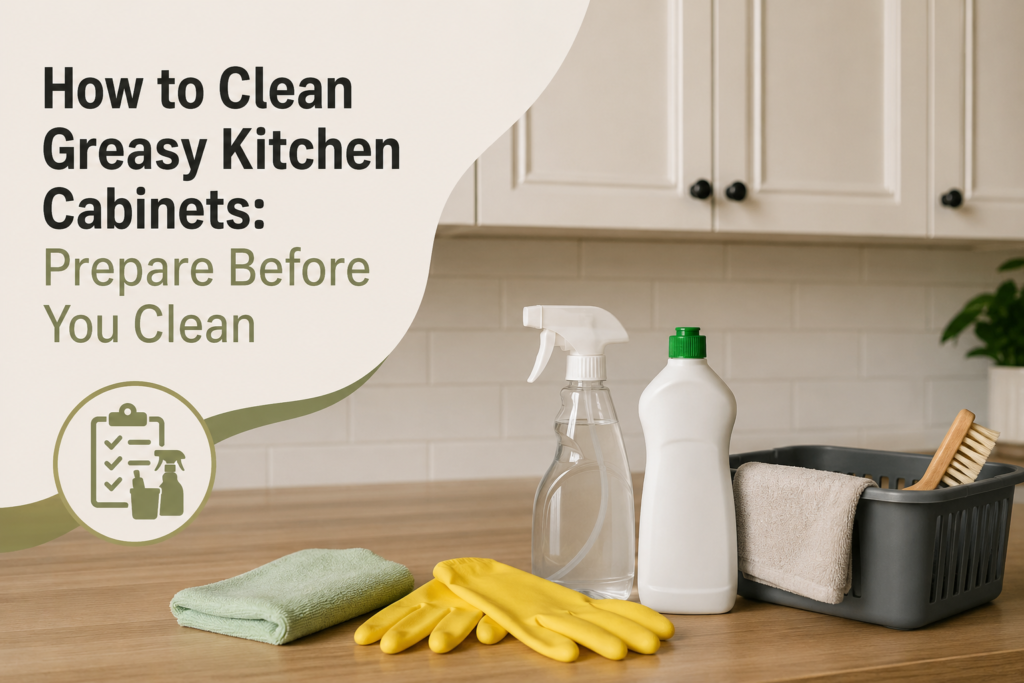
Before applying any cleaner, take a few minutes to prepare your workspace.
This simple step prevents accidental damage and makes the cleaning process much faster.
Step 1: Empty the Cabinets (If Deep Cleaning)
If you’re performing seasonal deep cleaning, remove dishes, food containers, spices, and cookware from the cabinets.
This allows you to clean both the interior and exterior thoroughly.
For routine weekly cleaning, you only need to clean the outside surfaces.
Step 2: Dust First
Always begin by removing loose dust.
Using a dry microfiber cloth, wipe:
- Cabinet doors
- Drawer fronts
- Handles
- Hinges
- Decorative trim
- Cabinet tops
- Edges
- Corners
Dust mixed with water acts like fine sandpaper.
Removing it first protects your cabinet finish from tiny scratches.
Step 3: Protect Nearby Surfaces
Lay an old towel over your countertop.
This catches drips and protects natural stone or wood surfaces while you work.
If you’re using a commercial degreaser, open a window or turn on your range hood to improve ventilation.
Step 4: Mix Your Cleaning Solution
Fill a bowl or bucket with warm—not hot—water.
Add only 2–3 drops of mild dish soap.
More soap doesn’t clean better.
Instead, excessive soap leaves behind a sticky residue that attracts dust more quickly.
How to Remove Stubborn Grease from Kitchen Cabinets
Sometimes ordinary dish soap isn’t enough.
Older grease hardens into a sticky film that requires a little extra help.
Before reaching for harsh chemicals, try these proven methods.
Method 1: Dish Soap + Warm Water (Best Overall)
Best for:
- Weekly cleaning
- Moderate grease
- Painted cabinets
- Laminate
- Finished wood
Mix:
- 2–3 drops mild dish soap
- 1 bowl warm water
This remains the safest cleaning method for most cabinet materials.
In fact, many professional cleaners still rely on dish soap because it’s specifically designed to break down cooking grease.
Method 2: Baking Soda Paste
Best for:
- Sticky spots
- Dried grease
- Around cabinet handles
Mix:
- 2 tablespoons baking soda
- 1 tablespoon water
Apply only to stubborn areas.
Allow it to sit for one minute.
Then gently wipe away using a damp microfiber cloth.
Avoid scrubbing aggressively.
Method 3: Diluted White Vinegar
White Kitchen Cabinets vinegar works well on fingerprints and light grease.
Mix:
- One part white vinegar
- One part warm water
Spray onto a microfiber cloth—not directly onto the cabinets.
Always test on a hidden area first.
Avoid using vinegar on unfinished wood or surfaces where the manufacturer advises against acidic cleaners.
Method 4: Cabinet-Safe Degreaser
If your cabinets haven’t been cleaned in years, a cabinet-safe degreaser may save considerable time.
Look for products specifically labeled safe for:
- Finished wood
- Painted cabinetry
- Laminate
- Thermofoil
Allow the product to dwell according to the manufacturer’s instructions before wiping.
Never leave chemical cleaners sitting longer than recommended.
Homemade Kitchen Cabinet Degreaser Recipes

Many homeowners prefer natural cleaning solutions.
While homemade cleaners won’t outperform every commercial degreaser, they often work well for routine maintenance.
Recipe 1: Everyday Cabinet Cleaner
Mix:
- 2 cups warm water
- A few drops of mild dish soap
Perfect for weekly cleaning.
Recipe 2: Light Grease Remover
Mix:
- 1 cup warm water
- 1 cup white vinegar
Use only on cabinet finishes that tolerate vinegar.
Recipe 3: Spot Cleaning Paste
Mix:
- Baking soda
- Small amount of water
Use only for isolated grease spots.
Wipe clean immediately afterward.
Commercial Cabinet Cleaners Worth Buying
Sometimes convenience matters.
These products are popular because they’re designed to cut through kitchen grease while remaining gentle on cabinet finishes.
| Product | Best For |
|---|---|
| Dawn Platinum Dish Soap | Everyday grease removal |
| Murphy Oil Soap | Finished wood cabinets |
| Krud Kutter Degreaser | Heavy grease buildup |
| Weiman Cabinet & Wood Cleaner | Cleaning and polishing |
| Method Wood Cleaner | Routine maintenance |
Choose products appropriate for your cabinet material.
When in doubt, follow the cabinet manufacturer’s care recommendations.
How to Clean Different Types of Greasy Kitchen Cabinets
Not all cabinets should be cleaned the same way.
Choosing the wrong cleaner may damage the finish.
How to Clean Greasy Wood Kitchen Cabinets
Wood requires gentle care.
Use:
- Mild dish soap
- Murphy Oil Soap
- Soft microfiber cloth
Avoid:
- Excessive water
- Steam cleaners
- Bleach
- Abrasive pads
Always wipe with the grain.
Dry immediately.
How to Clean Greasy Painted Kitchen Cabinets
Painted cabinets scratch more easily than many homeowners realize.
Use:
- Warm water
- Mild soap
- Soft microfiber cloth
Never use rough scrubbing pads.
Avoid soaking cabinet edges.
How to Clean Greasy Laminate Kitchen Cabinets
Laminate is durable but not indestructible.
Use:
- Damp microfiber cloth
- Dish soap solution
- Cabinet-safe cleaner
Never use steel wool or abrasive powders.
Avoid allowing moisture to seep beneath laminate edges.
How to Clean Greasy Thermofoil Cabinets
Thermofoil cabinets have a vinyl coating.
Too much heat or moisture may weaken the adhesive.
Always:
- Use a lightly damp cloth
- Dry immediately
- Avoid steam cleaning
This helps prevent peeling around edges.
A Simple Habit That Makes Future Cleaning Easier
A few months ago, a neighbor mentioned she dreaded cleaning her kitchen because cabinet grease always took hours to remove. After switching to a simple routine—wiping cabinet doors with a damp microfiber cloth and a little dish soap once a week—she noticed a big difference. When it came time for a seasonal deep clean, there was almost no sticky buildup left to tackle.
The lesson is simple: small, regular cleanups are much easier than dealing with months of hardened grease. Spending just five minutes each week can save hours of scrubbing later.
How to Prevent Grease Buildup on Kitchen Cabinets
The easiest way to clean greasy kitchen cabinets is to prevent heavy grease from building up in the first place. A few simple habits can keep your cabinets cleaner for longer and reduce the need for deep scrubbing.
Use Your Range Hood Every Time You Cook
One of the biggest reasons cabinets become greasy is airborne cooking oil.
Whenever you fry, sauté, or cook with high heat, tiny grease particles rise into the air before settling on nearby surfaces.
Turning on your range hood or exhaust fan while cooking helps remove much of this grease before it lands on your cabinets.
Even leaving the hood running for 5–10 minutes after cooking can make a noticeable difference over time.
Wipe Up Fresh Grease Immediately
Fresh grease comes off easily.
Old grease becomes sticky and attracts dust, making it much harder to remove.
If you notice:
- Oil splashes
- Sauce stains
- Fingerprints
- Steam residue
wipe them away with a damp microfiber cloth before they dry.
This simple habit prevents thick grease layers from forming.
Dust Cabinets Every Week
Dust may seem harmless, but when it mixes with cooking grease, it creates the sticky film many homeowners struggle to remove.
Once a week, quickly wipe:
- Upper cabinets
- Cabinet tops
- Drawer fronts
- Handles
- Decorative trim
Weekly dusting usually takes less than five minutes but saves hours of deep cleaning later.
Keep Cabinet Handles Clean
Cabinet handles collect natural oils from your hands every day.
Over time, these oils spread across cabinet doors and combine with cooking grease.
Once a week, clean:
- Knobs
- Pulls
- Handles
- Drawer fronts around handles
You’ll immediately notice your kitchen looks cleaner.
Don’t Leave Cabinets Wet
Moisture is one of the biggest enemies of kitchen cabinetry.
Even moisture-resistant cabinets can develop problems if water sits around seams and edges.
Always dry cabinets immediately after cleaning.
Pay special attention to:
- Bottom edges
- Corners
- Around sinks
- Near dishwashers
Use Splatter Screens During Cooking
If you cook foods that produce a lot of oil splatter, such as bacon, burgers, or fried chicken, consider using a splatter screen.
These inexpensive tools help reduce airborne grease while keeping your stovetop cleaner.
Less grease in the air means less grease on your cabinets.
How to Clean Greasy Kitchen Cabinets Without Damaging the Finish
One of the biggest mistakes homeowners make when learning how to clean greasy kitchen cabinets is using harsh chemicals or abrasive scrubbers. Although strong cleaners may seem more effective, they can scratch painted surfaces, dull laminate finishes, and dry out natural wood. A microfiber cloth, mild dish soap, and gentle cleaning techniques usually provide the best long-term results while protecting your cabinets.
Below are some of the most effective options.
| Product | Best For | Why It’s Recommended |
|---|---|---|
| Microfiber Cloths | Daily & weekly cleaning | Trap grease and dust without scratching |
| Mild Dish Soap | Everyday grease | Cuts grease safely on most cabinet finishes |
| Murphy Oil Soap | Finished wood cabinets | Cleans while enhancing wood’s natural appearance |
| Krud Kutter Degreaser | Heavy grease buildup | Powerful water-based degreaser for stubborn grime |
| Weiman Cabinet & Wood Cleaner | Cleaning and protection | Cleans, shines, and helps repel fingerprints |
| Soft Detailing Brush | Corners & trim | Reaches tight spaces without damage |
| Splatter Screen | Grease prevention | Reduces airborne grease while cooking |
When buying cleaning products, always choose those specifically labeled safe for your cabinet material.
When Cleaning Isn’t Enough
Sometimes grease isn’t the real problem.
If your cabinets show any of the following signs, cleaning alone won’t restore them:
- Peeling laminate
- Bubbling surfaces
- Water damage
- Swollen cabinet doors
- Deep scratches
- Burn marks
- Loose edges
- Warped panels
- Faded finish from years of sun exposure
In these situations, you may need:
- Cabinet refinishing
- Laminate repair
- Professional restoration
- Cabinet replacement
Cleaning removes dirt—it can’t repair structural damage.
Professional Tips to Keep Kitchen Cabinets Looking Like New
Before you begin how to clean greasy kitchen cabinets, identify your cabinet material. Painted wood, laminate, thermofoil, and solid wood cabinets all have different cleaning requirements. Using the wrong cleaner may damage the finish, so always start with the gentlest cleaning solution and test it on a hidden area first. Professional cabinet installers recommend a few simple habits that dramatically extend cabinet life.
Open Cabinets Gently
Repeated slamming loosens hinges and stresses cabinet joints.
Soft-close hinges are a worthwhile upgrade if your cabinets don’t already have them.
Don’t Overload Shelves
Heavy cookware puts pressure on cabinet boxes and hardware.
Distribute weight evenly to prevent sagging shelves.
Inspect Cabinets Every Few Months
Take a few minutes to check for:
- Loose hinges
- Loose handles
- Water damage
- Peeling laminate
- Cracked caulk
- Small chips
Fixing small problems early prevents expensive repairs later.
Protect Cabinets from Heat
Cabinets next to ovens, dishwashers, and cooktops experience more heat and moisture.
After running the dishwasher, allow steam to escape before opening it fully against nearby cabinet doors.
This simple habit helps protect cabinet finishes over time.
Reduce Direct Sunlight
If your kitchen receives strong afternoon sunlight, prolonged UV exposure can gradually fade painted and wood cabinet finishes.
Blinds, curtains, or UV-filtering window film can help preserve the original color.
Why Regular Cabinet Maintenance Saves Money

The easiest way to avoid heavy grease buildup is to include how to clean greasy kitchen cabinets in your weekly kitchen cleaning routine. Spending just five to ten minutes wiping cabinet doors, handles, and drawer fronts with a damp microfiber cloth prevents grease from hardening and keeps your cabinets looking freshly cleaned throughout the year. Many homeowners assume cabinets need replacing after 10–15 years.
In reality, quality kitchen cabinets often last 20 years or more with proper care.
A simple weekly cleaning routine helps:
- Prevent grease buildup
- Reduce wear on the finish
- Protect cabinet edges
- Maintain the original color
- Extend cabinet lifespan
- Improve kitchen hygiene
Replacing cabinets is one of the most expensive kitchen upgrades.
Maintaining them is far more affordable.
Conclusion
Learning how to clean greasy kitchen cabinets doesn’t require expensive products or hours of scrubbing. In most homes, a simple combination of warm water, mild dish soap, and a soft microfiber cloth is enough to remove everyday grease, fingerprints, and cooking residue while protecting the cabinet finish. Knowing how to clean greasy kitchen cabinets can make a noticeable difference in both the appearance and lifespan of your kitchen. By using gentle cleaners, removing grease before it hardens, and following a regular maintenance routine, how to clean greasy kitchen cabinets becomes a quick task instead of a time-consuming deep-cleaning project.
Whether you choose a simple dish soap solution, a cabinet-safe degreaser, or a natural homemade cleaner, the key to how to clean greasy kitchen cabinets is consistency. A few minutes of weekly care will help protect your cabinet finish, reduce grease buildup, and keep your kitchen looking clean, fresh, and inviting for years to come.
Remember, knowing how to clean greasy kitchen cabinets is only part of the solution. Regular maintenance, proper ventilation, and small weekly cleaning habits will prevent stubborn grease from returning and help preserve the beauty of your kitchen. With the right approach, your cabinets can continue looking fresh, bright, and inviting long after they were installed.
FAQ’S…
How to clean greasy kitchen cabinets naturally?
The safest way to how to clean greasy kitchen cabinets naturally is by using warm water, mild dish soap, and a microfiber cloth. For stubborn grease, a small amount of baking soda paste can help remove buildup without damaging most cabinet finishes.
What is the best way to clean greasy kitchen cabinets?
The best method for how to clean greasy kitchen cabinets is to wipe the surface with a microfiber cloth dampened in warm water mixed with a few drops of mild dish soap. Rinse with a clean damp cloth and dry immediately to prevent moisture damage.
Can Dawn dish soap clean greasy kitchen cabinets?
Yes. Many homeowners use Dawn because it is designed to break down cooking grease. When learning how to clean greasy kitchen cabinets, a few drops of Dawn mixed with warm water is one of the safest and most effective cleaning solutions.
Can vinegar damage kitchen cabinets?
Diluted white vinegar can help remove light grease, but it should always be tested on a hidden area first. When deciding how to clean greasy kitchen cabinets, follow your cabinet manufacturer’s cleaning recommendations to avoid damaging the finish.