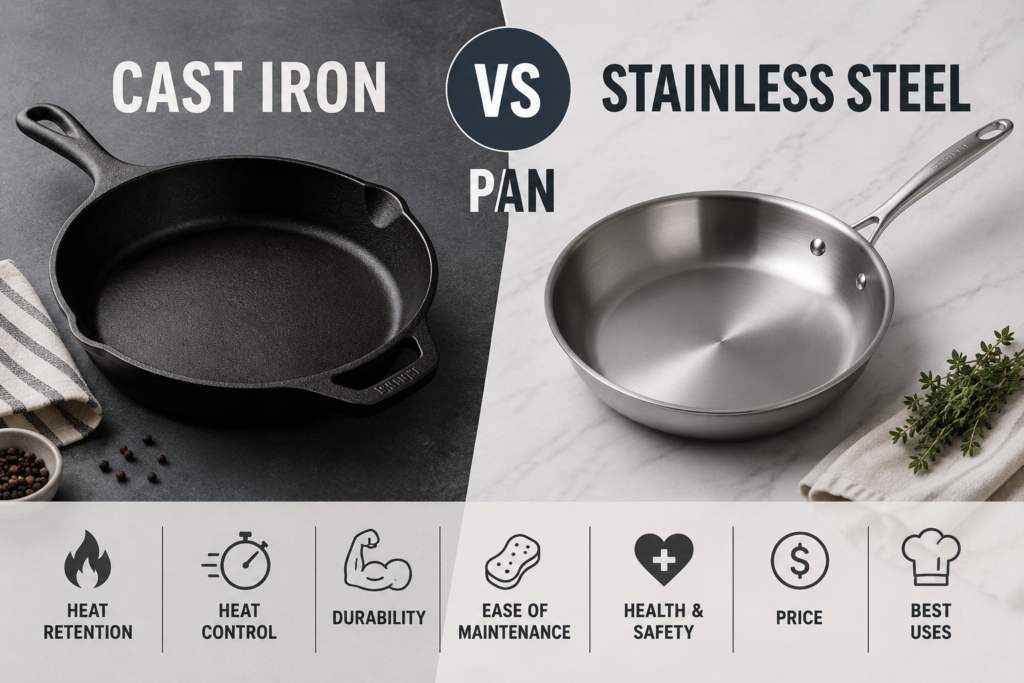
If you’re wondering which is better—cast iron vs stainless steel pan, the answer depends on what you cook most often. A cast iron pan is unbeatable for heat retention, steaks, and oven cooking, while a stainless steel pan offers superior versatility, quick temperature control, and easy maintenance. Most professional chefs keep both in their kitchens because each excels in different situations. Have you ever stood in the cookware aisle or browsed online, staring at dozens of frying pans and wondering which one is actually worth buying?
This cast iron vs stainless steel pan guide will help you make a confident decision based on your cooking habits, budget, and long-term kitchen goals. The real issue was choosing the right cookware without understanding how each material behaves. That’s exactly why this guide exists.
In this detailed cast iron vs stainless steel pan comparison, you’ll learn the real differences between these two popular cookware materials, including their strengths, weaknesses, maintenance requirements, cooking performance, health considerations, durability, and long-term value.
In this detailed comparison, you’ll learn the real differences between cast iron vs stainless steel pan, their strengths, weaknesses, maintenance requirements, cooking performance, health considerations, durability, and long-term value. By the end, you’ll know exactly which pan deserves a place in your kitchen—or whether you should own both.
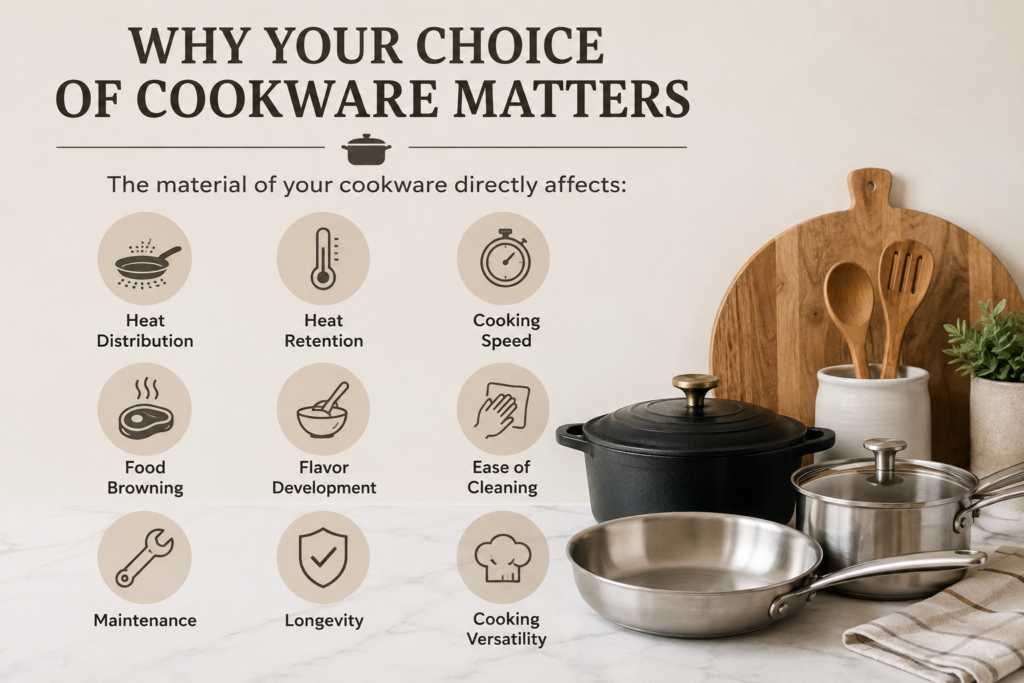
Why Your Choice of Cookware Matters
Many people believe great cooking starts with an expensive recipe. Professional chefs know it starts with the right pan.
The material of your cookware directly affects:
- Heat distribution
- Heat retention
- Cooking speed
- Food browning
- Flavor development
- Ease of cleaning
- Maintenance
- Longevity
- Cooking versatility
For example, a perfectly seared steak depends more on consistent high heat than on seasoning. Likewise, a delicate omelet benefits from precise temperature control rather than extreme heat retention. This cast iron vs stainless steel pan comparison will help you understand which cookware option matches your cooking style, budget, and kitchen needs.
This cast iron vs stainless steel pan guide will help you make a confident decision based on your cooking habits, budget, and long-term kitchen goals.
Cast Iron vs Stainless Steel Pan Which Is Better? A Complete Comparison Guide
When looking at cast iron vs stainless steel pan, remember that the “better” option depends on the type of food you prepare most often. A professional chef and a beginner home cook may choose completely different cookware for the same kitchen.
| Feature | Cast Iron Pan | Stainless Steel Pan |
|---|---|---|
| Heat Retention | Excellent | Very Good |
| Heat Responsiveness | Slow | Excellent |
| Weight | Heavy | Medium |
| Maintenance | Moderate to High | Low |
| Rust Resistance | Needs Care | Excellent |
| Non-Stick Performance | Naturally improves with seasoning | Requires cooking technique |
| Acidic Foods | Bare cast iron is not ideal | Excellent |
| Oven Safe | Yes | Usually Yes |
| Dishwasher Safe | No | Usually Yes |
| Lifespan | Several generations | Decades |
| Beginner Friendly | Moderate | High |
| Best For | Steaks, cornbread, roasting | Everyday cooking, sauces, vegetables |
Bottom line: Neither pan is universally better. Each is designed for different cooking styles, and many experienced home cooks eventually own both.
Understanding the Difference Between Cast Iron and Stainless Steel
Although both cast iron vs stainless steel pan are built to last for decades, they are made differently.
A cast iron pan is created by pouring molten iron into molds, resulting in one thick, solid piece of cookware. This dense construction allows it to absorb and retain tremendous amounts of heat.
A stainless steel pan, on the other hand, is usually made from multiple layers of metal. Premium cookware often features tri-ply or 5-ply construction, combining stainless steel with aluminum or copper cores for faster and more even heating.
This difference in construction explains why the two materials cook so differently.
The Key Differences Between Cast Iron and Stainless Steel
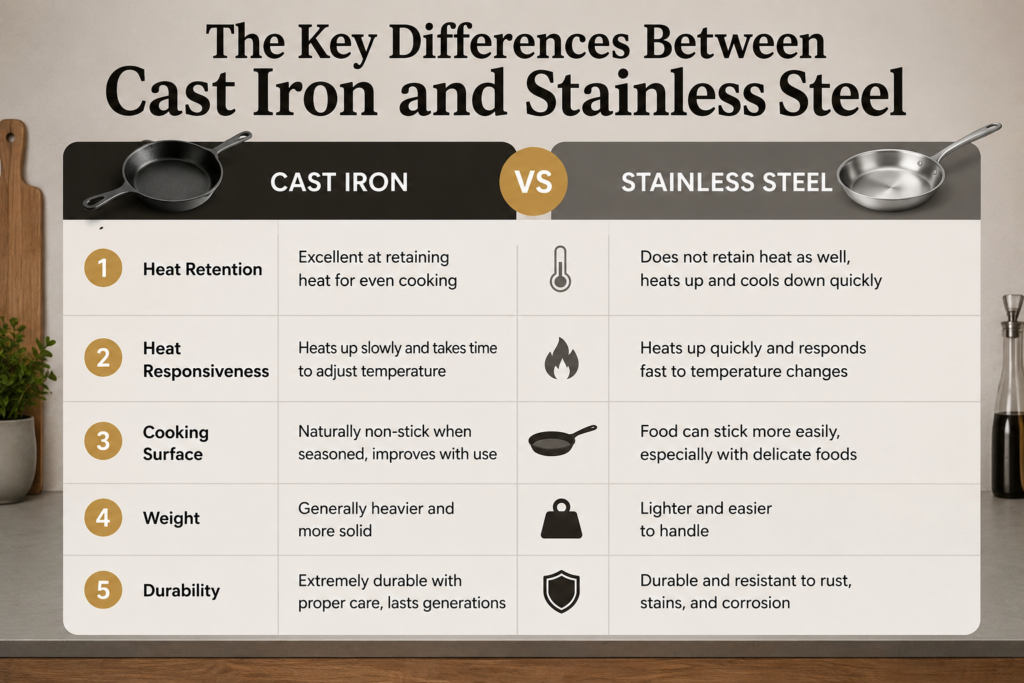
In this cast iron vs stainless steel pan comparison, let’s look at the characteristics that matter most in everyday cooking.
1. Heat Retention
In any cast iron vs stainless steel pan debate, heat retention is one of the biggest factors separating these two cookware materials. If heat retention were a competition, cast iron would comfortably take first place.
Once heated, a cast iron pan stays hot for a long time—even after the burner is turned off.
This makes it perfect for:
- Thick steaks
- Burgers
- Roasted vegetables
- Cornbread
- Skillet pizzas
- Dutch oven recipes
The stored heat helps maintain a consistent cooking temperature, producing beautifully browned food with a rich crust.
In contrast, stainless steel retains heat well but not nearly as long. Instead, it responds much faster to changes in burner temperature.
2. Heat Responsiveness
Imagine making a delicate cream sauce cast iron vs stainless steel pan.
The moment it starts simmering too aggressively, you reduce the heat. With stainless steel, the pan reacts almost immediately. With cast iron, however, the pan continues holding its previous temperature for several minutes.
This slower responsiveness is excellent for searing but less ideal for recipes requiring constant temperature adjustments.
Winner:
Stainless Steel
3. Cooking Surface
One of the biggest myths is that stainless steel is a bad cooking surface because food sticks cast iron vs stainless steel pan.
In reality, food sticks only when the cooking technique is incorrect. Properly preheated stainless steel can release foods surprisingly well. Meanwhile, a properly seasoned cast iron pan develops a naturally slick cooking surface over time. Every layer of seasoning improves its performance.
This natural seasoning is one reason cast iron remains a favorite among outdoor cooks and barbecue enthusiasts.
4. Weight
Weight is another important consideration when deciding between cast iron vs stainless steel pan, especially if you cook every day.
A standard 10-inch skillet may weigh over 5 pounds before adding food. For some people, this isn’t a problem. Others—especially older adults or people with wrist pain—may prefer the lighter feel of stainless steel. If you frequently flip vegetables, toss pasta, or sauté ingredients, stainless steel is noticeably easier to maneuver.
Winner:
Stainless Steel
5. Durability
Both cookware materials are incredibly durable. However, they age differently. cast iron vs stainless steel pan .A cast iron pan can survive generations with proper care. Many families still cook with skillets that are over 50 years old. Stainless steel is also remarkably durable.
It won’t chip, crack, or rust easily and resists dents far better than many non-stick alternatives.
While cast iron may technically outlast stainless steel, both are considered lifetime investments.
What Is a Cast Iron Pan?
When comparing cast iron vs stainless steel pan, many cooks choose cast iron because of its unmatched durability, traditional cooking performance, and ability to retain heat.
Its reputation comes from three things:
- Exceptional heat retention
- Incredible durability
- Naturally improving cooking surface
Unlike coated cookware that wears out after a few years, cast iron actually becomes better the more you cook with it.
Advantages of a Cast Iron Pan in the Cast Iron vs Stainless Steel Pan Debate
Outstanding Heat Retention
Cast iron stores more heat than nearly any other common cookware material.
That means food cooks evenly without dramatic temperature drops when cold ingredients are added.
This makes it perfect for:
- Thick steaks
- Bone-in chicken
- Pork chops
- Burgers
- Rustic breads
- Deep-dish pizzas
Excellent Searing
Nothing beats cast iron when developing a deeply caramelized crust.
Because the pan stays extremely hot, moisture evaporates quickly, allowing the famous Maillard reaction to create rich color and flavor.
For steak lovers, this alone makes cast iron worth owning.
Naturally Non-Stick Over Time
A seasoned cast iron skillet becomes smoother after every use.
Unlike synthetic coatings, this natural surface can be renewed indefinitely.
Even if the seasoning becomes damaged, it can simply be rebuilt.
Incredible Longevity
Buying cast iron isn’t just buying cookware.
It’s buying something your children and grandchildren can still use.
With proper maintenance, these pans often last for generations.
Works Almost Anywhere
One reason campers love cast iron is its versatility.
It can be used on:
- Gas stoves
- Electric cooktops
- Induction ranges
- Ovens
- Grills
- Campfires
- Outdoor fire pits
Few cookware materials are this adaptable.
What Is a Stainless Steel Pan?
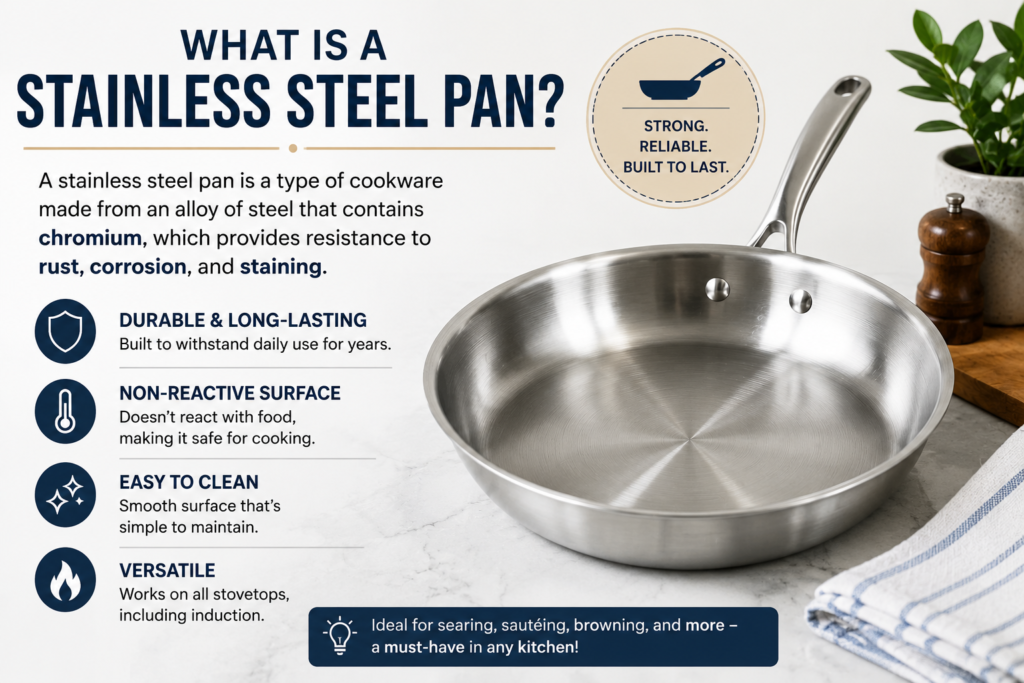
A stainless steel pan is the workhorse of modern kitchens. In a cast iron vs stainless steel pan comparison, stainless steel stands out because it offers better versatility and requires less maintenance for everyday cooking.
Rather than storing heat for long periods, it focuses on precision, speed, and versatility. Most premium stainless cookware combines layers of stainless steel with aluminum or copper cores.
This layered construction creates cookware that heats quickly, distributes heat evenly, and responds immediately to temperature adjustments.
Advantages of Stainless Steel in a Cast Iron vs Stainless Steel Pan Comparison
Incredible Versatility
Unlike cast iron, stainless steel comfortably handles almost every ingredient.
You can cook:
- Tomatoes
- Lemon sauces
- Wine reductions
- Vinegar-based recipes
- Seafood
- Pasta sauces
- Vegetables
- Eggs (with proper technique)
without worrying about chemical reactions or damaging the pan.
Excellent Heat Control
Professional cooks appreciate stainless steel because every adjustment on the burner produces an almost immediate response.
This level of control makes it easier to:
- Simmer sauces
- Reduce liquids
- Cook delicate proteins
- Sauté vegetables
- Finish butter-based sauces
The precision gives cooks greater confidence when preparing meals that require careful temperature management.
Cast Iron vs Stainless Steel Health: Which Pan Is Safer for Everyday Cooking?
Another important factor in the cast iron vs stainless steel pan discussion is safety and everyday health considerations. When choosing cookware, performance is important, but many home cooks also ask an equally important question: is cast iron or stainless steel healthier?
The good news is that both cast iron pans and stainless steel pans are considered safe choices when used correctly.
However, they behave differently.
A cast iron pan can naturally add small amounts of iron to food, which may be beneficial for some people but unnecessary for others. Meanwhile, stainless steel cookware is non-reactive, meaning it does not easily interact with acidic ingredients such as tomatoes, vinegar, or citrus-based sauces.
Let’s look deeper at the health differences.
Cast Iron vs Stainless Steel Health: Understanding Safety Differences
Cast Iron and Iron Transfer
One unique characteristic of a cast iron pan is that it can transfer trace amounts of iron into food during cooking.
For example:
- Cooking acidic foods for longer periods may increase iron transfer.
- Moist foods generally absorb more iron than dry foods.
- Newer cast iron cookware may release slightly more iron than heavily seasoned pans.
For people who need more dietary iron, this can sometimes be a small advantage.
However, cast iron is not a replacement for medical treatment or dietary planning.
Stainless Steel and Food Safety
A high-quality stainless steel pan is widely used in professional kitchens because it is:
- Non-reactive
- Resistant to rust
- Durable
- Suitable for acidic ingredients
- Easy to maintain
This makes stainless steel excellent for recipes such as:
- Tomato sauces
- Lemon chicken
- Wine reductions
- Vegetable soups
- Seafood dishes
Unlike bare cast iron, stainless steel does not require seasoning and does not change the flavor profile of food.
Which Is Healthier: Cast Iron or Stainless Steel?
The answer depends on your cooking habits.
Choose cast iron if you want:
- Naturally seasoned cookware
- Excellent heat retention
- A pan that improves with age
- The possibility of extra dietary iron
Choose stainless steel if you want:
- A non-reactive cooking surface
- Less maintenance
- More flexibility with ingredients
- Easy everyday cooking
For most households, both are healthy options when purchased from reliable manufacturers and used properly.
Cast Iron vs Stainless Steel Pan for Steak: Which Creates the Best Crust?
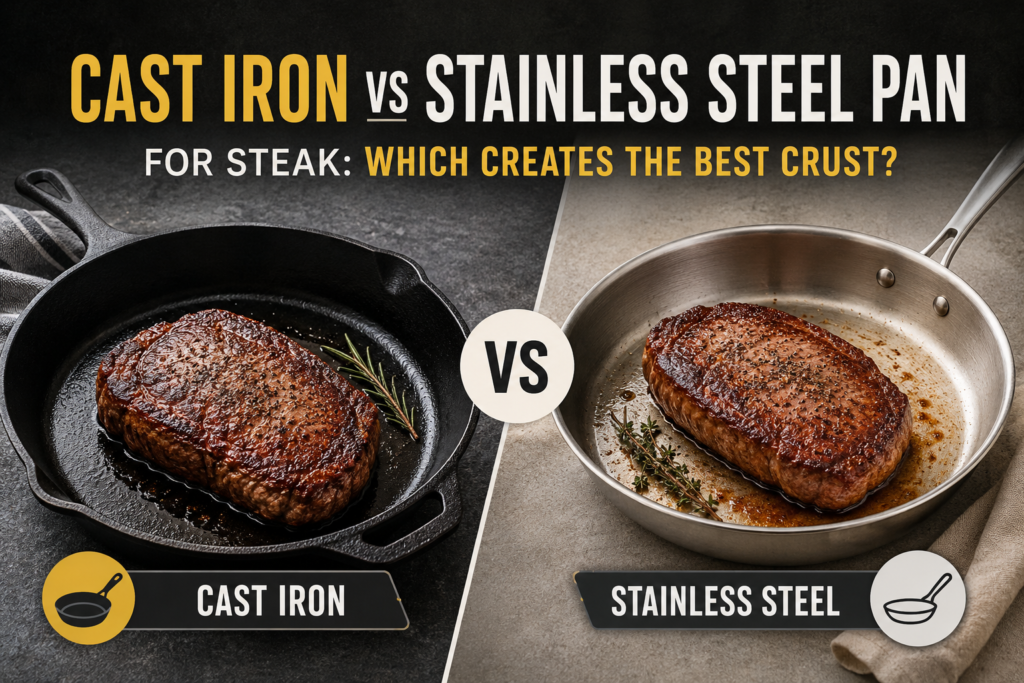
Ask any steak lover about the perfect steak, and the conversation eventually reaches one question:
Which pan gives the best sear—cast iron or stainless steel?
The answer depends on your cooking style.
Both can produce excellent results, but in a cast iron vs stainless steel pan for steak comparison, each creates that beautiful crust in slightly different ways.
Why Cast Iron Is Popular for Steak
A cast iron pan for steak has one major advantage:
heat retention.
When a cold steak touches a hot pan, the temperature naturally drops.
A lightweight pan may struggle to recover quickly.
Cast iron handles this situation better because it stores a large amount of heat.
This creates:
- Deep browning
- Crispy exterior
- Restaurant-style crust
- Even cooking
This is why many chefs and home cooks reach for cast iron when cooking thick cuts like:
- Ribeye
- New York strip
- Porterhouse
- T-bone
How to Cook Steak in Cast Iron Step by Step
Step 1: Bring the Steak to Room Temperature
Remove your steak from the refrigerator about 30–60 minutes before cooking.
This helps it cook more evenly.
Step 2: Preheat the Cast Iron Pan
Place your skillet over medium-high heat and allow it to become properly hot.
A common mistake is adding steak too early.
Step 3: Add a High Smoke Point Oil
Use oils suitable for high-temperature cooking.
Examples:
- Avocado oil
- Canola oil
- Grapeseed oil
Step 4: Sear Without Moving
Allow the steak to develop a crust before flipping.
Moving it too often prevents proper browning.
Step 5: Finish With Butter and Aromatics
Many cooks add:
- Butter
- Garlic
- Rosemary
- Thyme
during the final cooking stage to build flavor.
Why Stainless Steel Also Works for Steak
Many professional chefs actually prefer stainless steel pans for steak because they provide excellent temperature control.
Benefits include:
- Better visibility of browning
- Easier pan sauce preparation
- Faster heat adjustment
- Less weight
The browned pieces left behind after cooking, called fond, can be turned into incredible sauces.
For example:
After cooking steak:
- Remove the meat.
- Add wine or stock.
- Scrape the browned bits.
- Add butter.
- Create a restaurant-quality sauce.
This technique is one reason stainless steel remains a favorite in professional kitchens.
Winner: Cast Iron vs Stainless Steel Pan for Steak
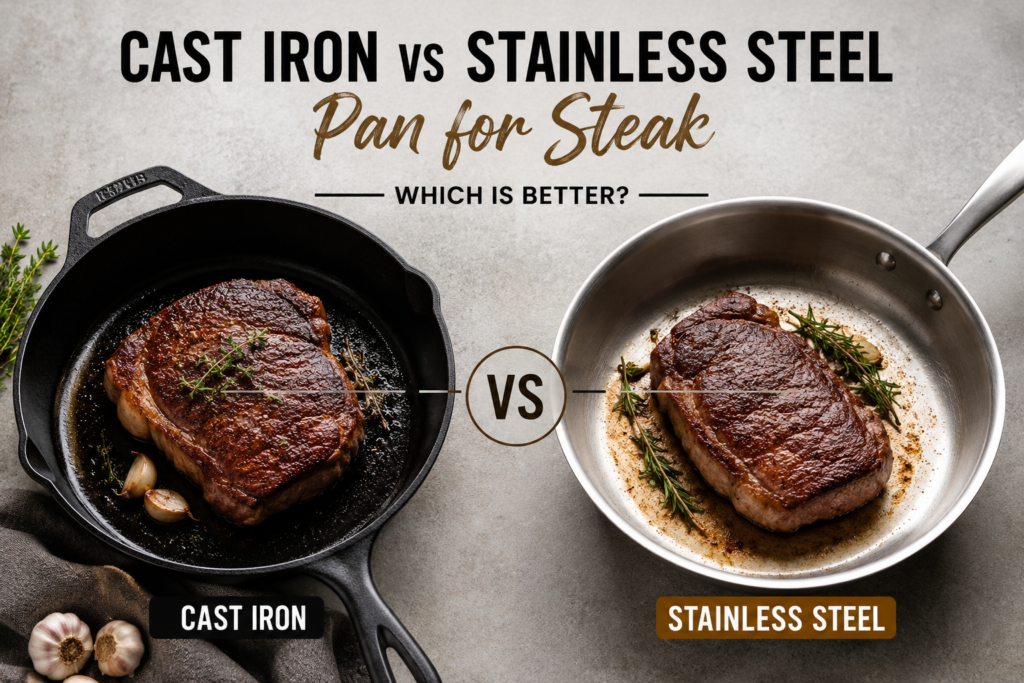
For maximum crust and traditional steakhouse results:
Cast Iron wins
For steak plus sauce-making and easier temperature control:
Stainless steel wins
Both are excellent choices.
Cast Iron vs Stainless Steel Pan Reddit: What Real Home Cooks Usually Discuss
When home cooks discuss cast iron vs stainless steel pan Reddit comparisons, the conversation usually comes down to cooking habits rather than choosing one universal winner.
There is no single perfect pan.
Many experienced cooks recommend owning both because they serve different purposes.
Common opinions include:
- Cast iron is loved for steaks, burgers, and high-heat cooking.
- Stainless steel is preferred for daily meals and sauces.
- Beginners often struggle with stainless steel because they don’t understand preheating.
- Beginners often struggle with cast iron because they underestimate maintenance.
A common theme among experienced cooks is:
Learn the technique before blaming the cookware.
A properly used stainless steel pan can perform amazingly, and a properly maintained cast iron pan can last a lifetime.
Cast Iron vs Stainless Steel Pan Price: Which Offers Better Value?
Price is another important factor when choosing between a cast iron vs stainless steel pan, especially for buyers investing in long-lasting cookware.
Many buyers assume the most expensive pan is automatically the best choice.
That is not always true.
Let’s compare.
| Category | Cast Iron | Stainless Steel |
|---|---|---|
| Entry-Level Price | Affordable | Moderate |
| Premium Options | More expensive enameled versions | Higher-end multi-clad options |
| Lifespan | Generations | Decades |
| Maintenance Cost | Very low | Very low |
| Replacement Frequency | Rare | Rare |
Cast Iron Price Range
Basic cast iron pans are surprisingly affordable.
You can find quality skillets without spending a fortune.
The biggest investment is not money—it is maintenance time.
You need to:
- Season the pan
- Dry it properly
- Protect it from rust
Stainless Steel Price Range
A quality stainless steel pan often costs more because of its construction.
Premium stainless cookware usually includes:
- Multiple metal layers
- Aluminum or copper cores
- Better handles
- Improved heat distribution
Although the upfront price can be higher, good stainless steel cookware can easily last decades.
Which Has Better Long-Term Value?
Both provide excellent value.
Choose cast iron if you want:
- Maximum durability
- Affordable performance
- Traditional cooking experience
Choose stainless steel if you want:
- Everyday convenience
- Professional versatility
- Lower maintenance
Cast Iron vs Stainless Steel vs Aluminium: Complete Comparison
Many shoppers comparing cast iron vs stainless steel pan vs aluminium also consider aluminum because it is common in affordable cookware.
Let’s compare all three.
| Feature | Cast Iron | Stainless Steel | Aluminium |
|---|---|---|---|
| Heat Retention | Excellent | Very Good | Moderate |
| Heating Speed | Slow | Fast | Very Fast |
| Durability | Excellent | Excellent | Moderate |
| Weight | Heavy | Medium | Lightweight |
| Rust Resistance | Lower | Excellent | Good |
| Acid Resistance | Moderate | Excellent | Depends on coating |
| Best Use | Searing & roasting | Everyday cooking | Quick heating |
Cast Iron vs Aluminium
Aluminum heats quickly and is lightweight.
However, it does not hold heat as effectively as cast iron.
This means it may lose temperature quickly when cold ingredients are added.
Stainless Steel vs Aluminium
Stainless steel is generally more durable.
Aluminum is often cheaper and lighter but may require coatings or additional layers for better performance.
Many premium cookware manufacturers combine aluminum cores with stainless steel layers to achieve the benefits of both materials.
Do Chefs Use Cast Iron or Stainless Steel? Professional Opinions Explained
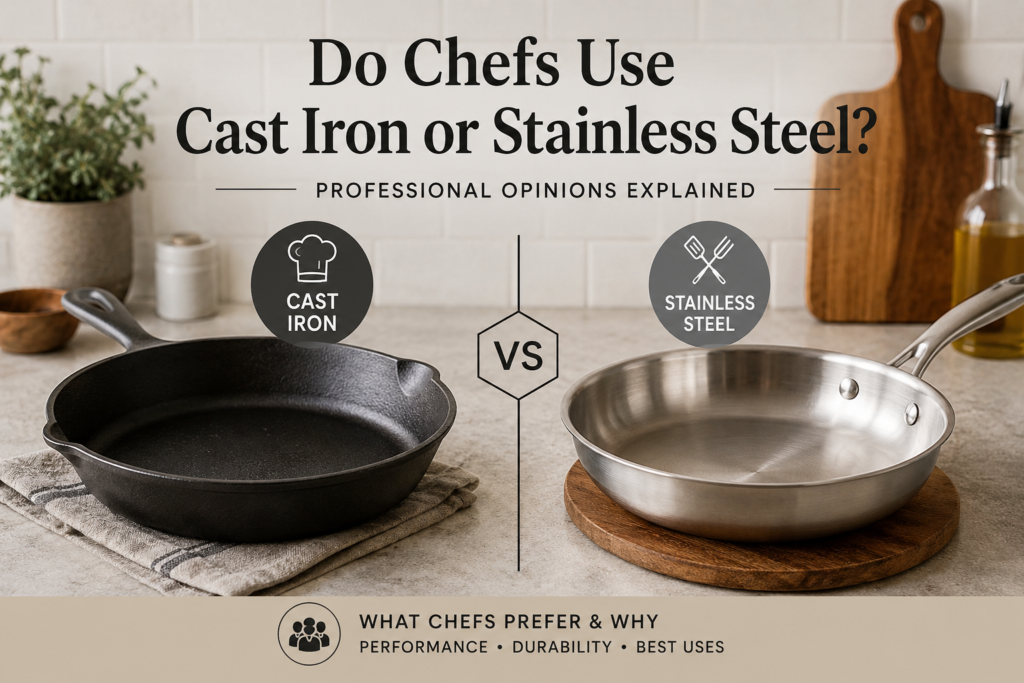
When researching cast iron vs stainless steel pan, many home cooks ask: “Do chefs use cast iron or stainless steel?” The answer is that professional kitchens rarely depend on only one cookware material.
Instead, chefs choose pans based on the dish.
A chef may use:
Cast iron for:
- Steaks
- Roasted meats
- Crispy potatoes
- Cornbread
- High-temperature cooking
Stainless steel for:
- Sauces
- Seafood
- Vegetables
- Pasta dishes
- Everyday restaurant cooking
The reason professionals value both is simple:
Different foods require different tools.
A hammer and screwdriver are both useful, but you would not use one for every job.
The same idea applies to cookware.
Final Thoughts
The debate between cast iron vs stainless steel pan will continue because both materials have earned their place in kitchens worldwide.
A cast iron pan brings incredible heat retention, durability, and classic cooking performance. A stainless steel pan delivers flexibility, speed, and professional-level control. If you cook frequently and want a complete kitchen setup, owning both is the smartest investment.
The right cookware does not just make cooking easier—it helps you create better meals for years to come. The right cookware does not just make cooking easier—the right cast iron vs stainless steel pan choice helps you create better meals for years to come.
FAQ’S..
Cast iron vs stainless steel pan which is better for beginners?
For most beginners, stainless steel is easier for everyday cooking because it requires less maintenance and works with more ingredients.
Is cast iron healthier than stainless steel?
Both are considered safe cookware choices.
A cast iron pan may add small amounts of iron to food, while stainless steel cookware offers a non-reactive cooking surface.
The healthier option depends on your cooking needs and preferences.
Why does food stick to my stainless steel pan?
Food usually sticks because:
The pan was not preheated properly.
Oil was added too early or too late.
Food was moved too soon.
Proper temperature control solves most sticking problems.